

The Digital Disappearance: When Your Favorite Show Vanishes
You know that sinking feeling. You settle in to finish that Netflix original you've been watching—the one with the Netflix logo right there on the thumbnail—and it's just... gone. No warning, no explanation, just an empty space where your show used to be. This isn't some obscure title either—it was a Netflix exclusive. If they don't host it, it literally doesn't exist anymore.
That Reddit post from r/DataHoarder hit a nerve because it's happening more frequently than people realize. In 2026, we're facing a bizarre paradox: we have more content available than ever before, yet our access to it is more fragile than physical media ever was. That user spent all night searching for a physical copy, only to discover the show was digital-only. The frustration is palpable: "How are they allowed to just delete culture for a tax break?"
I've been there myself. I lost access to several documentaries and international series that simply vanished from streaming platforms. And here's the uncomfortable truth: if you're not actively preserving digital content, you're at the mercy of corporate decisions that have nothing to do with artistic value or cultural preservation.
Why Streaming Services Delete Their Own Content
Let's start with the obvious question: why would Netflix—or any streaming service—delete content they paid to produce? The Reddit user mentioned tax breaks, and they're not wrong, but it's more complicated than that.
First, there's the financial angle. When a show underperforms, keeping it available costs money. There are licensing fees for music, residuals for actors and crew, and infrastructure costs for hosting and streaming. Writing off a show as a loss can provide tax benefits that sometimes outweigh the value of keeping it available. It's brutal calculus, but it's business.
Then there's the content strategy angle. Services want their catalogs to appear fresh and relevant. Removing older, less-watched content makes room for new productions and can make the overall library seem more appealing. There's also the issue of rights—sometimes music licenses expire, or there are contractual obligations that make keeping content available impractical or expensive.
But here's what they don't tell you: this practice creates a cultural black hole. Shows that were never released physically, especially niche or experimental content, can disappear completely. Future generations won't have access to them. Historians won't be able to study them. They become digital ghosts—things that existed once but leave no trace.
The Data Hoarder's Dilemma: Preservation vs. Practicality
The original poster mentioned feeling like they were "failing as a hoarder." That phrase captures the essence of modern digital preservation. Data hoarding isn't about mindless accumulation—it's about recognizing that if you don't grab something now, it might be gone tomorrow.
Traditional media preservation had physical artifacts. Even if a book went out of print, libraries might have copies. VHS tapes might degrade, but they don't just vanish from your shelf because a corporation decided they weren't profitable enough. Digital streaming changes everything. You're not buying content—you're renting access to it. And that access can be revoked at any time.
From what I've seen in preservation communities, there's a growing awareness that we need to take matters into our own hands. But it's not simple. The tools and techniques require technical knowledge. The legal landscape is murky. And the sheer volume of content makes comprehensive preservation impossible for individuals.
Still, targeted preservation of personally meaningful content is absolutely achievable. You don't need to archive everything—just the things that matter to you. And with the right approach, you can ensure your favorite shows don't disappear into the digital void.
Technical Approaches to Digital Preservation
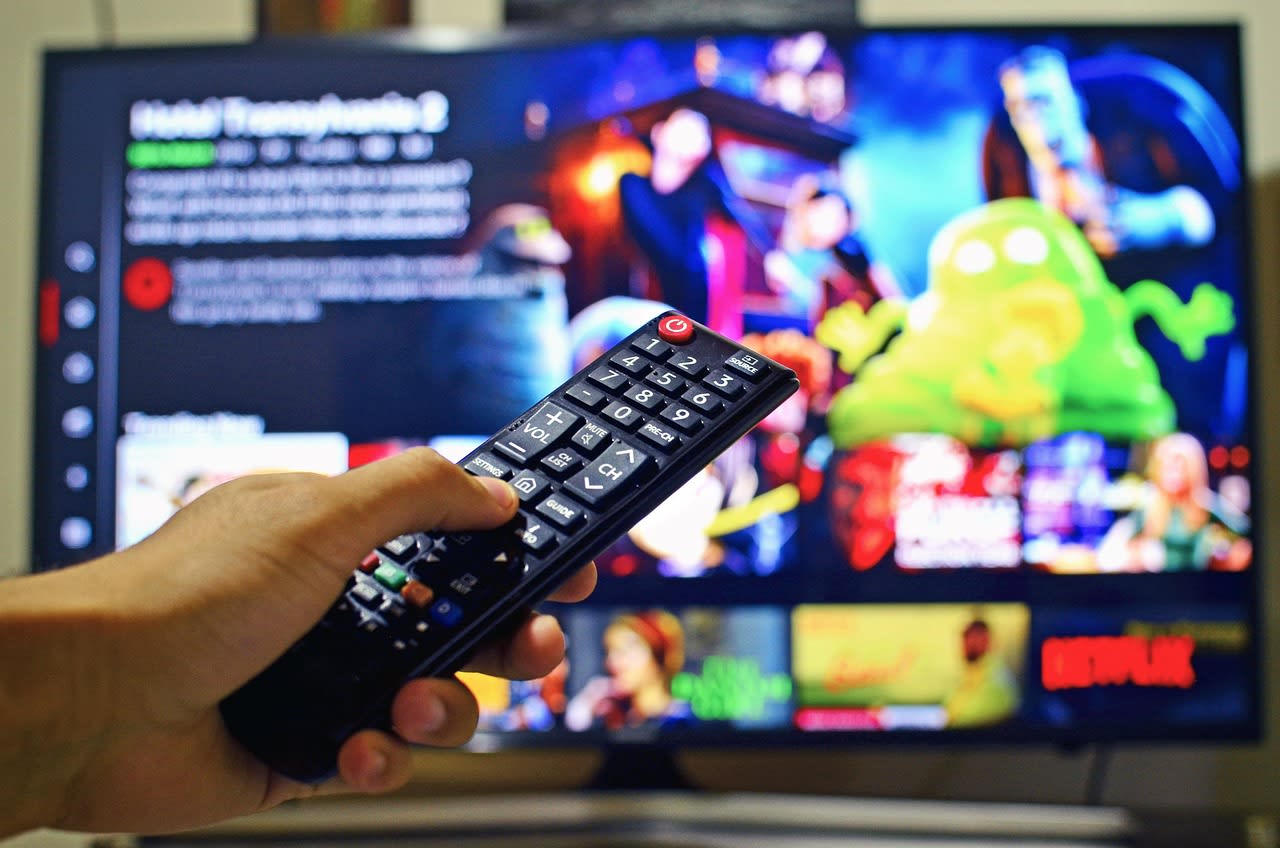
Okay, let's get practical. How do you actually preserve streaming content before it disappears? I've tested dozens of approaches over the years, and here's what actually works in 2026.
Screen recording is the most straightforward method, but it has limitations. The quality won't match the original stream, and it's time-consuming. For occasional use, tools like OBS Studio work well, but you're essentially creating a new recording rather than preserving the original digital file.
More advanced approaches involve accessing the actual video files. Streaming services deliver content in segments—usually small video files that get stitched together during playback. Specialized tools can capture these segments and reassemble them. The quality is much better since you're getting the original encoded video, but this method requires more technical knowledge.
Then there's the DRM problem. Most major streaming services use encryption to prevent exactly this kind of preservation. Breaking DRM is legally questionable in many jurisdictions, but from a purely technical perspective, tools exist that can handle common encryption schemes. I won't name specific tools here because the landscape changes rapidly, but communities dedicated to digital preservation are where you'll find current information.
What's interesting is how the arms race has evolved. As streaming services implement new protections, preservation tools adapt. It's a constant cycle of innovation and counter-innovation.
Web Scraping and Automation for Media Preservation
If you're serious about preserving content at scale, automation is essential. Manually saving each episode of a series isn't practical. This is where web scraping and automation platforms come in.
At its core, web scraping for media preservation involves programmatically accessing streaming content and saving it systematically. You need to handle authentication, navigate the service's interface, manage downloads, and organize the saved files. It's complex, but platforms exist that can simplify the process.
For instance, Apify's automation platform provides tools that can handle many of the technical challenges. Their infrastructure manages proxy rotation to avoid IP bans, handles JavaScript rendering (which many streaming sites rely on), and can run extraction tasks in the cloud. While they don't provide ready-made scrapers for copyrighted content for obvious legal reasons, their tools give technical users the building blocks to create preservation systems.
The key advantage of using a platform like this is reliability. When you're dealing with hundreds of episodes or multiple series, you need something that won't fail halfway through. Automated systems can retry failed downloads, organize files consistently, and even monitor for new content.
But here's an important caveat: even with the best tools, you'll face obstacles. Streaming services actively try to block automated access. You'll need to mimic human behavior, respect rate limits, and be prepared for the occasional block. It's a game of cat and mouse, and you're the mouse trying to preserve cheese that the cat might take away at any moment.
Legal and Ethical Considerations
We can't talk about this topic without addressing the elephant in the room: is preserving streaming content legal? The answer, unfortunately, is "it depends."
Copyright law varies by country, but generally, making personal copies of content you have legal access to falls into a gray area. The Digital Millennium Copyright Act (DMCA) in the United States specifically prohibits circumventing DRM, even for personal use. Other countries have similar provisions.
From an ethical perspective, many preservationists argue that when content is at risk of permanent loss, preservation serves the public good. Museums and archives have special exemptions for preservation in some jurisdictions, but individuals typically don't.
My personal approach—and this isn't legal advice—is to focus on content that's genuinely at risk. Mainstream blockbusters that get physical releases or multiple streaming licenses are less urgent than niche originals that exist on only one platform. The original Reddit post highlights exactly this: digital-only exclusives are the most vulnerable.
There's also the question of what you do with preserved content. Keeping it for personal use is one thing; distributing it is another entirely. Most preservation communities emphasize personal archiving rather than sharing, though some operate on the principle that content should be preserved in multiple locations to ensure its survival.
Building Your Personal Digital Archive
Let's say you decide to preserve some content. How do you actually build a sustainable personal archive? I've maintained mine for years, and here's what I've learned.
First, storage. You'll need lots of it. A single season of a high-quality show can be 50GB or more. For serious archiving, consider a NAS (Network Attached Storage) system. Synology NAS Systems offer excellent solutions for home media servers. They're reliable, expandable, and designed for continuous operation. Start with something that has at least four drive bays—you'll thank yourself later when you need to expand.
Organization is crucial. Create a consistent naming scheme and folder structure. I use: Media Type/Show Name/Season/Episode. Include metadata like resolution, source, and date acquired. This might seem obsessive, but when you have terabytes of content, being able to find what you need is essential.
Backup is non-negotiable. RAID (Redundant Array of Independent Disks) in your NAS protects against drive failure, but it's not a backup. You need at least one additional copy, preferably stored offsite or in the cloud. Services like Backblaze offer unlimited backup for a flat fee, which is perfect for media archives.
Quality matters. When preserving content, aim for the highest quality available. Storage gets cheaper every year, but you can't go back and recapture something at higher quality after it's gone. If you have to choose between saving more shows at lower quality or fewer shows at higher quality, go with quality. Future-proof your archive.
When Technical Skills Are Limited: Alternative Approaches
Not everyone has the technical skills or time to build automated preservation systems. If that describes you, don't worry—you still have options.
One approach is to support organizations that do legal preservation. The Internet Archive and various media preservation nonprofits work to save digital content. They often have legal agreements or work with content that's in the public domain. Supporting these organizations helps ensure broader cultural preservation.
Another option: community collaboration. The original Reddit post was in r/DataHoarder, which is part of a larger ecosystem of preservation communities. These groups often organize to save content that's at risk. By participating in these communities, you can contribute to collective preservation efforts even if you're not doing the technical work yourself.
You can also hire help. If there's specific content you want preserved but lack the skills to do it yourself, finding a technical expert on Fiverr is an option. Look for freelancers with experience in web scraping, automation, or media archiving. Be clear about what you want preserved and provide access to the content. This approach costs money, but for irreplaceable content, it might be worth it.
Finally, advocate for change. Contact streaming services and ask about their preservation policies. Support legislation that creates exceptions for digital preservation. The more people express concern about disappearing content, the more likely we are to see systemic solutions.
Common Mistakes and How to Avoid Them
I've seen plenty of people start preservation projects only to run into avoidable problems. Here are the most common mistakes and how to steer clear of them.
First, starting too big. Don't try to archive an entire streaming service. Pick one show, or even one season, and get that process working perfectly before scaling up. Preservation is a marathon, not a sprint.
Second, neglecting organization. I mentioned this earlier, but it bears repeating: without good organization, your archive becomes unusable. Implement your naming convention and folder structure from day one. Trust me—reorganizing terabytes of data is a nightmare you want to avoid.
Third, assuming your storage is reliable. All hard drives fail eventually. Use enterprise-grade drives for your archive, implement RAID for redundancy, and maintain proper backups. Western Digital Red Pro Drives are specifically designed for NAS systems and offer better reliability than consumer drives.
Fourth, ignoring the legal landscape. Understand the laws in your jurisdiction. While enforcement against individuals for personal preservation is rare, it's not impossible. Make informed decisions about what you preserve and how you use it.
Fifth, going it alone. The preservation community is vast and generally helpful. When you run into technical problems, ask for help. Share what you learn. Preservation works best as a collective effort.
The Future of Digital Preservation
Where does all this leave us as we look toward the rest of 2026 and beyond?
The trend is clear: more content will be digital-only, and more of it will disappear. Streaming services are consolidating, which often means content gets removed during mergers or strategy shifts. The economic pressures that lead to content removal aren't going away.
But there are hopeful signs too. Preservation tools are becoming more accessible. Storage continues to get cheaper. Awareness of digital fragility is growing—posts like the one on r/DataHoarder get thousands of upvotes because people are starting to understand what's at stake.
I believe we'll see more formal preservation efforts emerge. Maybe streaming services will offer "archive tiers" where you can pay extra to download content you want to keep. Perhaps libraries will get expanded digital preservation rights. The current system isn't sustainable, and eventually, something will have to give.
In the meantime, the responsibility falls to us—the viewers, the fans, the people who care about preserving culture. We can't save everything, but we can save what matters to us. We can build personal archives, support preservation organizations, and advocate for change.
Taking Control of Your Digital Media
That Reddit user felt helpless when their show disappeared. I get it—we've all been there. But here's the thing: you don't have to be passive. You can take steps to protect the media that matters to you.
Start small. Pick one show that's important to you and figure out how to preserve it. Learn the basics of whatever method works for your technical level. Join a community where you can ask questions and learn from others.
Invest in storage. It's the foundation of any preservation effort. Get reliable drives, set up proper backups, and think long-term.
Most importantly, change your mindset about digital content. That show you're streaming isn't yours—you're just borrowing it. If you want to truly own it, you need to take active steps to preserve it. In 2026, ownership means responsibility for preservation.
The digital landscape is ephemeral by design. Shows appear and disappear based on algorithms and balance sheets. But culture matters. The stories we tell matter. And with the right tools and approach, we can ensure they don't vanish into the digital void.
So the next time you find a show you love, especially if it's a streaming exclusive, ask yourself: what happens if this disappears tomorrow? Then take action. Your future self—and maybe future generations—will thank you.
