

The Spotify Preservation Project That's Shaking Up Data Hoarding
If you've been anywhere near r/DataHoarder lately, you've seen the buzz. Anna's Archive—that shadow library known for preserving knowledge—has apparently done something monumental. They claim to have backed up all of Spotify. Not just the music files themselves (that's a whole different legal minefield), but the metadata, the playlists, the artist information, the entire structural database that makes Spotify work.
And now they're calling for seeders. That Reddit post with 600+ upvotes isn't just hype—it's a genuine call to action from a community that understands digital preservation in a way most people don't. When streaming services can disappear content overnight (and they do), having an independent archive matters.
But here's what most articles won't tell you: backing up Spotify isn't about downloading MP3s. It's about scraping one of the world's most sophisticated web applications at a scale that boggles the mind. We're talking about millions of API calls, sophisticated proxy rotation, and handling dynamic JavaScript content—all while avoiding detection and rate limiting.
In this deep dive, I'll walk you through exactly what this operation entails from a technical perspective. I've been scraping websites professionally for over a decade, and I can tell you: this isn't amateur hour. This is next-level data preservation that pushes the boundaries of what's technically possible.
Understanding What "Backing Up Spotify" Actually Means
Let's clear up the biggest misconception right away. When data hoarders talk about backing up Spotify, they're not talking about downloading 100 million audio files. That would be petabytes of data and a legal nightmare. No, what they're after is far more interesting: the metadata.
Think about it. Spotify knows everything about music. They know which songs are on which albums (including multiple versions and regional variations). They know artist biographies, discographies, related artists, and genre classifications. They have millions of user-created playlists organized by mood, activity, decade, and theme. They have listening statistics, popularity rankings, and editorial recommendations.
This metadata represents decades of music industry knowledge and cultural organization. And it's all locked inside Spotify's proprietary systems. If Spotify disappeared tomorrow (unlikely, but possible), this organizational structure would vanish with it.
From what I've gathered from the community discussions, Anna's Archive appears to have scraped:
- Artist profiles and biographies
- Album listings with track information
- Playlist data (structure, not necessarily the actual playlist contents)
- Genre and mood classifications
- Related artist networks
- Release dates and label information
This is incredibly valuable for music researchers, historians, and even alternative music platforms. It's the modern equivalent of backing up the Library of Congress's card catalog—not the books themselves, but the system for finding them.
The Technical Marvel: How You Scrape Spotify at Scale
Now here's where things get technically fascinating. Spotify isn't a simple website you can crawl with wget. It's a sophisticated single-page application (SPA) that loads content dynamically via JavaScript. Every click triggers API calls, and those APIs are heavily protected.
To scrape Spotify successfully at this scale, you need several technical components working in harmony:
Proxy Infrastructure That Doesn't Fail
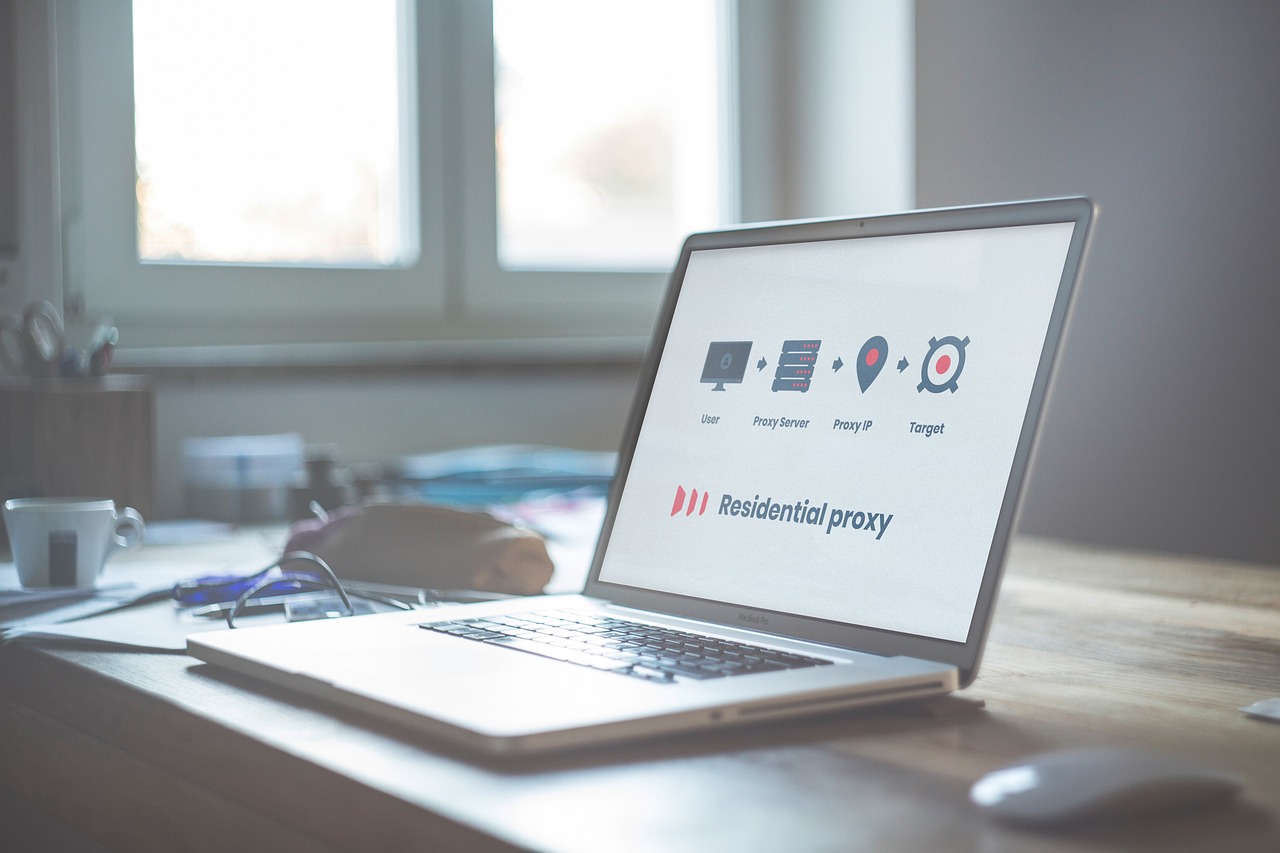
Spotify's anti-scraping systems are no joke. They detect unusual patterns, block IP addresses, and implement rate limiting. To scrape millions of pages, you need thousands of rotating proxies. Residential proxies work best because they look like real user traffic, but they're expensive at this scale.
Some hoarders in the discussion mentioned using a mix of residential proxies, data center proxies, and even Tor exit nodes (though Tor is painfully slow for large-scale scraping). The key is rotation—switching IP addresses frequently enough to avoid detection but not so frequently that you trigger other security measures.
Headless Browser Automation
Because Spotify loads content dynamically, you can't just make HTTP requests. You need a headless browser that can execute JavaScript, wait for elements to load, and simulate real user interactions. Puppeteer and Playwright are popular choices here.
But there's a catch: headless browsers are resource-intensive. Running thousands of them simultaneously requires serious computing power. The community speculates that Anna's Archive likely used a distributed system, possibly across multiple cloud providers or volunteer systems.
Rate Limiting and Polite Scraping
This is where ethics meet technical requirements. Even if you can scrape a site aggressively, should you? Most ethical scrapers implement delays between requests to avoid overwhelming the target server. For a project this size, that means the scraping operation likely ran for weeks or months, not days.
One Reddit commenter mentioned they found evidence of the scraping in their server logs—requests coming at consistent intervals, always from different IPs, always requesting different artist pages. It was methodical, patient, and clearly designed to minimize impact.
The Legal Gray Area Nobody Wants to Talk About

Let's address the elephant in the room. Is this legal? Well, it's complicated—and that's putting it mildly.
Scraping publicly accessible data has been in legal limbo for years. The landmark hiQ Labs v. LinkedIn case established that scraping publicly available data might be legal, but that ruling has limitations. Spotify's terms of service explicitly prohibit scraping, but whether those terms are enforceable against non-users is debatable.
Here's my take, based on watching these legal battles unfold: metadata about creative works often exists in a different legal category than the works themselves. Facts about music—release dates, track lengths, artist names—might not be copyrightable in the same way the music is.
But there's another angle: database rights. In some jurisdictions (particularly Europe), the organization and structure of a database is protected separately from its contents. Spotify's meticulous categorization might qualify for this protection.
The data hoarding community's perspective, as expressed in the Reddit comments, tends to focus on preservation rather than profit. They're not selling this data or using it commercially. They're creating an archive—a backup of cultural information. Whether that argument holds up legally remains to be seen.
Why This Matters for Digital Preservation
You might be thinking: "It's just music metadata. Why does this matter?" Let me give you a historical example that changed how I think about digital preservation.
In the early 2000s, there was a music database called All Music Guide (AMG). It was comprehensive, meticulously curated, and incredibly valuable for music lovers. Then it got bought, rebranded, and eventually much of its data became inaccessible behind paywalls and broken systems. Years of curation nearly lost.
Spotify represents the AMG of our generation—but on a much larger scale. Their metadata isn't just a list; it's a living, evolving map of musical relationships. When an artist dies and their catalog gets re-evaluated, that's reflected in Spotify's recommendations. When a genre evolves, Spotify tracks those connections.
Preserving this isn't about stealing. It's about ensuring that this cultural mapping survives corporate decisions, licensing changes, and platform shutdowns. Several Reddit commenters shared stories of losing access to curated playlists when services shut down. One person mentioned Grooveshark specifically—years of carefully organized music, gone overnight.
The hard truth is that corporations aren't reliable stewards of cultural data. Their priorities shift with market demands. What's valuable today might be deprecated tomorrow. Community-driven archives like what Anna's Archive is attempting provide an alternative preservation path.
Practical Guide: How to Contribute Responsibly
So you've read the Reddit call to action and you want to help. What should you actually do? And more importantly, what should you avoid doing?
Seeding, Not Scraping
For most people, the responsible way to contribute is through seeding, not attempting your own scraping operation. The initial data collection has already been done (allegedly). Now it needs distribution through torrents.
If you decide to seed:
- Use a VPN. Seriously. Don't expose your home IP address.
- Consider seedbox hosting if you have the budget. It keeps the traffic off your home network.
- Seed responsibly—many clients let you limit upload speeds so you don't saturate your connection.
If You Must Scrape...
Maybe you're a developer wanting to understand the technical challenge. If you're going to experiment with scraping music metadata (from any source, not necessarily Spotify), here are some best practices:
First, respect robots.txt. It's not legally binding, but it's a good-faith gesture. Second, implement delays between requests—I usually recommend 2-5 seconds minimum. Third, identify your scraper clearly in the user-agent string. Being transparent is better than pretending to be a regular browser.
For handling the technical complexity of large-scale scraping, tools like Apify can manage the infrastructure headaches. They handle proxy rotation, CAPTCHA solving, and headless browser management, letting you focus on the data extraction logic. I've used them for research projects where I needed to scrape thousands of pages without getting blocked.
Alternative Data Sources
Here's something the Reddit discussion didn't mention: Spotify isn't the only source of music metadata. MusicBrainz is a community-driven database that's already open and freely accessible. Last.fm has extensive listening data. Discogs has incredible detail about physical releases.
If you're interested in music data preservation, consider contributing to these open projects instead of or in addition to seeding the Spotify archive. They're legal, ethical, and could benefit from the data hoarding community's expertise.
Common Questions from the Data Hoarding Community
Reading through the Reddit comments, several questions kept coming up. Let me address the most important ones directly.
"Is this actually all of Spotify?"
Probably not. "All of Spotify" likely means all the publicly accessible metadata, not necessarily every internal database. There are almost certainly gaps—regional variations, recently added content, or data behind additional authentication layers.
"What format is the data in?"
Based on similar projects, it's probably structured data (JSON, CSV, or a database dump) rather than raw HTML. The value is in the structured information, not the web pages themselves.
"How big is the dataset?"
Estimates vary, but music metadata is surprisingly compact. Even millions of artists, albums, and tracks might only be tens of gigabytes when stripped of images and compressed. The Reddit discussion suggested the initial torrent might be in the 50-100GB range, though that's speculation.
"Can I use this to rebuild Spotify?"
Not really. You'd have the map but not the territory. You could theoretically build a music discovery interface with the metadata, but you'd still need the actual audio files from legitimate sources.
"What about the ethical concerns?"
This was the most heated part of the Reddit discussion. Some argued this is straightforward piracy. Others saw it as digital archaeology. My perspective: context matters. Using this data to compete with Spotify commercially would be problematic. Using it for research, preservation, or to build complementary tools might be more defensible.
The Future of Music Metadata Preservation
Looking ahead to 2025 and beyond, this Spotify backup represents something bigger than one dataset. It's part of a growing movement toward decentralized cultural preservation.
We're seeing similar efforts with YouTube metadata, podcast archives, and even social media content. As more of our cultural conversation moves to corporate platforms, there's increasing interest in creating independent backups.
The technical barriers are dropping, too. Five years ago, scraping a site like Spotify at this scale would have required a dedicated team of engineers. Today, with tools like cloud-based scraping platforms and affordable proxy services, it's within reach of determined individuals.
But there's a catch: as scraping becomes easier, platforms are fighting back harder. We're entering an arms race between preservationists and platform security teams. The next few years will likely see more sophisticated blocking techniques—and equally sophisticated workarounds.
For those interested in this space, I recommend investing in good technical resources. Books like Web Scraping with Python provide solid foundations, while Proxies for Web Scraping cover the infrastructure side. And if you need custom scraping solutions but don't want to build them yourself, you can always hire a developer on Fiverr who specializes in this niche.
Preserving Our Digital Commons
The Anna's Archive Spotify backup—whether completely accurate or partially successful—represents a fascinating moment in digital preservation. It's not about getting free music. It's about recognizing that the organizational knowledge surrounding our culture is valuable and vulnerable.
As one Reddit commenter put it: "We're not hoarding data. We're preventing cultural amnesia." That might sound dramatic, but history shows they're not wrong. How much early internet culture has already been lost to dead links and shuttered platforms?
The technical achievement here is impressive, but the philosophical implications are what really matter. In a world where access to information is increasingly mediated by corporations, community-driven archives offer an alternative model. They're messy, legally ambiguous, and technically challenging—but they represent a form of digital resilience.
Whether you choose to seed this particular torrent or not, the conversation it has sparked is valuable. It forces us to ask important questions: Who gets to preserve culture? What responsibilities do platforms have as cultural stewards? And how do we balance copyright with preservation?
These questions don't have easy answers. But as more of our lives move online, we can't afford not to ask them.
