
The Binary Promise That Misses the Point
So Elon Musk says by 2026 we won't even bother coding—AI will just create the binary directly. Sounds futuristic, right? Until you actually think about what that means. I've been building software for fifteen years, and when I first heard this, my immediate reaction was: "Wait, haven't we already solved this?"
Because here's the thing: compilers already do exactly what Musk is describing. They take human-readable instructions and turn them into machine code. The difference is, compilers do it with formal languages, deterministic transforms, and—most importantly—checkability. Same inputs, same output. If something's wrong, you get an error at a specific line with a specific reason.
The "skip the code" pitch is basically saying: let's replace this transparent, debuggable system with a black box that spits out binaries. And honestly? That sounds less like progress and more like forgetting everything we've learned about building reliable software.
What Compilers Actually Do (That AI Can't)
Let me walk you through what happens when you compile code. I'm not talking about the simplified version—I mean what actually happens in production systems. When GCC or Clang processes your C++ code, it's not just translating. It's performing dozens of optimization passes, each with mathematically proven correctness. It's checking type safety, memory alignment, calling conventions.
And here's the critical part: every single step is deterministic and reproducible. If you give the same source code to the same compiler with the same flags, you get the exact same binary. Every time. This isn't just convenient—it's essential for debugging, for security audits, for understanding why your program crashed at 3 AM.
Now imagine an AI generating binaries directly. How do you debug that? How do you know why it chose one instruction sequence over another? How do you verify it's correct? You can't—not in any meaningful way. You're left staring at assembly code trying to reverse-engineer decisions that were never documented.
The Debugging Problem Nobody's Talking About
Here's where the rubber meets the road. I've worked with AI coding assistants—GitHub Copilot, Tabnine, the whole lot. They're great for boilerplate. But when they generate something wrong? Debugging AI-generated code is already a special kind of hell.
The AI doesn't think in terms of algorithms or data structures. It thinks in terms of statistical patterns. So when it produces incorrect code, the error isn't logical—it's statistical. The fix isn't about understanding the problem domain—it's about nudging the prompt until you get different statistics.
Now scale that up to entire binaries. Your program crashes. What do you do? You can't look at source code because there isn't any. You can't reason about the algorithm because it was never explicitly designed. You're debugging a statistical model's output, not a programmer's intent.
And let me tell you from experience: debugging without source is like surgery with oven mitts. Possible? Maybe. Efficient? Not a chance.
Source Code as Communication (Not Just Instruction)
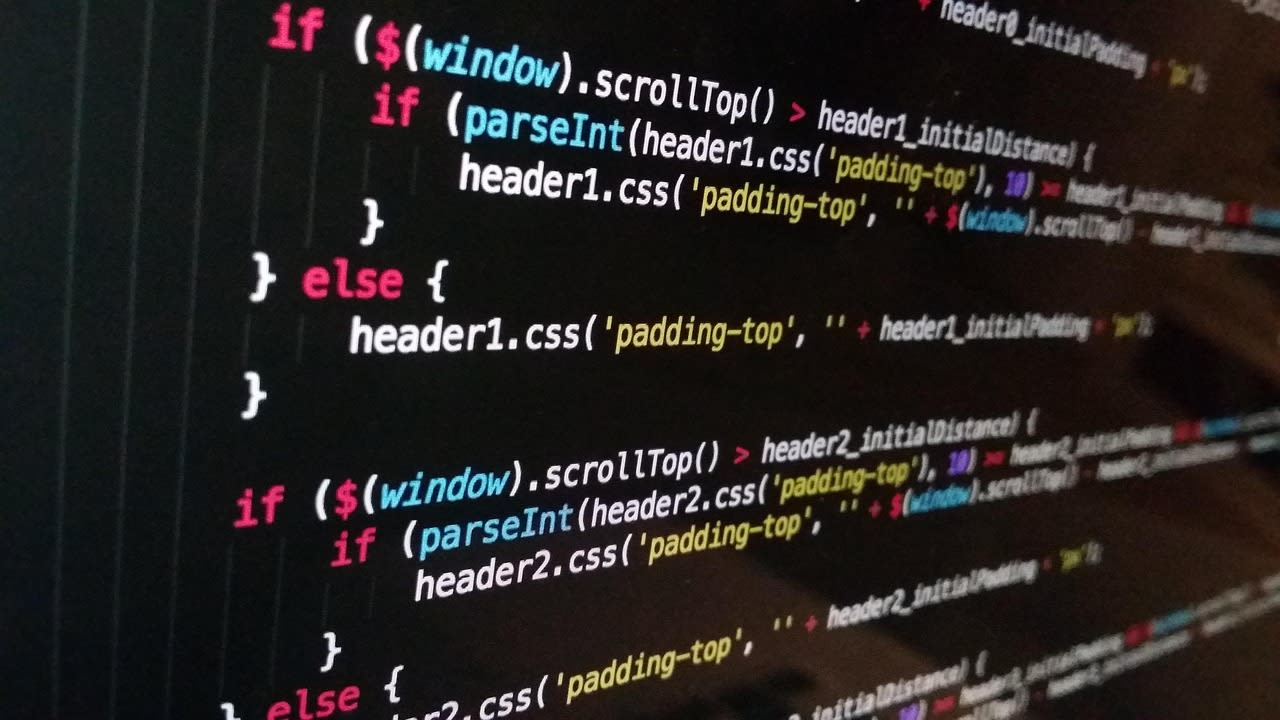
This is what the "skip the code" crowd misses completely. Source code isn't just instructions for computers. It's communication between developers. It's documentation. It's the record of decisions made and trade-offs considered.
When I inherit a codebase, I'm not just looking for what the code does. I'm looking for why it does it that way. I'm looking for the constraints the original developer faced. I'm looking for the assumptions baked into the design.
AI-generated binaries have none of this. They're pure function without rationale. They're answers without questions. And in software development—especially in 2026 when systems are more complex than ever—understanding the why is often more important than the what.
The Integration Nightmare
Let's talk about APIs and integration, since that's where this gets really messy. Modern software isn't monolithic binaries. It's services talking to services, APIs calling APIs, libraries depending on libraries.
When you're integrating systems, you need to understand interfaces. You need to understand data formats. You need to understand error handling. Source code gives you all of this. It shows you the contract between components.
AI-generated binaries? They might implement the same interface, but you have no idea how. Did it use the most efficient serialization? Did it handle edge cases properly? Did it implement retry logic correctly? You can't know without source.
And what about when you need to modify behavior? With source code, you change a function and recompile. With AI binaries, you... what? Regenerate the entire thing and hope it still integrates? That's not development—that's gambling.
The Security Implications
This should keep every CISO awake at night. Security auditing of binaries is notoriously difficult. Even with excellent tooling, reverse engineering is time-consuming and error-prone.
Now imagine every component in your system is an AI-generated binary. How do you audit for vulnerabilities? How do you check for compliance? How do you know what the software actually does?
Source code lets security teams use static analysis. It lets them review logic. It lets them understand data flows. Binaries hide all of this behind layers of optimization and transformation.
And here's the real kicker: if the AI training data included vulnerable code patterns, those patterns will show up in the binaries. But you won't know until someone exploits them. At that point, fixing the issue means... regenerating everything? That's not a security model—that's a liability.
What AI Should Actually Do for Developers

So if skipping code is wrong, what's right? In my experience, AI should augment the development process, not replace the artifacts. Here's what actually works:
First, AI can generate better source code. Not binaries—actual, readable, maintainable source code. It can suggest optimizations. It can write tests. It can document complex logic.
Second, AI can help with the boring parts. Configuration files. Build scripts. Deployment pipelines. These are areas where the "why" is less important than the "what works."
Third—and this is the most promising area—AI can help understand existing codebases. It can answer questions like "Why does this function handle errors this way?" or "What's the performance implication of this data structure choice?"
These are tools that make developers more effective. They don't replace the need for source code—they enhance its value.
The Practical Middle Ground
So what should you actually do in 2026? Based on what I'm seeing in the industry, here's the practical approach:
Use AI for prototyping. Generate initial implementations quickly, then refine them manually. The AI gives you a starting point; you provide the craftsmanship.
Maintain source control for everything. Even AI-generated code should be committed, reviewed, and maintained like any other code. Treat it as a collaboration between human and machine.
Invest in better tooling. We need debuggers that understand AI-generated code patterns. We need static analyzers that can work with statistical code generation. We need better ways to document the reasoning behind AI suggestions.
And most importantly: never accept binaries without source. That should be non-negotiable. If a vendor offers AI-generated binaries, demand the source. If they can't provide it, walk away.
Common Questions (And Real Answers)
"But won't AI eventually get good enough?"
Maybe. But "good enough" doesn't mean skipping source code. It means generating better source code. The fundamental need for human-readable, debuggable, maintainable artifacts doesn't go away.
"What about small scripts or one-off tasks?"
Even then, I'd argue for keeping source. Those one-off tasks have a habit of becoming critical. And debugging a script you didn't write is frustrating enough without adding binary reverse engineering to the mix.
"Isn't this just resistance to change?"
No, it's learning from history. We've been here before with visual programming, with code generators, with "write once, run anywhere" promises. The patterns that work are the ones that preserve transparency and control.
"What about legacy systems where source is lost?"
That's a cautionary tale, not a goal. We've spent decades dealing with the nightmare of maintaining binary-only software. Why would we intentionally create more of it?
Looking Forward (Realistically)
By 2026, AI will transform software development. But not by eliminating source code. By making it better. By helping us write more correct code faster. By catching bugs earlier. By documenting more thoroughly.
The compilers of 2026 won't be replaced by AI. They'll be enhanced by it. Imagine a compiler that uses AI to suggest better optimizations based on your specific use case. Or a debugger that uses AI to explain why a particular optimization caused a bug.
These are real advancements. They preserve what works—deterministic transforms, formal languages, debuggable artifacts—while adding intelligence to the process.
The "skip the code" vision misunderstands what makes software development work. It's not about translating intent to binary. It's about creating systems that humans can understand, modify, and trust. Source code isn't an implementation detail—it's the foundation.
So when someone tells you we'll skip coding by 2026, ask them how they plan to debug at 3 AM. Ask them how they'll audit for security. Ask them how they'll maintain systems over decades. The answers will tell you everything you need to know about whether this is progress or amnesia.