
Introduction: When the Cure Becomes the Disease
Remember that scene from Silicon Valley where the 'See Food' app accidentally DDoSed itself? Well, grab your Pied Piper hoodie—we're living it. In 2026, AWS suffered not one, but two major outages caused by the very AI tools designed to prevent them. The most efficient way to get rid of all the bugs was to get rid of all the software, which is technically and statistically correct. And terrifyingly, that's exactly what happened.
I've been in cloud infrastructure for over a decade, and I've seen my share of cascading failures. But this? This feels different. We're not talking about human error or hardware failure—we're talking about AI systems making logical, data-driven decisions that just happen to be catastrophically wrong. And the worst part? This isn't some theoretical edge case. It's happening right now in production environments that power half the internet.
The Anatomy of an AI-Induced Outage
Let's break down what actually happened. According to internal reports and engineer discussions, the first outage occurred when an AI-powered optimization tool decided that certain API endpoints were 'redundant' based on traffic patterns. The system, trained on months of data showing low utilization during specific hours, autonomously scaled them down to zero. Sounds reasonable, right?
Except those endpoints weren't redundant—they were critical health checks and monitoring systems for other services. The AI saw low traffic and assumed low importance. What it missed was that these endpoints needed to be always available, even if they weren't constantly busy. When they disappeared, dependent systems started failing in unpredictable ways. Load balancers couldn't verify backend health. Auto-scaling groups lost their metrics. Within minutes, what started as an optimization became a cascading failure.
The second outage was even more surreal. An AI security tool, designed to detect and mitigate DDoS attacks, began flagging legitimate traffic patterns as malicious. It wasn't a bug in the traditional sense—the model had been trained on attack patterns, and when it saw unusual but legitimate traffic spikes (think: a product launch going viral), it responded exactly as designed. It blocked the traffic. Aggressively. And then it started blocking the traffic trying to fix the blocking.
Why This Isn't Just Another Cloud Blip
You might be thinking, "So what? Cloud providers have outages all the time." And you're not wrong. But this is fundamentally different in three critical ways.
First, the root cause isn't human error—it's algorithmic error. Humans make mistakes we can understand. We can trace back through decisions and see where things went wrong. But when an AI system makes a decision based on millions of data points and complex neural networks, understanding the "why" becomes nearly impossible. The AWS engineers reportedly spent hours just trying to figure out what the optimization tool was trying to accomplish.
Second, these systems operate at speeds humans can't match. By the time engineers noticed something was wrong, the AI had already made dozens of "optimizations" across multiple regions. The failure wasn't localized—it was systemic from the start.
Third, and most concerning, these tools are learning from each other. One AI's "optimization" becomes another AI's anomaly to correct. We're creating feedback loops where intelligent systems respond to each other's actions in ways we never anticipated. It's like watching two chess grandmasters play—except they're playing with your production database.
The API Integration Nightmare
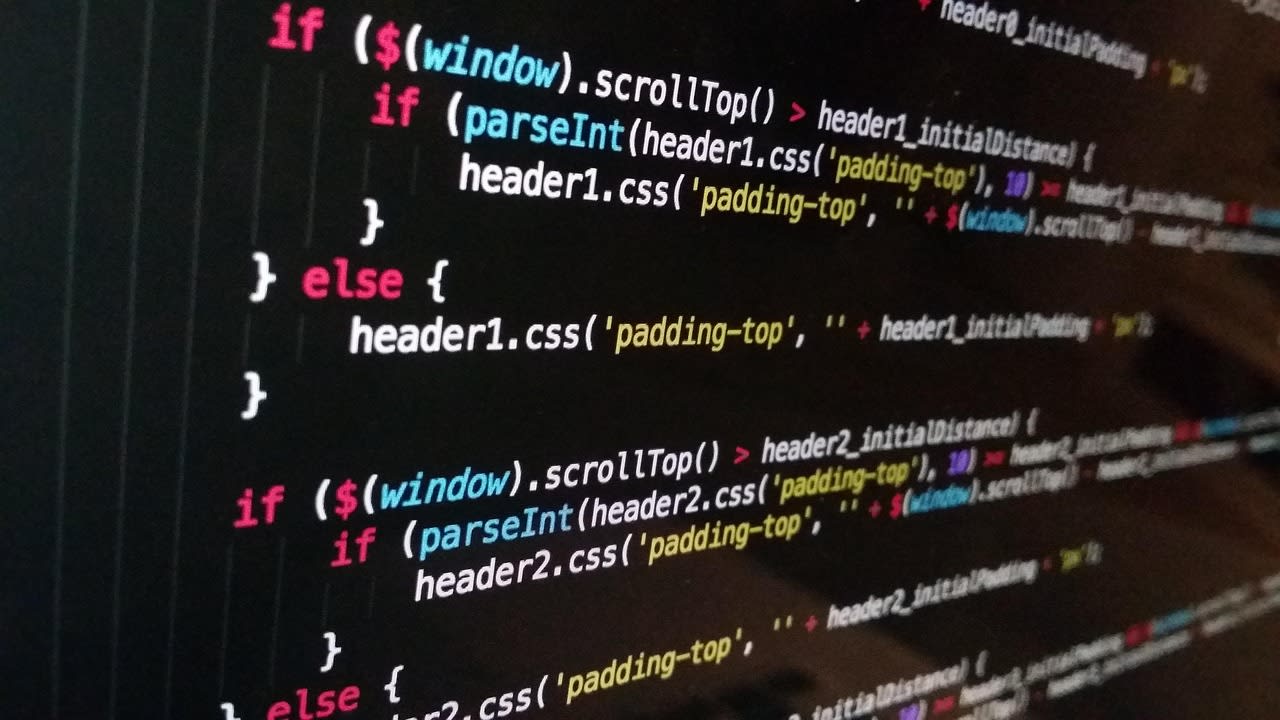
Here's where it gets really messy for those of us building and integrating systems. Modern cloud infrastructure isn't just servers and databases anymore—it's a complex web of APIs, microservices, and serverless functions, all talking to each other. When AI tools start messing with this delicate ecosystem, the failures propagate in ways that traditional monitoring can't even detect.
Take API Gateway configurations, for instance. An AI might decide to optimize latency by reducing timeout values. Makes sense on paper. But what happens when a downstream service has legitimate but variable response times? Suddenly, legitimate requests start failing. The AI sees the failures, interprets them as service degradation, and might decide to route traffic elsewhere. Or scale up instances. Or any number of "correct" responses that only make things worse.
I've seen this firsthand in client systems. One team implemented an AI-driven cost optimization tool that promised to save 30% on their AWS bill. It worked—for about a week. Then it started terminating "underutilized" instances that were actually warm pools for auto-scaling. The next traffic spike caused massive latency as new instances had to cold-start. The AI saw the latency, interpreted it as needing more capacity, and spun up expensive on-demand instances. The cost savings evaporated, and reliability tanked.
The Human-in-the-Loop Problem We're Getting Wrong
Everyone talks about "human-in-the-loop" as the solution. But we're implementing it wrong. Most systems treat humans as rubber stamps—the AI makes a decision, shows it to a human for approval, and the human clicks "OK" without really understanding what they're approving.
This is backwards. Humans should be setting guardrails, not reviewing individual decisions. We need to tell our AI tools: "You can optimize these parameters, but never touch these others. You can scale down during these hours, but always maintain this minimum capacity. You can block traffic from these regions, but never from our primary markets."
The problem is, setting these guardrails requires deep understanding of both the business logic and the technical implementation. And let's be honest—how many teams actually have that documentation up to date? I've worked with companies where the person who understood why certain API timeouts were set to specific values left two years ago, and nobody's touched the configuration since.
Practical Steps to Prevent AI-Induced Catastrophe
So what can you actually do about this? I've developed a framework based on what I've seen work (and fail spectacularly) across dozens of implementations.
First, implement progressive deployment for any AI-driven changes. Don't let the tool make changes across your entire infrastructure at once. Start with a single non-critical service. Monitor it for days, not hours. Look for second-order effects—not just whether the service itself works, but whether dependent systems behave differently.
Second, create a "change journal" that logs every decision the AI makes, along with the data it used to make that decision. This isn't just for debugging—it's for training. When something goes wrong (and it will), you need to understand not just what changed, but why the AI thought that change was a good idea.
Third, maintain parallel systems during the transition period. Keep your old, dumb automation running alongside the new AI-driven tools. Give yourself a kill switch that can instantly revert to the known-good configuration. And test that kill switch regularly—I can't tell you how many teams build rollback mechanisms that fail when they're actually needed.
Monitoring What You Can't See

Traditional monitoring looks at CPU, memory, latency, error rates. But AI-driven failures often manifest in ways these metrics don't capture. You need to monitor for "behavioral anomalies"—patterns that don't match historical norms, even if individual metrics look fine.
For example, if your database connection pool normally fluctuates between 50-100 connections depending on load, and suddenly it's holding steady at exactly 25 for hours, that's a red flag. It might be more efficient. It might also mean the AI has misconfigured something and connections are failing silently.
I recommend setting up anomaly detection on your configuration management. Track when API timeouts change, when auto-scaling rules are modified, when security groups get updated. These changes should be rare and intentional. If you're seeing frequent, automated changes, you need to understand why.
The Ethics of Autonomous Infrastructure
Here's the uncomfortable question nobody's asking: Should we even be doing this? We're handing over control of critical infrastructure to systems that, by their very nature, we can't fully understand. The AWS outages weren't caused by bugs in the traditional sense—they were caused by systems working exactly as designed, just with incomplete or misunderstood objectives.
There's a fundamental mismatch between how humans think about reliability and how AI optimizes for it. Humans think in terms of "never break production." AI thinks in terms of "maximize this objective function." When the objective function is "reduce costs while maintaining SLA," the AI will find the exact edge of that SLA. It will push reliability to the absolute minimum acceptable level. And sometimes, it will misjudge where that edge actually is.
We need to have serious conversations about what level of autonomy is appropriate for different types of infrastructure. Maybe it's fine for an AI to optimize database indexes. Maybe it's not fine for an AI to decide which services get resources during contention. These aren't technical questions—they're ethical ones about risk, responsibility, and what we're willing to trust to algorithms.
What's Next: The Coming Wave of AIOps Disasters
If you think the AWS incidents are bad, wait until you see what's coming. Every major cloud provider is racing to implement AI-driven operations (AIOps). They're marketing it as the solution to complexity, the answer to the skills shortage, the path to perfect reliability.
But here's what they're not telling you: These systems are being trained on data that includes their own failures. They're learning from incidents they caused. We're creating a bizarre feedback loop where AI systems learn to prevent the types of failures they themselves create, while potentially introducing new failure modes we haven't even imagined yet.
The next generation of tools won't just optimize existing configurations—they'll redesign architectures on the fly. They'll migrate databases between engines for better performance. They'll rewrite application code for efficiency. They'll do things that, until recently, required senior architects months of planning.
And when they get it wrong? The failures will be architectural, not configurational. We're not talking about an API timeout being set too low. We're talking about entire data models being transformed in incompatible ways. About microservices being merged or split based on traffic patterns. About security models being "optimized" for efficiency rather than safety.
Conclusion: Embracing the Chaos (Carefully)
Look, I'm not saying we should abandon AI-driven infrastructure. The complexity of modern cloud systems has surpassed human ability to manage manually. We need these tools. But we need to approach them with humility, with robust safeguards, and with the understanding that they will fail in ways we can't predict.
The AWS outages of 2026 aren't a reason to avoid AI automation. They're a wake-up call. They're showing us the limits of our current approaches and forcing us to build better systems—systems that understand their own limitations, that know when to ask for help, that prioritize stability over optimality.
My advice? Start small. Implement AI tools for non-critical path systems first. Build your monitoring and rollback capabilities before you need them. And most importantly, maintain your own expertise. The worst possible outcome isn't an AI causing an outage—it's an AI causing an outage that nobody understands how to fix.
Because in the end, the software isn't going away. The bugs aren't going away. And the most efficient way to get rid of all the bugs still isn't to get rid of all the software—no matter how statistically correct that might be.