
The Ribbon Text Challenge: When Text Needs to Flow Like Paint
You've seen that mesmerizing gif—text that looks painted onto a moving ribbon, bending and twisting while staying perfectly readable. It's one of those effects that looks simple but makes you wonder: how do they actually do that? The original Reddit post from r/webdev nailed the core dilemma: should you use a ribbon mesh with scrolling UVs, or render live text to a canvas texture each frame?
I've built dozens of these effects over the years, and let me tell you—there's no single right answer. But there are definitely wrong approaches that'll tank your performance or make your text look like garbage. The community discussion highlighted exactly what developers struggle with: maintaining readability during deformation, handling real-time updates, and keeping performance smooth.
In this guide, we're going to break down both approaches, compare them head-to-head, and I'll share what I've found works best in 2025's Three.js ecosystem. We'll cover everything from basic implementation to advanced optimization techniques that most tutorials skip.
Understanding the Core Problem: Text That Deforms Intelligently
Before we jump into code, let's understand why this is tricky. Regular 3D text in Three.js uses geometry—each letter is a mesh with vertices. When you bend that geometry, the letters themselves deform. They stretch, squash, and generally become unreadable. That's not what we want.
The ribbon text effect requires something different: text that appears to be painted onto a surface that's moving independently. The text needs to maintain its shape and readability while the surface beneath it bends and twists. It's like painting words on a rubber sheet—the sheet moves, but the paint stays crisp.
This is where the community discussion gets interesting. Some developers swear by the UV scrolling approach because it's computationally cheap. Others insist on canvas textures for maximum flexibility. Both have merit, but they solve slightly different problems.
From what I've seen in production projects, the choice often comes down to three factors: how dynamic your text needs to be, what kind of deformation your ribbon has, and whether you're targeting mobile or desktop. We'll explore each of these considerations in detail.
Approach 1: UV Scrolling with Repeating Textures
Let's start with the UV scrolling method since it's what many developers reach for first. The concept is straightforward: you create a ribbon mesh, apply a texture containing your text (repeated horizontally), and then animate the UV coordinates to make the text flow along the ribbon.
Here's the basic setup:
// Create ribbon geometry
const ribbonGeometry = new THREE.PlaneGeometry(width, height, segments, 1);

// Create text texture (pre-rendered)
const canvas = document.createElement('canvas');
const context = canvas.getContext('2d');
// Draw your text here...
const texture = new THREE.CanvasTexture(canvas);
texture.wrapS = THREE.RepeatWrapping;
texture.repeat.set(repeatCount, 1);

// Create material
const material = new THREE.MeshBasicMaterial({ map: texture });
const ribbon = new THREE.Mesh(ribbonGeometry, material);
Then in your animation loop:
function animate() {
    texture.offset.x += scrollSpeed * deltaTime;
    // Update ribbon deformation here
    renderer.render(scene, camera);
}
The beauty of this approach is its simplicity and performance. You're essentially just moving texture coordinates—something GPUs handle incredibly well. No geometry manipulation, no real-time text rendering. Just a simple offset update.
But here's the catch that the Reddit discussion hinted at: this only works well when your ribbon deformation is relatively simple. If your ribbon twists in complex ways, the text will appear to swim across the surface in unnatural patterns. The UV coordinates are tied to the mesh's geometry, so extreme deformation can make the text stretch in weird ways.
I've found this approach works best for ribbons that primarily bend along one axis—think flag-like motion rather than corkscrew twists. It's also perfect when your text content is static or follows a predictable pattern that can be pre-rendered.
Approach 2: Real-Time Canvas Texture Rendering
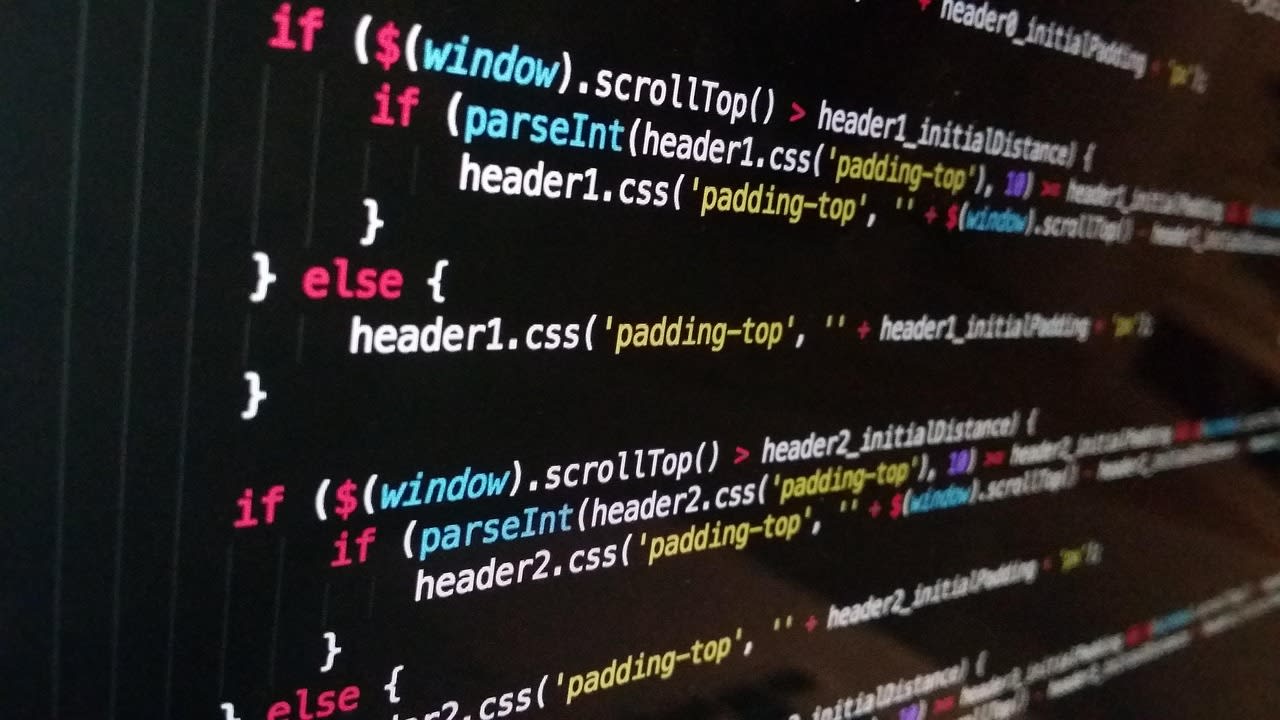
Now let's look at the canvas texture approach. This is where things get more computationally expensive but also much more flexible. Instead of pre-rendering your text, you create a canvas texture and update it every frame with new text content.
The process looks something like this:
// Create dynamic canvas texture
const dynamicCanvas = document.createElement('canvas');
dynamicCanvas.width = 2048; // Higher resolution for clarity
dynamicCanvas.height = 512;
const dynamicContext = dynamicCanvas.getContext('2d');

const dynamicTexture = new THREE.CanvasTexture(dynamicCanvas);
dynamicTexture.needsUpdate = true;

// In your animation loop
function updateCanvasTexture(textContent, ribbonPosition) {
    // Clear canvas
    dynamicContext.clearRect(0, 0, dynamicCanvas.width, dynamicCanvas.height);

    // Calculate text position based on ribbon deformation
    // This is the complex part!
    const textX = calculateTextPosition(ribbonPosition);
    const textY = dynamicCanvas.height / 2;

    // Draw text
    dynamicContext.fillStyle = '#ffffff';
    dynamicContext.font = 'bold 48px Arial';
    dynamicContext.fillText(textContent, textX, textY);

    // Update texture
    dynamicTexture.needsUpdate = true;
}
This approach gives you complete control. Want to change the text content in real-time based on user input? No problem. Need the text to react to ribbon deformation in specific ways? You can write the logic for that.
But—and this is a big but—you're now doing CPU-bound canvas operations every frame. If you're targeting 60fps, you have about 16 milliseconds to render your entire scene, and canvas text rendering isn't cheap. I've seen projects where this becomes the bottleneck, especially on mobile devices.
The Reddit comments mentioned this concern, and they're right to be worried. However, in 2025, we have some tricks to mitigate the performance hit, which we'll cover in the optimization section.
Hybrid Approach: The Best of Both Worlds
After testing both methods extensively, I've settled on what I call the hybrid approach for most production projects. It combines the performance of UV scrolling with the flexibility of canvas textures, and it addresses the specific concerns raised in the original discussion.
Here's how it works: Instead of updating the entire canvas texture every frame, you create a larger texture that contains multiple variations or segments of text. Then you use UV animation to switch between these segments or scroll through them. It's like having a film strip of text frames that you play back.
For dynamic text updates, you only redraw the portions of the canvas that have changed. If the text content updates infrequently (say, every few seconds), you can get away with minimal canvas operations while maintaining smooth animation through UV manipulation.
This approach is particularly useful for:
- Text that updates periodically but not every frame
- Ribbons with complex deformation where pure UV scrolling looks wrong
- Projects that need to support lower-end devices
I recently used this hybrid method for a data visualization project where text values updated every 2-3 seconds based on live data. The ribbon animation remained buttery smooth at 60fps, and text updates happened without any visible hitches.
Performance Optimization: Keeping Your Animation Smooth
Let's talk optimization because this is where many developers stumble. The Reddit discussion rightly focused on finding the "clean" approach, but clean code doesn't always mean performant code.
First, texture resolution matters more than you might think. For canvas textures, I typically start with 2048x512 for ribbon text. This gives you enough resolution for crisp text without blowing up GPU memory. Remember to use power-of-two dimensions whenever possible—GPUs handle these more efficiently.
Second, consider texture atlasing. If you're using the hybrid approach, pack multiple text variations into a single texture atlas. This reduces texture switches and can significantly improve performance. Three.js handles texture atlasing reasonably well, especially if you're careful with UV coordinates.
Third—and this is crucial—profile your animation. Use the browser's performance tools to see where time is being spent. Is it in the canvas rendering? The UV updates? The geometry deformation? I've seen cases where developers assumed the canvas was the bottleneck when it was actually too many geometry segments on the ribbon mesh.
For complex projects where performance is critical, you might consider offloading some work to Web Workers. Canvas operations can sometimes be moved to a worker thread, though there are limitations with getting the data back to the main thread for texture updates.
Handling Complex Deformation: Beyond Simple Bending

The original gif showed text that remained readable during significant deformation. This is where the real challenge lies. If your ribbon is doing simple sine-wave motion, either approach works fine. But what about corkscrew twists, knots, or sudden directional changes?
For complex deformation, you need to think about text orientation and perspective. With the UV scrolling approach, the text will follow the surface normals, which might look wrong during sharp twists. With canvas textures, you have more control but also more complexity.
One technique I've used successfully is to calculate text orientation based on the ribbon's Frenet-Serret frame (tangent, normal, binormal vectors). This gives you a natural orientation that follows the ribbon's curvature. It's mathematically intensive but produces beautiful results.
Here's a simplified version:
function calculateTextOrientation(ribbonSegment) {
    // Get tangent (direction of movement)
    const tangent = new THREE.Vector3().subVectors(
        ribbonSegment.nextPoint,
        ribbonSegment.previousPoint
    ).normalize();

    // Get normal (curvature direction)
    // Simplified calculation - in reality you'd use more points
    const normal = new THREE.Vector3(0, 1, 0); // Adjust based on your ribbon

    // Calculate binormal (cross product)
    const binormal = new THREE.Vector3().crossVectors(tangent, normal).normalize();

    // Return orientation matrix or quaternion
    return { tangent, normal, binormal };
}
This kind of calculation works better with the canvas texture approach because you can apply the orientation when drawing the text. With UV scrolling, you're limited to whatever orientation the surface normals provide.
Real-World Implementation: A Step-by-Step Guide
Let's walk through a practical implementation using the hybrid approach. We'll create a ribbon text animation that can handle dynamic content updates while maintaining good performance.
First, set up your ribbon geometry. I recommend using TubeGeometry or creating a custom ribbon by extruding along a path. The number of segments affects both quality and performance—start with 50-100 segments and adjust based on your needs.
Create your canvas texture with enough space for several text "frames." If your text updates every few seconds, you might want 4-8 frames to create smooth transitions.
Implement a double-buffering system for canvas updates. While one texture is being displayed, update the other in the background, then swap them. This prevents visual glitches during updates.
For the animation loop, separate your updates based on frequency:
function animate() {
    const now = Date.now();

    // High-frequency updates (every frame)
    updateUVAnimation(deltaTime);
    updateRibbonDeformation(deltaTime);

    // Medium-frequency updates (every 100ms)
    if (now - lastCanvasUpdate > 100) {
        updatePartialCanvas();
        lastCanvasUpdate = now;
    }

    // Low-frequency updates (every 2 seconds)
    if (now - lastTextUpdate > 2000) {
        updateTextContent();
        lastTextUpdate = now;
    }

    renderer.render(scene, camera);
}
This tiered update approach ensures smooth animation while still allowing for dynamic content changes.
Common Pitfalls and How to Avoid Them
Based on the Reddit discussion and my own experience, here are the most common mistakes developers make with ribbon text animations:
Texture bleeding: When using repeating textures with mipmapping, you might see artifacts at texture seams. The fix is usually to add a pixel of padding around your text in the canvas or adjust texture filtering.
Performance death by a thousand updates: Updating the entire canvas every frame when only small portions have changed. Use dirty rectangles or update regions to minimize canvas operations.
Ignoring device capabilities: What runs at 60fps on your development machine might chug on a mobile device. Test on target hardware and have fallbacks ready.
Forgetting about memory: Canvas textures eat GPU memory. If you're creating new textures every update without disposing old ones, you'll eventually crash. Always call texture.dispose() when you're done with a texture.
Overcomplicating the deformation: Sometimes a simple sine wave looks better than complex physics-based motion, especially if readability is your priority.
When to Hire a Specialist
Let's be honest—implementing advanced Three.js animations isn't everyone's cup of tea. If you're on a tight deadline or need production-ready results quickly, it might make sense to bring in an expert.
Platforms like Fiverr have skilled Three.js developers who specialize in this kind of animation work. I've hired specialists there for particularly complex projects, and it often saves time in the long run. Look for developers with specific Three.js animation portfolios—general WebGL knowledge isn't enough for these nuanced effects.
For teams building data visualization tools that need to scrape or process dynamic text content, services like Apify can handle the data pipeline while you focus on the visualization. I've used their scraping infrastructure to feed real-time data into Three.js visualizations, and it saves you from building that backend yourself.
Looking Ahead: The Future of WebGL Text Animation
As we move through 2025, I'm seeing some exciting developments in WebGL text rendering. WebGPU is becoming more widely supported, offering even better performance for compute-heavy operations like real-time text deformation.
Shader-based text rendering is also improving. While it's still complex to implement, the performance benefits are significant—especially for effects like the ribbon text we've been discussing. Imagine running your text deformation entirely in the vertex shader, with no canvas operations at all.
Three.js itself continues to evolve. The r152 release added better support for instanced text, which could open up new possibilities for ribbon animations with thousands of characters.
The key takeaway? The techniques we've discussed today will remain relevant, but the implementation details will keep improving. Stay curious, keep experimenting, and don't be afraid to mix and match approaches based on your specific needs.
Wrapping Up: Your Path to Fluid Ribbon Text
So, back to the original Reddit question: UV scrolling or canvas textures? After all this, my answer is: it depends, but lean toward the hybrid approach for most real-world applications.
Start with UV scrolling for its simplicity and performance. If you need dynamic text updates or complex deformation, layer in canvas texture updates strategically. Profile constantly, optimize based on actual bottlenecks (not assumed ones), and always prioritize readability over fancy effects.
The community discussion was spot-on in identifying the core tension between performance and flexibility. In 2025, we have the tools to balance both—we just need to use them thoughtfully.
Now go build something amazing. Start with a simple implementation, get it working, then iterate. And when you create that perfect ribbon text animation that flows like paint on silk? Share it with the community. We all learn from each other's breakthroughs.