



You know that feeling when your phone gets hot from too much processing? Now imagine that on a planetary scale. That's essentially what's happening right now with AI infrastructure. The discussion on r/technology about Wired's data center article hit a nerve because it's not just about lines of code anymore—it's about concrete, steel, and staggering electricity bills. People aren't just worried about whether AI will take their jobs; they're asking where all this computing power actually lives, who's paying for it, and what happens when we run out of space and power.
I've been following this space for years, and what's happening now is different. We're not talking about adding a few more servers to an existing facility. We're talking about building the equivalent of small cities dedicated solely to processing AI models. And as one Redditor put it, "The environmental impact alone should give everyone pause." They're right. But there's more to the story.
The Scale Is Hard to Even Comprehend
Let's start with some numbers that put this in perspective. A single modern AI data center isn't your grandfather's server room. We're talking facilities that can span over 1 million square feet—that's roughly 17 football fields under one roof. The cost? Easily $1-2 billion before you even flip the switch. And the power requirements? One of these facilities can draw 300-500 megawatts. To give you context, that's enough electricity to power a city of 300,000 homes.
What really struck me from the Reddit discussion was how many people were asking practical questions: "Where does all this power come from?" "Who's paying for these things?" "What happens to older data centers?" These aren't abstract concerns—they're real infrastructure problems that communities are grappling with right now.
I remember visiting a data center project in the Southwest last year. The local utility had to build an entirely new substation just for this one facility. The transmission lines alone cost hundreds of millions. And this is happening in dozens of locations simultaneously. Microsoft, Google, Amazon, Meta—they're all in an arms race to build more capacity than their competitors. One commenter noted, "It feels like we're building the physical internet all over again, but this time it's for AI." They're not wrong.
Why AI Models Are So Hungry for Resources
Here's where things get technical, but stick with me—it's important to understand why this is happening now. Traditional cloud computing was mostly about storage and serving web pages. AI training is fundamentally different. When you're training a model like GPT-5 or Gemini Ultra, you're not just moving data around—you're performing trillions of mathematical operations per second, continuously, for weeks or months.
Those NVIDIA H100 and Blackwell GPUs everyone's talking about? They're not sipping power. A single rack of these can draw 100 kilowatts. A full-scale AI data center might have thousands of these racks running simultaneously. The heat generated is immense—we're talking cooling systems that move millions of gallons of water or use massive evaporative cooling towers.
Several Redditors pointed out the irony: "We're using AI to optimize energy usage while the AI itself consumes more energy than small countries." There's truth to this. The computational requirements for cutting-edge AI models are doubling every few months. What required 100 GPUs last year might need 1,000 this year for the next breakthrough.
What most people don't realize is that inference—actually using the trained models—is becoming the bigger long-term problem. Training happens once (or periodically), but inference happens billions of times per day as people use ChatGPT, Copilot, and other AI services. That's the sustained load that's driving this permanent infrastructure build-out.
The Real-World Impact on Communities
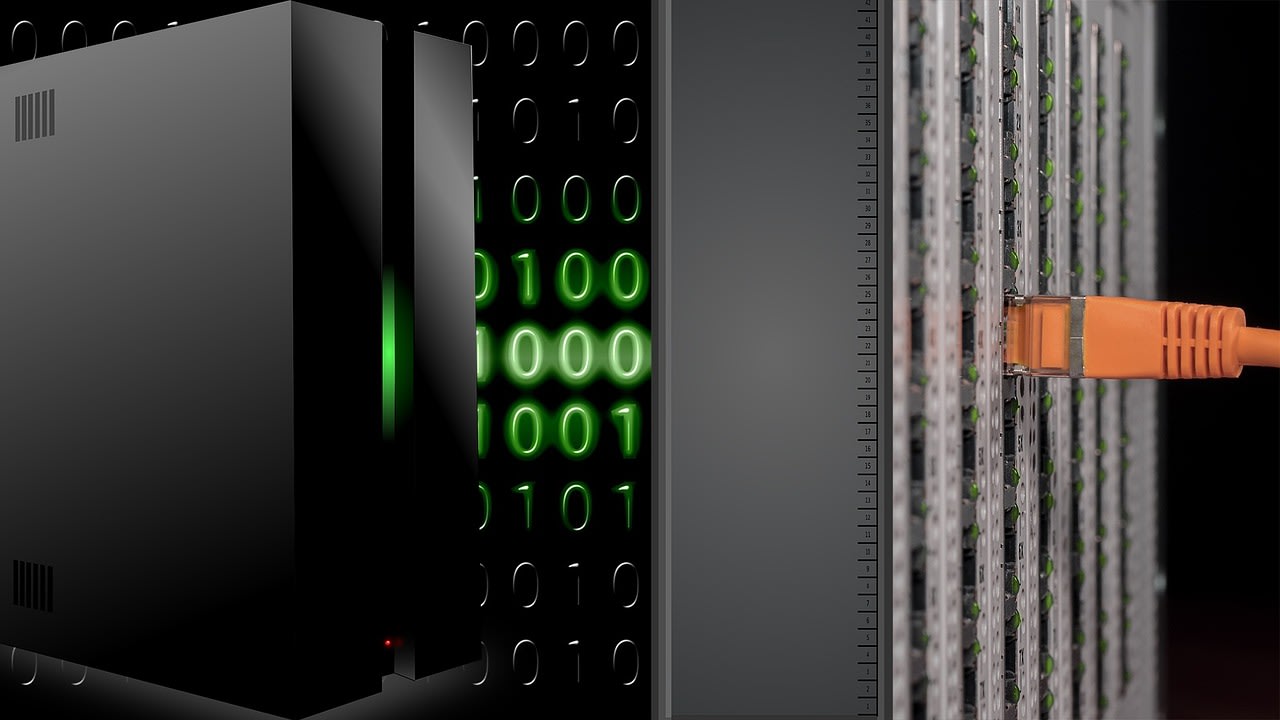
This is where the Reddit discussion got really interesting. People weren't just talking about abstract numbers—they were sharing actual experiences. One user from Virginia described how their rural county suddenly became "data center alley," with multiple billion-dollar facilities transforming the landscape and local economy.
"The tax revenue is great," they wrote, "but our power grid is strained, water usage is through the roof, and the character of our community has changed forever." This tension between economic development and community impact came up repeatedly. Another commenter from the Pacific Northwest mentioned that data centers are now competing with residential users for clean hydro power that was once abundant and cheap.
From what I've seen, the location decisions follow a simple formula: available land, cheap power, favorable tax incentives, and proximity to fiber networks. But here's the catch—as more data centers cluster in these "ideal" locations, they drive up power costs for everyone else and strain local resources. Some utilities are now saying no to new data center connections because they simply can't provide the power.
And let's talk about water. Those cooling systems I mentioned? They can use 1-5 million gallons of water per day. In drought-prone areas, this creates real conflicts. One Arizona community actually blocked a data center project over water concerns. These aren't hypothetical issues—they're happening right now.
The Environmental Paradox
Here's the uncomfortable truth that several Redditors highlighted: Many tech companies have made ambitious carbon neutrality pledges, but the AI boom is making those commitments incredibly difficult to keep. A data center running on fossil fuels can have a carbon footprint equivalent to hundreds of thousands of cars.
The good news? There's massive investment in renewable energy to power these facilities. Microsoft, Google, and Amazon are some of the largest corporate purchasers of renewable energy in the world. But here's the problem—renewables are intermittent. The sun doesn't always shine, and the wind doesn't always blow, but AI models need to run 24/7.
This has led to what one energy expert in the thread called "the gas bridge problem." Companies are building natural gas plants as backup power, locking in fossil fuel dependency for decades. Some are experimenting with nuclear—both small modular reactors and partnering with existing nuclear plants—but that's controversial and takes years to develop.
The most promising development I've seen is the move toward advanced geothermal. It's always-on, has a tiny footprint compared to solar or wind farms, and can be built almost anywhere. But we're talking about technology that's still scaling up. In the meantime, the AI keeps getting hungrier.
What Happens to All the Old Infrastructure?
This was a fascinating thread in the discussion that doesn't get enough attention. As companies build these AI-optimized facilities, what happens to the thousands of existing data centers built for the cloud computing era? Some Redditors called them "AI dinosaurs"—perfectly functional but not designed for the GPU density and power requirements of modern AI workloads.
The reality is mixed. Some get retrofitted with new power and cooling systems at enormous cost. Others get repurposed for less demanding workloads or edge computing. But many will simply become obsolete. We're talking about billions of dollars of infrastructure that might have its useful life cut short by a decade or more.
I've toured some of these older facilities, and the difference is stark. The new AI data centers feel like something out of a sci-fi movie—aisles of GPUs humming away, liquid cooling systems that look like industrial plumbing, power distribution that could support a small town. The old ones feel... quaint by comparison.
One data center operator in the thread made an interesting point: "We're seeing a bifurcation. AI workloads go to specialized facilities, everything else stays in traditional clouds. It's creating two parallel infrastructure worlds." This makes sense when you think about it—not every workload needs or can afford AI-grade infrastructure.
The Economic Implications Are Staggering
Let's talk money, because this is where it gets really eye-opening. Building one of these facilities is just the start. The operational costs are where the real expenses pile up. Power is typically 40-60% of the total cost of ownership. At 10 cents per kilowatt-hour (and it's often higher), a 300-megawatt facility spends about $260 million per year just on electricity.
Then there's the hardware. Those NVIDIA GPUs everyone wants? They cost $30,000-$40,000 each. A full-scale AI data center might have 50,000 of them. Do the math—that's $1.5-2 billion just in GPUs, and they have a useful life of maybe 3-5 years before being replaced by the next generation.
Several Redditors asked the obvious question: "Who can afford this?" The answer is basically the hyperscalers (Microsoft, Google, Amazon) and maybe a handful of well-funded AI companies. For everyone else, it's cloud or nothing. This is creating what one commenter called "compute aristocracy"—a small group of companies that control the means of AI production.
What worries me is the barrier to entry for new players. If you're a startup with a groundbreaking AI idea, you basically have to go through one of the big cloud providers. They control the infrastructure, and increasingly, they're also your competitors in the AI space. It's a tricky position to be in.
Practical Implications for Developers and Businesses
Okay, so what does all this mean for you if you're building with AI? First, efficiency matters more than ever. Every unnecessary parameter in your model, every redundant inference, is literally burning money and energy. The days of "just throw more compute at it" are ending because the compute is getting too expensive.
Second, consider where your models run. Edge computing—running AI locally on devices—is seeing renewed interest because it avoids data center costs entirely. Apple's approach with on-device AI makes a lot more sense when you consider the infrastructure alternative.
Third, monitor your cloud AI costs like a hawk. I've seen projects where the inference costs alone killed the business model. Use quantization, pruning, and other optimization techniques. Consider specialized hardware like Google's TPUs or AWS Inferentia if they fit your workload—they can be more efficient than general-purpose GPUs.
If you're dealing with data collection for AI training, tools like Apify's web scraping platform can help automate data gathering efficiently. But remember—more data means more training compute, so be selective about what you actually need.
Common Questions and Misconceptions
Let me address some of the recurring questions from the Reddit thread directly:
"Will this AI boom crash like crypto mining did?" Probably not in the same way. Crypto mining was purely speculative—the value was in the cryptocurrency itself. AI has actual applications across every industry. The demand might fluctuate, but it's not going to zero.
"Can't we just use renewable energy?" We can and should, but there are physical limits. Transmission lines, grid stability, and the intermittent nature of solar and wind are real challenges. The transition will take years.
"What about efficiency improvements?" They're happening—new chips are more efficient, cooling systems are better, software is optimized. But Jevons paradox often applies: as AI gets more efficient, we use it for more things, so total consumption still increases.
"Is this sustainable long-term?" Honestly? Not at current growth rates. Something has to give—either AI progress slows, we find breakthrough energy sources, or we decide as a society to limit certain applications. My money is on a combination of all three.
Looking Ahead: What Comes Next?
By 2025, we'll likely see several trends accelerate. First, geographical dispersion—companies will build in more locations to access different power mixes and avoid overloading any single grid. Second, specialized AI chips will become more common, offering better performance per watt than general-purpose GPUs.
Third, and this is crucial, we'll see more regulation. Data centers are becoming too big to ignore. Expect carbon taxes, water usage restrictions, and power allocation rules. The free-for-all days are ending.
For smaller companies and developers, the key is adaptability. Learn to work with constrained resources. Consider hiring specialists on Fiverr for specific AI optimization tasks if you don't have in-house expertise. And stay informed about new hardware and cloud offerings—the landscape changes monthly.
One Redditor put it perfectly: "We're building the nervous system of the 21st century, and we're just realizing how much energy a brain actually needs." The question isn't whether we'll build this infrastructure—we already are. The question is whether we can build it wisely, sustainably, and in a way that benefits more than just a few tech giants.
The physical footprint of AI is here to stay. Our job now is to make sure that footprint doesn't become a stomp that crushes everything in its path. Because behind every AI breakthrough, there's a building somewhere with a very large power bill—and that building is changing our world in ways we're only beginning to understand.
