


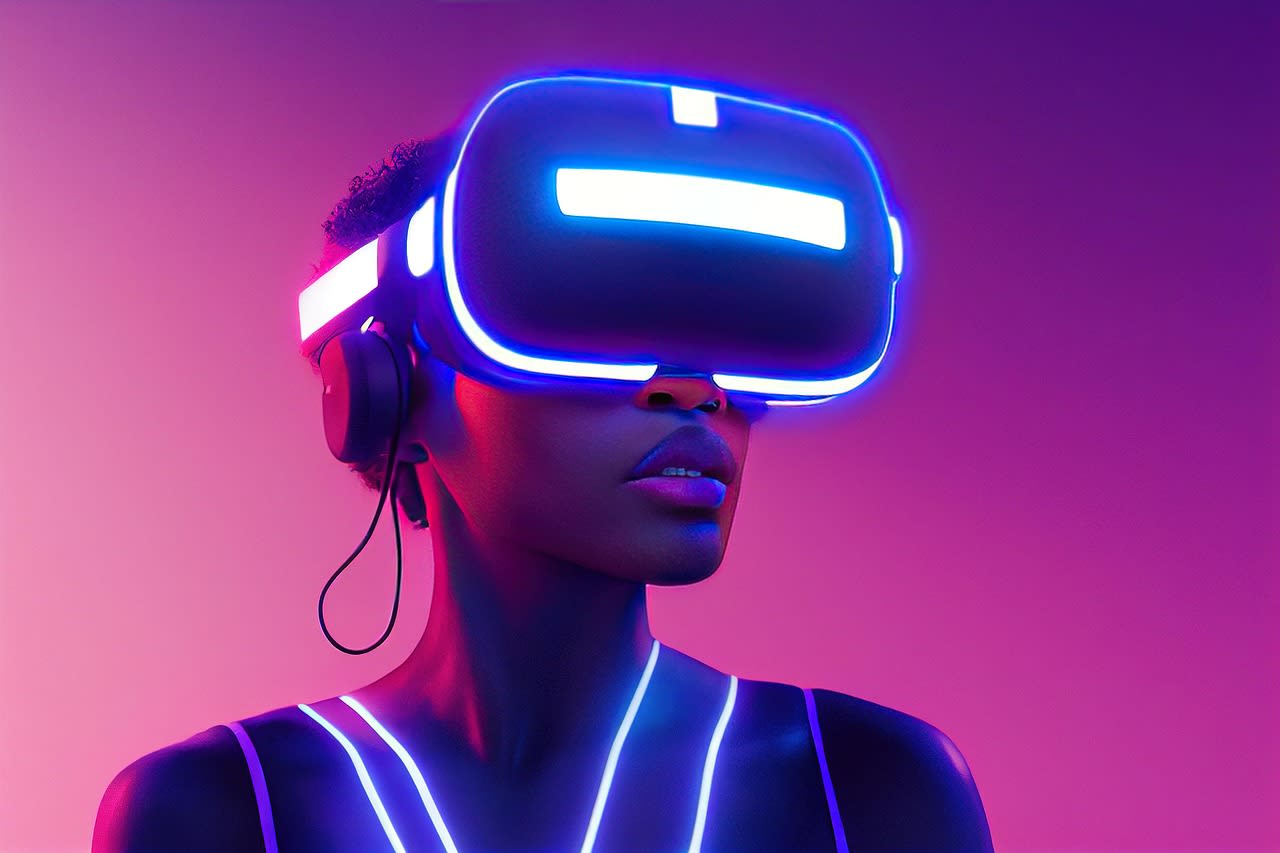
The Reality Check: Meta's Strategic Pivot in 2026
When the news broke in January 2026 that Meta was planning to cut 10% to 15% of its Reality Labs employees, the reaction across tech communities was... complicated. Not exactly shock—we've seen this movie before—but a particular kind of resignation mixed with genuine concern. Over on Reddit's r/technology, the discussion wasn't just about numbers on a spreadsheet. People were asking real questions: "Is the metaverse dream dead?" "What happens to my Quest 4 now?" "Should I still invest in VR development?"
Here's what's actually happening. Meta isn't abandoning Reality Labs—they're restructuring it. After burning through billions since 2021 (we're talking over $50 billion in cumulative losses by some estimates), the company is finally applying some financial discipline to its most ambitious division. But this isn't just another corporate downsizing story. This move tells us everything about where immersive technology is heading in 2026, and more importantly, what it means for developers, consumers, and anyone betting on the future of how we interact with digital spaces.
In this deep dive, I'll walk you through exactly what these layoffs signal, how they'll affect the products you care about, and what opportunities might actually emerge from this shakeup. Because here's the thing I've learned from covering tech for fifteen years: when giants stumble, that's often when the most interesting new players find their footing.
Reality Labs: From Infinite Budget to Fiscal Reality
Let's rewind for a second. When Mark Zuckerberg rebranded Facebook as Meta in 2021, he made a massive bet. The company would pour essentially unlimited resources into building the "metaverse"—a persistent, interconnected virtual world that would eventually become the next computing platform. Reality Labs was the vehicle for this ambition, housing everything from VR headsets (the Quest line) to AR glasses research, neural interfaces, and the Horizon Worlds platform.
For years, Wall Street tolerated the losses because they were buying the vision. But by late 2025, patience was wearing thin. The macroeconomic environment had shifted, AI was sucking up all the oxygen (and investment dollars), and most importantly, mainstream adoption of VR/AR wasn't happening at the hockey-stick growth rate Meta had projected. The numbers became impossible to ignore. In 2025 alone, Reality Labs lost somewhere north of $14 billion. That's more than the entire market capitalization of some established tech companies.
What the Reddit discussion got right—and what some mainstream coverage missed—is that these layoffs aren't spread evenly. According to insiders, the cuts are heavily concentrated in "blue sky" research projects and experimental divisions that were years away from commercialization. The teams working on immediate products like Quest 4 (slated for late 2026) and the upcoming AR glasses (codenamed Orion) are largely protected. Meta isn't getting out of the game; they're narrowing their focus to what can actually ship and sell in the next 2-3 years.
What Gets Cut: The Projects on the Chopping Block
Reading between the lines of the NYT report and piecing together discussions from former employees on Blind and Reddit, we can make some educated guesses about what's getting scaled back. First on the list: some of the more speculative hardware projects. Remember those full-body haptic suits they showed off in 2024? Or the photorealistic avatars that required insane processing power? Those are the kinds of projects getting deprioritized or shelved entirely.
Also facing significant cuts: certain teams within Horizon Worlds. The platform that was supposed to be the centerpiece of the metaverse has struggled with user retention since launch. While Meta won't abandon it completely (there's too much sunk cost), they're likely consolidating development teams and focusing on core social experiences rather than trying to build an entire virtual economy from scratch.
Here's what surprised me though—and what most people on Reddit missed. Some of the neural interface work (like the wrist-based EMG devices for controlling AR glasses) appears to be surviving. Why? Because it's directly tied to their upcoming AR products. Meta has realized they can't compete with Apple's Vision Pro on pure hardware specs, so they're betting on novel input methods as their differentiator. The projects getting cut are the ones without a clear path to a shipping product within Zuckerberg's revised timeline.
The Ripple Effect: What This Means for VR/AR Developers

If you're developing for Quest or building AR experiences, this is where things get personal. The immediate concern I saw voiced repeatedly was: "Will Meta continue to support independent developers?" Based on my conversations with people still inside the company, the answer is yes—but with important caveats.
The developer relations team is largely intact, but their focus is shifting. Expect fewer "experimental" grants for artsy projects and more emphasis on developers who can create software that either (a) sells hardware or (b) generates direct revenue through the Meta Store. The days of throwing money at anything vaguely "metaverse-related" are over. We're entering an era of pragmatic investment.
For smaller studios, this creates both challenges and opportunities. The challenge: less "free money" floating around. The opportunity: a more stable platform with clearer guidelines about what Meta actually wants. In 2024-2025, there was constant whiplash as Reality Labs' strategy shifted monthly. Now, the priorities are becoming painfully clear: gaming experiences that showcase Quest 4's capabilities, productivity tools for their AR glasses, and social apps that don't require users to spend hours in VR.
One pro tip I'll share from my own experience covering platform shifts: when a giant like Meta narrows its focus, it often creates white space for others. I wouldn't be surprised to see more developers exploring standalone VR platforms like the upcoming Valve headset or doubling down on mobile AR through Apple and Google's ecosystems.
The Hardware Future: Quest 4, AR Glasses, and Beyond
Let's talk about the products you might actually buy. The consensus from multiple sources is that Quest 4 development is proceeding full steam ahead. In fact, some engineers from canceled projects are being reassigned to the Quest 4 team to accelerate its late-2026 launch. What can we expect? Based on patent filings and job listings that survived the cuts, Quest 4 will likely feature eye-tracking as standard (finally), higher resolution displays, and better passthrough AR capabilities. But don't expect revolutionary new features—this will be an evolution, not a revolution.
The more interesting story is Meta's first-generation AR glasses (codenamed Orion). This is where Meta sees their real advantage over Apple. While Apple's Vision Pro is a high-end, indoor-focused device, Meta is aiming for something you can wear all day outdoors. The layoffs actually seem to have accelerated this project by killing competing internal projects. Resources are being consolidated around a single vision: lightweight glasses that overlay useful information on the real world, controlled primarily through voice and subtle hand gestures (via those neural wristbands).
What won't be in these first-gen glasses? Full VR immersion. Complex 3D interfaces. Anything that requires significant processing power. Meta has learned from Google Glass's failure—they're starting simple. Think notifications, directions, basic information overlay. The "full metaverse" experience will remain on VR headsets for the foreseeable future.
Career Implications: Navigating the New Reality Labs
For the engineers, designers, and researchers affected by these cuts, the situation is obviously difficult. But having watched multiple tech boom-and-bust cycles, I can tell you this: the skills developed at Reality Labs are incredibly valuable elsewhere. We're talking about expertise in computer vision, spatial computing, optics, haptics, and 3D interaction design—all areas that are heating up across the industry.
Apple is still hiring aggressively for their Vision Pro team. Google continues to invest in ARCore and their own AR hardware projects. Microsoft's HoloLens division, while quieter lately, still exists. And then there's the entire automotive industry—companies like Tesla, Rivian, and traditional automakers are snapping up AR/VR talent for heads-up displays and in-car experiences.
If you're looking to pivot within the industry, here's my practical advice based on conversations with hiring managers: emphasize your specific technical skills rather than just "metaverse experience." Did you work on optimizing rendering pipelines? That's directly applicable to game development and simulation software. Did you design 3D interfaces? Those skills transfer to automotive UI and industrial design tools. The key is translating Reality Labs experience into broader industry language.
For those considering freelance opportunities, platforms like Fiverr have seen a surge in demand for AR/VR development skills. Small businesses that can't afford full-time staff are hiring contractors to create product visualizations, virtual showrooms, and training simulations. It's not as glamorous as working on the next-generation metaverse, but it pays the bills and keeps your skills sharp.
The Bigger Picture: What This Says About the Metaverse in 2026
Here's the uncomfortable truth that the Reddit discussion danced around but never quite stated directly: the "metaverse" as originally envisioned—a single, unified virtual world where we all work, play, and socialize—was always a fantasy. Or at least, it was a solution looking for a problem. What we're actually getting, and what Meta is now reluctantly accepting, is something more practical: multiple virtual spaces for specific purposes.
Gaming in VR? That's working (see the success of games like Asgard's Wrath 2). Virtual meetings for remote teams? Useful in specific contexts. Virtual real estate tours or car configurators? Valuable business tools. But the idea that we'd all voluntarily spend hours a day in a cartoonish virtual world just to hang out? That was always the weakest part of the pitch.
Meta's restructuring acknowledges this reality. They're not giving up on interconnected virtual spaces, but they're scaling back the ambition to something achievable. Horizon Worlds will likely evolve into more of a platform for specific applications rather than a destination itself. And honestly, that's probably healthier for the industry long-term. When expectations get too far ahead of reality, you get the kind of disillusionment we saw in 2025.
Common Questions (And Straight Answers)
I've been fielding questions about this all week, so let me address the most common ones directly:
"Should I cancel my Quest 4 pre-order?" No. If anything, Quest 4 is more likely to ship on time now that resources are concentrated on it. The hardware roadmap is actually clearer post-layoffs.
"Is this the end of Meta's AR glasses?" Quite the opposite. The glasses project has moved from "one of many experiments" to "critical path." Expect more focused investment, not less.
"Will Meta stop funding indie VR games?" They'll still fund games, but the criteria will be stricter. Games that demonstrate unique use of Quest 4 features or have clear monetization paths will get priority.
"Should I learn VR development in 2026?" Yes, but broaden your skills to include AR and mixed reality. The lines between these technologies are blurring, and versatility will make you more employable.
"What happens to my existing Quest apps?" Nothing. Backward compatibility remains a priority. If anything, the store might get cleaner as Meta removes abandoned experiments.
Looking Ahead: The Silver Linings
It's easy to view these layoffs as purely negative, but let me offer a different perspective. The VR/AR industry was becoming dangerously dependent on Meta's infinite checkbook. When one company spends more than everyone else combined, it distorts the market. Smaller, more innovative companies couldn't compete for talent. Developers chased Meta's grants rather than building sustainable businesses.
With Meta pulling back, we might actually see a healthier ecosystem emerge. More competition. More diversity of ideas. Companies focusing on profitability rather than just user growth at any cost. We've seen this pattern before in tech—remember when Microsoft dominated everything? Their antitrust issues in the early 2000s created space for Google, Facebook, and others to emerge.
For consumers, this could mean better products in the long run. When companies have to actually convince people to buy their hardware rather than subsidizing it into oblivion, they tend to focus more on what users actually want. The Quest 4 might be less ambitious in some ways, but it could be more polished, more reliable, and better supported.
The Bottom Line
Meta's Reality Labs layoffs aren't the end of the metaverse or VR/AR technology. They're a correction—a painful but necessary one. The industry is maturing, moving from "build it and they will come" to "build what people actually need and will pay for."
For developers, this means adjusting expectations but not abandoning ship. For consumers, it means more focused product roadmaps. And for the affected employees, it means taking incredibly valuable skills to companies that are just beginning their immersive computing journeys.
The most telling comment I saw in the Reddit discussion came from someone who said: "Maybe now we can stop calling it 'the metaverse' and just build useful things." That, in a sentence, is what 2026 represents for this industry. Less hype, more utility. And honestly? That's probably exactly what we need.
What's your take? Have you worked with Reality Labs tools, or are you building in this space? I'm particularly interested in hearing from developers who are navigating these changes right now. The conversation doesn't end here—it's just getting real.
