


The Crazy Idea That Got Everyone Talking
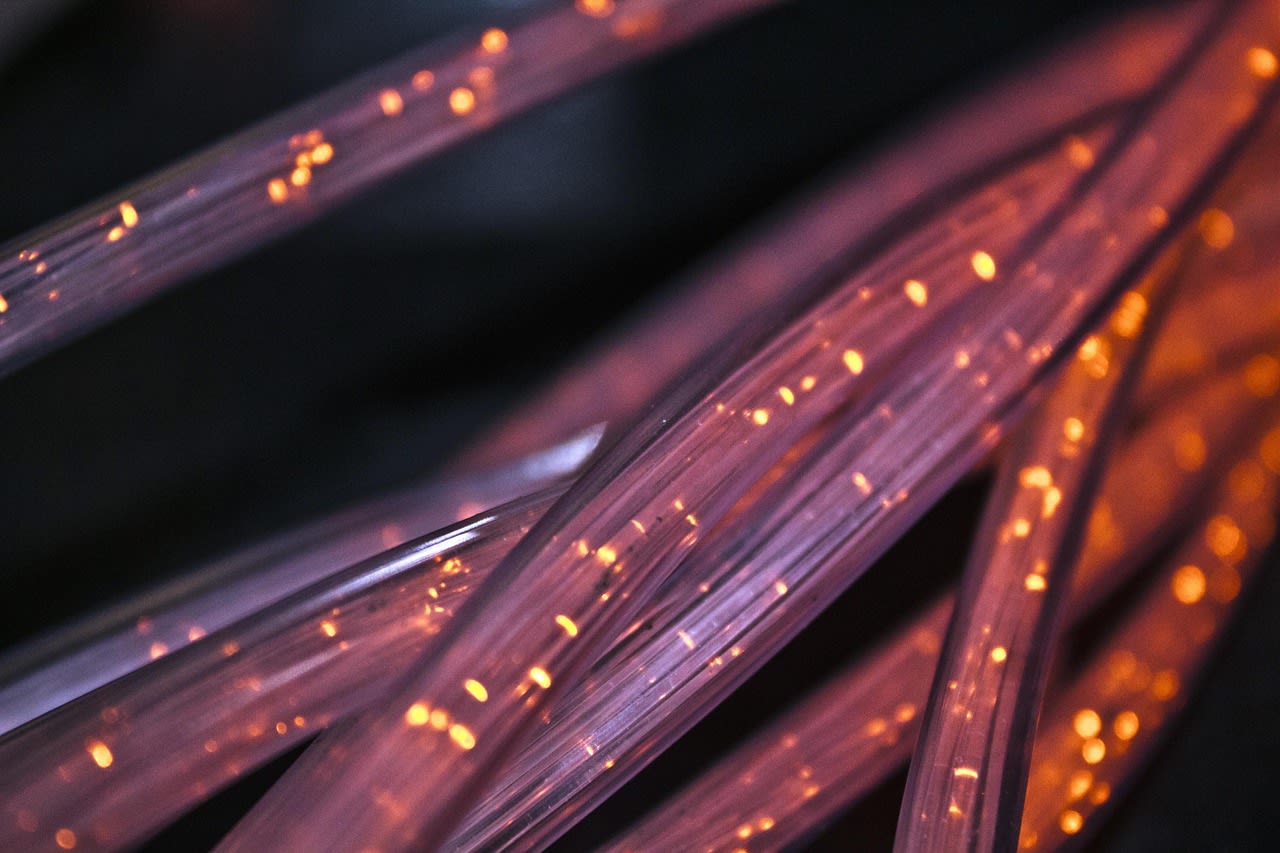
So John Carmack drops this bomb on social media: what if we used a long fiber optic line as an L2 cache? Not meters—kilometers. The legendary programmer behind Doom, Quake, and Oculus VR was musing about streaming AI data through light instead of electrons. And honestly? It's the kind of "what if" that makes you stop scrolling and actually think.
The original discussion blew up with nearly 2,000 upvotes and 290 comments. Programmers, hardware engineers, and AI researchers all jumped in. Some called it brilliant lateral thinking. Others said it was physically impossible. Most were somewhere in between—intrigued but skeptical. What's fascinating isn't whether Carmack's specific proposal would work (we'll get to that), but what it reveals about our current memory bottleneck problems.
See, we're hitting walls with traditional memory architectures. AI models keep growing—we're talking hundreds of billions of parameters now—and shuffling that data between storage, RAM, and processors creates insane bottlenecks. Carmack's fiber idea is really asking: can we rethink the entire memory hierarchy using different physical principles?
Understanding the Fiber-as-Cache Concept
Let's break this down without the jargon. Normally, your computer has a memory hierarchy: super-fast but tiny registers, then small but fast L1 cache, larger but slower L2 cache, even larger but slower L3 cache, then main memory (DRAM), then storage (SSDs/HDDs). Each level trades capacity for speed.
Carmack's proposal essentially says: what if we made L2 cache out of light traveling through fiber? Instead of storing bits in transistors, we'd store them as photons moving through glass. The "storage" would literally be the time it takes light to travel through the fiber. Need to retrieve data? Just wait for the right photons to come out the other end.
Here's the math that makes this interesting: light travels through fiber at about 200,000 km/s (two-thirds of vacuum speed). A 10km fiber spool would have a round-trip latency of about 100 microseconds. That's slower than L1 cache (nanoseconds) but potentially competitive with some DRAM access patterns. The capacity? Well, you could theoretically have terabits of data "in flight" through the fiber at any moment.
But—and this is a huge but—you're not really "storing" data in the traditional sense. You're delaying it. It's more like a FIFO buffer than random-access memory. This distinction sparked some of the hottest debate in the original thread.
The Physics Challenges Everyone's Talking About
Reading through the 290 comments, several physical limitations kept popping up. Let's address the big ones people were actually worried about.
First: attenuation. Light doesn't travel through fiber forever without loss. Modern single-mode fiber loses about 0.2 dB/km. Over 10km, that's 2 dB loss—manageable with good optics. Over 100km? You're losing 20 dB, meaning only 1% of your light makes it through. You'd need amplifiers, which add noise and complexity. One commenter who actually works with fiber optics put it bluntly: "The moment you need optical amplifiers, your simple cache becomes a telecom system."
Second: dispersion. Different wavelengths travel at slightly different speeds through glass. Over long distances, your carefully timed pulses would smear together. You'd need dispersion compensation, which again adds complexity. There's a reason why high-speed fiber networks use sophisticated modulation schemes—they're fighting these exact physics problems.
Third: temperature stability. Fiber length changes with temperature—about 10-20 parts per million per degree Celsius. For a 10km fiber, a 1°C change means 10-20cm length change. That's 0.5-1 nanosecond timing shift. Might not sound like much, but when you're trying to synchronize data streams with nanosecond precision? It matters. A lot.
Why This Idea Actually Makes Sense for Streaming AI
Here's where Carmack's background in real-time graphics and VR gives him unique insight. He's thinking about data flow, not just storage. And for certain AI workloads—particularly inference on streaming data—this matters.
Consider an AI processing video frames in real-time. The data comes in a predictable stream: frame 1, frame 2, frame 3. You don't need random access to frame 237 while processing frame 1. You just need to keep the pipeline full. A fiber delay line could act as a massive buffer, ensuring the AI accelerator never starves for data.
Or think about large language model inference. While generating token 50, you're already fetching the weights needed for token 51, 52, 53... This prefetching is predictable. If you know your access pattern in advance (and with AI inference, you often do), a FIFO buffer might be exactly what you need.
The original discussion had someone point out that this isn't entirely new—acoustic delay line memory was used in 1950s computers. Mercury tanks would store data as sound waves traveling through liquid metal. Carmack's proposal is essentially the optical version of that old idea, just with modern materials and at light speed.
Latency vs. Bandwidth: The Real Trade-Off
This is the core tension that every commenter kept circling back to. Traditional caches optimize for low latency—getting data as fast as possible. Carmack's fiber cache would have relatively high latency (microseconds vs. nanoseconds) but potentially enormous bandwidth.
Let me put some numbers on this. A modern HBM3 memory stack might deliver 1 TB/s bandwidth with 100ns latency. A fiber system could theoretically deliver multiple terabits per second (that's hundreds of gigabytes per second) but with 10-100 microsecond latency. Different trade-off entirely.
For AI training? Probably a non-starter. The random access patterns and dependency chains need low latency. But for inference on streaming data? Maybe. If you can hide the latency by prefetching far enough ahead, the massive bandwidth could keep your AI accelerators fed.
One engineer in the thread made this great point: "We've spent decades optimizing for latency because bandwidth was scarce. Now we have photonic interconnects with insane bandwidth but non-zero latency. Maybe it's time to rethink our algorithms to prefer bandwidth over latency where possible."
Practical Implementation Challenges in 2026
Let's say you actually wanted to build this today. What would it look like? And what would go wrong? Based on the discussion and current tech trends, here's what you'd face.
First, you need optical transceivers at both ends. These aren't cheap. A 400G QSFP-DD optical module runs hundreds of dollars. And you'd need them for every fiber strand. The cost per bit starts looking less attractive compared to DRAM.
Second, synchronization becomes a nightmare. Your fiber "cache" exists in the time domain. You need precise clocks to know when to inject and extract data. Any jitter in your timing circuits means corrupted data. We're talking about picosecond precision over microseconds of delay—that's maintaining one part in a million timing accuracy.
Third, error correction. Fiber isn't perfect. You'll get bit errors from noise, dispersion, and attenuation. DRAM uses ECC (error-correcting codes), but they add latency. Your fiber system would need its own ECC, further complicating the timing.
Fourth, and this is subtle: you can't easily read without destroying. In DRAM, you read a value and it stays there. In a fiber delay line, you detect photons at the output—they're gone once measured. If you need the same data later, you have to store it elsewhere or re-inject it. This changes the entire cache coherency model.
Alternative Approaches People Suggested
The discussion wasn't just about shooting down Carmack's idea. Many commenters proposed variations or alternatives that might work better.
Several people mentioned photonic integrated circuits (PICs). Instead of kilometers of fiber spooled somewhere, you could have microscopic optical waveguides on a chip. Same principle—light delay as storage—but integrated with silicon. The latency would be shorter (nanoseconds instead of microseconds), but so would the capacity. Still, it might make sense as an on-chip buffer.
Others pointed to optical RAM research that's actually happening. Companies like Lightelligence and Lightmatter are building optical AI accelerators. Some research groups have demonstrated optical buffers using microresonators—tiny rings that trap light, storing it for nanoseconds. These are more like traditional caches but using photons instead of electrons.
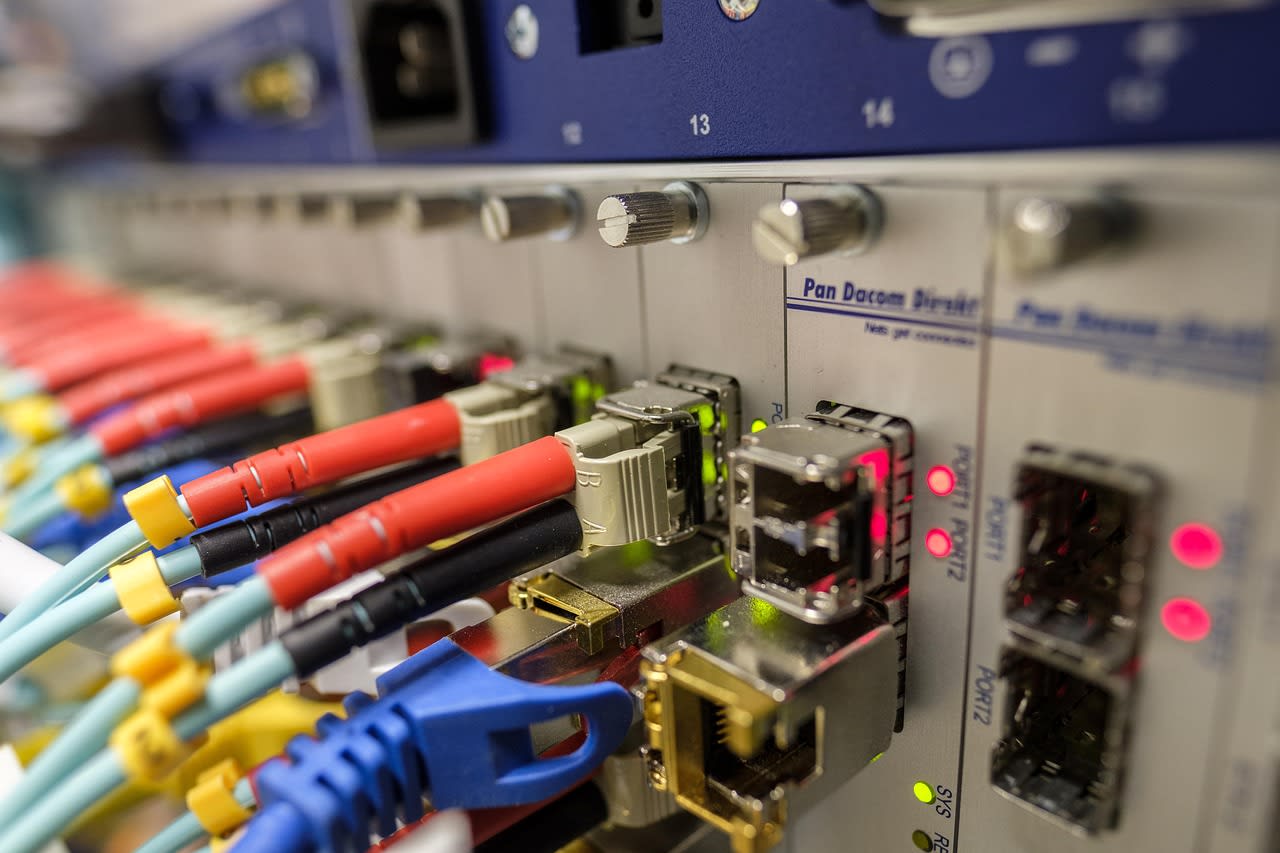
Then there's the hybrid approach: use fiber for chip-to-chip communication, not as cache itself. We already see this with silicon photonics in data centers. The real win might be in connecting multiple AI accelerators with optical links, creating what one commenter called a "fabric of light" between processors.
What This Means for AI Hardware Development
Stepping back from the technical details, Carmack's thought experiment matters because it challenges assumptions. And in 2026, we need that.
AI hardware has been following a predictable path: bigger GPUs, more memory, faster interconnects. But we're hitting diminishing returns. Power consumption is insane—some AI data centers use as much electricity as small cities. Heat dissipation is becoming unmanageable. Physical size is limited by the speed of light across the chip.
Optical computing offers potential solutions. Light generates less heat than electrons moving through resistance. Light can cross longer distances without signal degradation. Multiple wavelengths can travel through the same fiber simultaneously (wavelength division multiplexing), giving you massive parallelism.
The companies betting on this aren't small startups anymore. Intel has its silicon photonics division. Nvidia acquired Mellanox for their optical networking expertise. Google and Facebook are designing their own optical interconnects for data centers. The frontier is moving from electrical to optical, just not necessarily in the way Carmack imagined.
Common Misconceptions and FAQs
Reading through the comments, I noticed several misconceptions that kept popping up. Let's clear these up.
"This would replace all DRAM" - No, that wasn't the proposal. Carmack specifically mentioned L2 cache. It's a specific level in the memory hierarchy for specific access patterns. Nobody's suggesting fiber for main memory.
"Light speed is too slow" - This misses the point. Yes, light is slower in fiber than in vacuum. But the comparison isn't to the speed of light in vacuum—it's to electrical signals in wires (about half light speed) and to DRAM access times (which include many other delays besides propagation).
"We already have optical fiber networks" - True, but those are for communication over kilometers, not caching. The difference is in the requirements: networks tolerate milliseconds of latency; caches need microseconds or less. Different design constraints entirely.
"This is just a FIFO buffer, not a cache" - Technically correct, but maybe that's the insight. Maybe some AI workloads don't need fully associative caches with random access. Maybe a smart FIFO is good enough and much simpler to implement.
Where This Technology Might Actually Land
So will we see fiber optic L2 caches in consumer GPUs by 2030? Probably not. But elements of this idea might show up in surprising places.
Specialized AI inference chips for edge devices could use integrated optical buffers. If you're processing sensor data in a self-driving car or drone, the streaming nature fits the delay-line model perfectly. The low power consumption of optics would be a huge advantage.
High-frequency trading systems already use microwave links because they're faster than fiber. But what if you wanted to buffer market data with precise timing? A carefully calibrated fiber delay line might give you that microsecond advantage.
Scientific computing often involves processing massive data streams from instruments. Radio astronomy, particle physics, weather simulation—these fields move petabytes in predictable patterns. Custom optical buffers could be worth the engineering effort.
The key insight—and I think this was Carmack's real point—is that we should match the physical implementation to the access pattern. Not every memory needs to be random access. Not every buffer needs to be SRAM or DRAM. Sometimes, letting data flow through light might be the right solution.
Final Thoughts: Why Thought Experiments Matter
John Carmack probably knew his fiber cache idea wasn't going to ship next year. That wasn't the point. The point was to break frame, to question assumptions that have been baked into computer architecture for decades.
We get stuck in local maxima. DRAM works, so we make it faster. SRAM works, so we make it denser. But sometimes you need to ask: what if we used completely different physics? What if we embraced latency instead of fighting it? What if we designed algorithms around the hardware instead of hardware around the algorithms?
The discussion that followed proved the value of the exercise. Nearly 300 comments from engineers, physicists, and programmers all engaging with a radical idea. Some built on it. Some tore it apart. All of them thought harder about memory systems than they had in months.
So next time you're designing a system or writing an algorithm, ask yourself: what's my real constraint? Is it actually latency, or is it bandwidth? Do I need random access, or would sequential work? Could I use a completely different physical principle? You might not end up with kilometers of fiber in your server rack, but you might just find a better solution than what everyone else is doing.
