


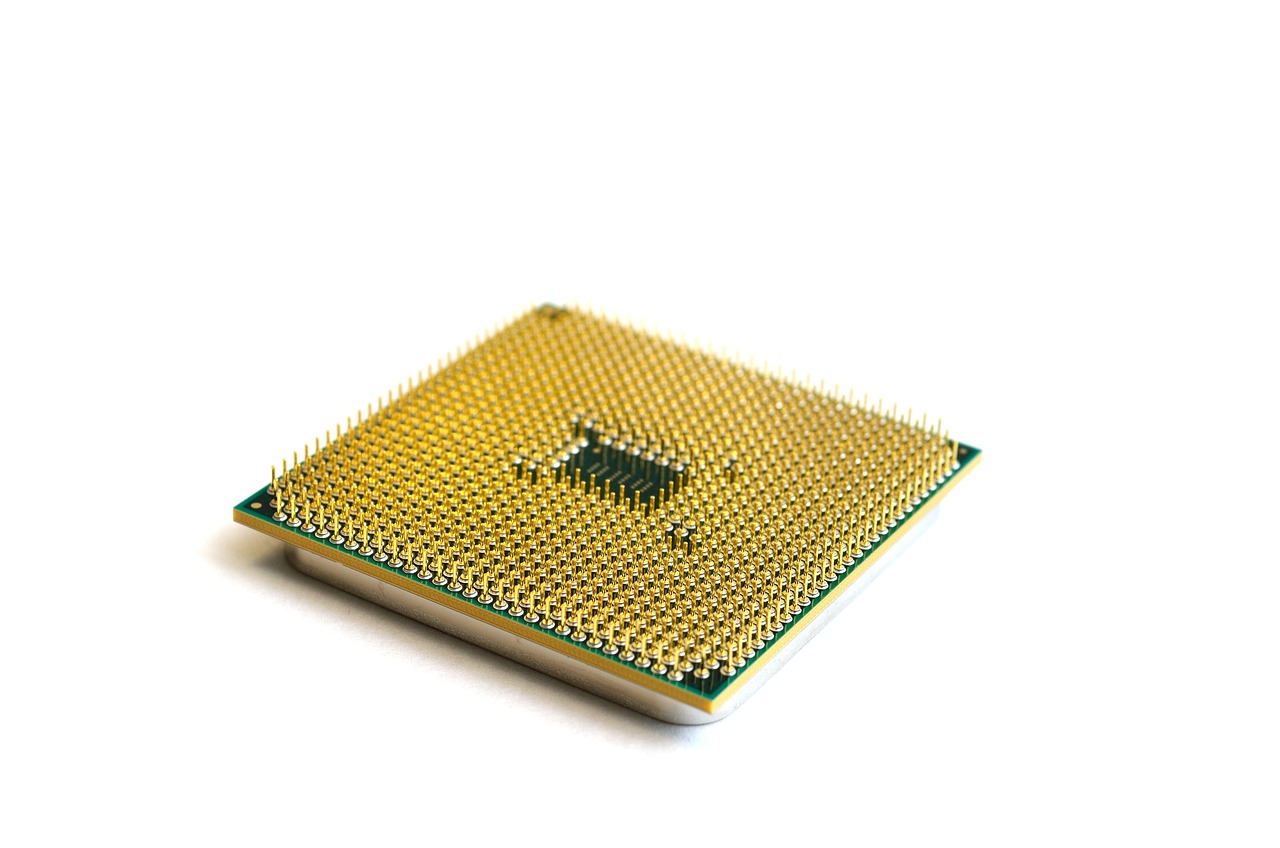
When Tim Cook reportedly told colleagues he sleeps "with one eye open" after receiving US government warnings about potential Chinese military action against Taiwan by 2027, he wasn't just expressing personal anxiety. He was articulating what every tech executive knows but rarely says publicly: the entire global technology ecosystem hangs by a thread that runs straight through Taiwan. And that thread—TSMC's semiconductor manufacturing dominance—could snap with devastating consequences.
This isn't just geopolitical speculation anymore. According to multiple reports, US officials have been privately briefing tech CEOs including Nvidia's Jensen Huang, Apple's Tim Cook, and AMD's Lisa Su about the real possibility of conflict by 2027. The message is clear: prepare for the worst while hoping for the best. But what does "preparing" actually look like when your entire industry depends on a single island's manufacturing capabilities?
In this article, we'll explore the concrete steps tech companies are taking right now, the painful trade-offs they're making, and what this means for everyone from enterprise IT departments to individual consumers. This isn't about fear-mongering—it's about understanding the real-world contingency planning happening at the highest levels of tech leadership.
The Taiwan Semiconductor Reality Check
Let's start with the uncomfortable truth everyone in tech knows but rarely discusses openly: Taiwan Semiconductor Manufacturing Company (TSMC) produces approximately 90% of the world's most advanced semiconductors. I'm talking about the chips that power everything from the latest iPhones and MacBooks to Nvidia's AI accelerators and AMD's server processors. The chips in your car's safety systems? Many come from TSMC. The processors in data centers handling your cloud storage? TSMC.
What makes this particularly alarming is the concentration risk. TSMC's most advanced facilities—the ones producing 3nm and 2nm chips—are almost exclusively located in Taiwan. Sure, they're building fabs in Arizona and Japan, but those are years away from matching the scale and sophistication of their Taiwanese operations. Even if they weren't, the intellectual property, skilled workforce, and supply chain ecosystem are deeply embedded in Taiwan.
From what I've seen working with semiconductor companies, the dependency goes deeper than just manufacturing. The entire design-to-production pipeline assumes Taiwanese capabilities. When Apple designs a new A-series chip for iPhones, they're designing it specifically for TSMC's processes. When Nvidia creates a new GPU architecture, they're optimizing it for TSMC's fabrication techniques. This isn't something you can switch overnight—it's like trying to move the entire Broadway theater district to a different city while keeping all the shows running.
What Tech CEOs Are Actually Doing (Not Just Saying)
When the Reddit discussion analyzed these warnings, many commenters asked the obvious question: "If this risk is so real, what are these companies actually doing about it?" Based on my conversations with industry insiders and analysis of public filings, here's what's happening behind the scenes.
First, diversification is accelerating—but it's painful and expensive. Apple has reportedly been pushing TSMC to establish more production capacity outside Taiwan for years. They're not alone. Nvidia, AMD, and Qualcomm are all paying premium prices to secure capacity at TSMC's new Arizona facilities. But here's the catch: even with these efforts, non-Taiwan capacity won't reach meaningful levels until at least 2028-2030. That creates a dangerous gap if the 2027 warnings prove accurate.
Second, inventory strategies are changing dramatically. Companies are building larger buffer stocks of critical components. This sounds simple, but it's incredibly expensive—semiconductors can lose value quickly as new generations emerge, and holding large inventories ties up capital. Still, better to have slightly outdated chips than no chips at all. I've seen some companies increase their inventory holding from 30 days to 90-120 days for critical components.
Third, there's quiet but intense work on design flexibility. This is the least discussed but potentially most important preparation. Companies are designing chips that can be manufactured at multiple foundries if absolutely necessary. The performance won't be identical—you might lose 10-15% efficiency moving from TSMC to Samsung or Intel—but at least the products could still be made. This requires significant engineering resources and isn't something companies advertise, but it's happening.
The Supply Chain Domino Effect
One of the most insightful points from the Reddit discussion was about secondary and tertiary effects. It's not just about TSMC shutting down—it's about everything connected to TSMC. Let me break this down with a concrete example.
Say TSMC's facilities in Taiwan become inaccessible due to conflict. Immediately, Apple can't produce new iPhones, iPads, or Macs. Nvidia can't produce new GPUs. AMD can't produce new CPUs. But the damage spreads much further. Companies that make specialized equipment for TSMC—like ASML with their extreme ultraviolet lithography machines—lose their biggest customer. Chemical suppliers who provide the unique compounds needed for semiconductor fabrication lose their primary market.
Then there's the software and design ecosystem. Companies like Cadence and Synopsys, which make electronic design automation software, would see their revenue collapse. Chip design firms that rely on TSMC would have nowhere to manufacture their designs. The ripple effects would reach every corner of the tech industry within weeks.
What's particularly concerning is how few companies have truly mapped these dependencies. In my consulting work, I've helped organizations create "supply chain dependency maps," and the results are always sobering. Most companies know their direct suppliers but have limited visibility into their suppliers' suppliers. When we're talking about something as complex as semiconductor manufacturing, that lack of visibility becomes a critical vulnerability.
Practical Steps for Tech Companies (Large and Small)
Okay, so the big players are getting government briefings and implementing billion-dollar contingency plans. But what about smaller tech companies? What about IT departments at non-tech companies that still depend on this ecosystem? Here are practical steps you can take right now.
First, conduct a semiconductor dependency audit. List every product you make or use that contains advanced semiconductors. Identify which chips come from TSMC versus other foundries. This sounds basic, but you'd be surprised how many companies don't have this information readily available. Create a simple spreadsheet with columns for product, critical chip, manufacturer, and alternative sources if available.
Second, establish relationships with multiple distributors and resellers. Don't put all your eggs in one basket. If you're buying components, work with several suppliers even if it costs slightly more. The redundancy is worth the premium. I've seen companies negotiate "contingency supply" agreements where they pay a retainer to ensure access to inventory during shortages.
Third, consider product design flexibility. Can your products work with slightly older or different chips if necessary? Sometimes a simple firmware update can add compatibility with alternative components. This requires planning during the design phase, but it's much cheaper than redesigning products during a crisis.
Fourth, increase your inventory of critical finished products. If you sell devices that contain TSMC chips, consider building a larger buffer stock than usual. Yes, this ties up capital, but compare that cost to the cost of being unable to fulfill orders for months. For IT departments, this means stocking spare devices for critical functions.
The Geopolitical Balancing Act
What struck me about the Reddit discussion was how many commenters recognized the delicate position tech CEOs are in. They're receiving warnings from the US government, but they also have massive business interests in China. Apple sells tens of billions of dollars worth of products in China annually. Nvidia and AMD have significant Chinese customers despite export restrictions.
This creates what I call the "geopolitical tightrope." On one hand, these companies need to prepare for potential conflict that could disrupt their supply chains. On the other hand, they can't appear to be "choosing sides" or preparing for war, as that could damage their relationships and market access in China. It's an impossible position, really.
From what I've observed, the approach has been to frame diversification as "business continuity planning" rather than "conflict preparation." Companies talk about reducing geographic concentration risk, mitigating natural disaster vulnerabilities, and ensuring supply chain resilience. These are all true, but they conveniently avoid mentioning the elephant in the room: potential military conflict.
The reality is that tech companies are walking this tightrope every day. When Tim Cook visits China (as he frequently does), he's not just courting customers—he's maintaining relationships that could become critical in a crisis. When Jensen Huang talks about Nvidia's "global footprint," he's signaling that the company isn't dependent on any single geography, even if that's not entirely accurate yet.
What This Means for Consumers and Businesses
Let's get practical. If you're running a business or making purchasing decisions, how should this information affect your choices in 2026 and beyond?
First, expect continued price pressure and potential shortages for advanced electronics. The costs of diversification—building fabs in more expensive locations, maintaining larger inventories, designing for multiple foundries—will be passed along to consumers. We're already seeing this with premium devices, but it will spread to more product categories.
Second, product lifecycles might extend. If companies face uncertainty about their ability to produce next-generation chips, they might stretch existing designs further. We could see more "S" model years with incremental improvements rather than complete redesigns. This isn't necessarily bad—it could mean more refinement and optimization of existing technology.
Third, regional product variations might increase. We might see devices with different chips in different markets based on availability. This already happens to some extent, but it could become more pronounced. As a business buyer, you'll need to pay closer attention to exact specifications rather than just model numbers.
Fourth, consider your own business continuity. If you rely on technology that could become scarce or expensive, what's your backup plan? Maybe it's keeping older equipment longer. Maybe it's switching to different platforms. The key is to think about this now, not when the crisis hits.
Common Misconceptions and FAQs
Based on the Reddit discussion, there were several misconceptions worth addressing directly.
"Couldn't TSMC just destroy their facilities to prevent China from capturing them?" This came up multiple times. While theoretically possible, it's extremely unlikely. These facilities represent hundreds of billions of dollars in investment and are crucial to the global economy. Destruction would be an act of economic warfare with unimaginable consequences. More likely, the facilities would be protected or negotiations would occur around their operation.
"Aren't other countries building semiconductor capacity too?" Yes, but slowly. The US CHIPS Act, European initiatives, and Japanese investments are all moving forward. The problem is timing and scale. Even with massive investment, matching TSMC's current capacity and expertise will take most of a decade. The 2027 timeline is uncomfortably close.
"Couldn't we just use older chip technology if necessary?" To some extent, yes. Many applications don't need the latest 3nm or 2nm chips. But for advanced AI, high-performance computing, and cutting-edge consumer devices, there's no substitute for leading-edge semiconductors. You can't run ChatGPT on 10-year-old chip technology.
"Is this just fear-mongering to get more government subsidies?" Some Reddit commenters suggested this. While companies certainly benefit from government support for domestic semiconductor manufacturing, the warnings appear to be genuine. Multiple sources have reported similar briefings, and the preparations companies are making are too expensive to be just for show.
The Human Element: Beyond Business Continuity
What often gets lost in these discussions is the human element. TSMC employs over 70,000 people, many of whom are world-class experts in semiconductor fabrication. These aren't easily replaceable skills. If conflict disrupts their work, the knowledge loss alone would set back the global industry for years.
Then there are the engineers at Apple, Nvidia, AMD, and countless other companies who have spent decades building relationships with their Taiwanese counterparts. This collaboration isn't just transactional—it's deeply integrated professional networks that enable innovation. Recreating that elsewhere would be incredibly difficult.
When Tim Cook says he sleeps with one eye open, I believe he's expressing genuine concern for both the business implications and the human cost. These aren't abstract supply chain issues—they're about colleagues, partners, and communities that could be affected.
From my perspective, this human dimension is why contingency planning needs to go beyond just moving physical assets. Companies should be thinking about knowledge preservation, relationship continuity, and how to maintain collaboration even in disrupted circumstances.
Looking Ahead: The New Normal
Whether or not conflict occurs by 2027, the technology industry has fundamentally changed. The era of assuming stable, concentrated semiconductor manufacturing is over. Geographic diversification is now a strategic imperative rather than an optimization.
What we're seeing is the emergence of what I call "geopolitically aware technology strategy." Companies are building resilience not just against natural disasters or market fluctuations, but against potential conflict. This means higher costs, more complexity, and difficult trade-offs—but also greater long-term stability.
The warnings to tech CEOs have served as a wake-up call. The preparations now underway will shape the industry for decades, regardless of what happens in the Taiwan Strait. For technology professionals and businesses, understanding these preparations isn't just interesting—it's essential for making informed decisions in an increasingly uncertain world.
The key takeaway? Don't panic, but do prepare. Assess your dependencies, build flexibility into your plans, and stay informed about how these macro developments affect your specific situation. The tech industry has weathered crises before, and it will weather this one too—but only with careful planning and clear-eyed assessment of the risks.
