


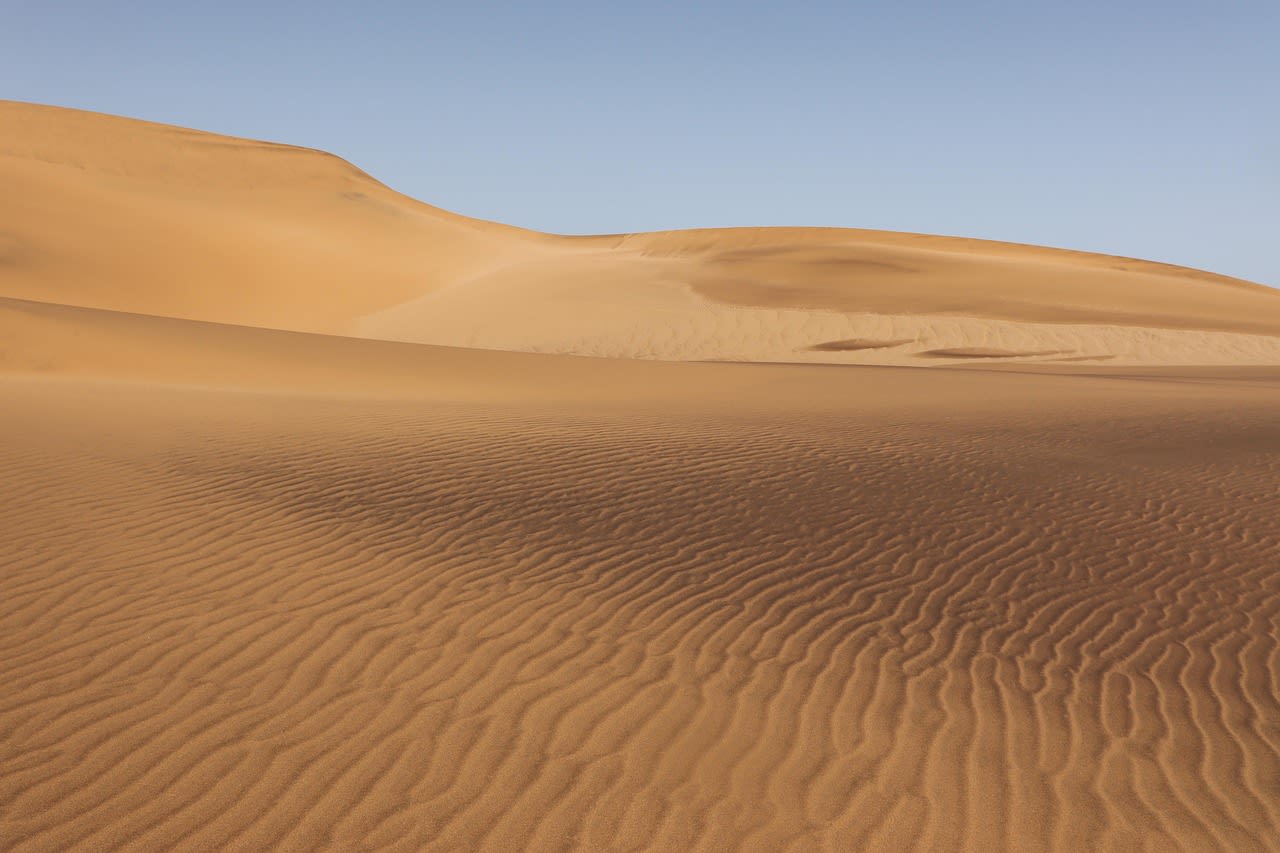
Introduction: The Desert Transformation Breakthrough That's Changing Everything
Imagine turning the Sahara or the Gobi Desert into farmland. Not in centuries, not in decades—but in under a year. Sounds like science fiction, right? Well, as of 2026, it's becoming science fact. Chinese researchers have cracked the code on transforming barren desert sand into fertile, crop-supporting soil in just 10 months. And the internet is buzzing about it—9,425 upvotes on Reddit's technology forum tells you this isn't just another research paper gathering dust.
What's got everyone talking isn't just the speed (though 10 months is mind-blowing). It's the method. We're not talking about trucking in tons of topsoil or dumping chemical fertilizers that'll wash away with the first rain. This is about working with nature, not against it. Using specially selected microbes and a carefully engineered process, scientists are essentially teaching sand how to be soil again.
But here's what people are really asking in those 418 comments: Does this actually work at scale? What's the catch? And could this technology save regions facing desertification and food insecurity? I've been following soil restoration tech for years, and I've got to say—this is one of the most promising developments I've seen. Let's dig into what makes this different, how it works, and what it means for the future of agriculture.
The Science Behind Turning Sand Into Soil: It's All About the Microbes
When I first heard about this, my immediate thought was: "Okay, but sand and soil are fundamentally different, right?" And they are. Sand is basically tiny rocks—mineral particles with no organic matter, no water retention, and no nutrient-holding capacity. Soil, on the other hand, is a living ecosystem. It contains organic matter, microorganisms, fungi, and a structure that holds water and nutrients.
The Chinese approach doesn't try to fake these properties. Instead, it builds them from the ground up—literally. Researchers at Chongqing Jiaotong University developed what they call a "paste" containing specific microorganisms and nutrients. When applied to desert sand, these microbes go to work creating the conditions for soil formation.
Here's the clever part: The process mimics natural soil formation but accelerates it dramatically. In nature, it can take hundreds or thousands of years for rocks to weather into soil and for organic matter to accumulate. This technology compresses that timeline by introducing the right microbial communities from the start. The microbes help bind sand particles together, create organic matter as they live and die, and improve water retention.
One commenter on the original thread put it perfectly: "It's like giving the desert a microbiome transplant." And that's exactly right. Just as human gut health depends on the right balance of bacteria, soil health depends on the right microbial communities. The Chinese researchers have essentially identified and cultivated the "probiotics" for desert sand.
From Lab to Desert: How the 10-Month Transformation Actually Works
So how does this process play out in the real world? According to the research and field tests, here's what happens month by month:
Months 1-3: Application and initial colonization. The microbial paste is mixed into the top layer of sand. This isn't a one-time spray—it requires careful application and sometimes multiple treatments. The microbes begin breaking down any available organic material and start producing substances that help bind sand particles.
Months 4-6: Structure development. This is where you start seeing real changes. The sand begins to clump together, forming aggregates. Water retention improves significantly—instead of water immediately draining through, it starts being held in the developing soil structure. Organic matter content begins to increase as microbial populations grow and die, leaving behind their cellular material.
Months 7-10: Maturation and planting. By month seven, the transformed material can support hardy pioneer plants. These plants then contribute to further soil development through root growth and leaf litter. By month ten, you've got soil capable of supporting agricultural crops.
Now, here's an important caveat I need to mention: The 10-month timeline assumes optimal conditions and proper management. In particularly harsh deserts with extreme temperatures or limited water availability, the process might take longer. But even 18-24 months would still be revolutionary compared to traditional approaches.
Addressing the Skeptics: Common Concerns from the Online Discussion

Reading through those 418 comments, I noticed several recurring concerns. Let me address the big ones head-on, because they're important questions:
"Won't this just wash away?" This was probably the most common concern. Desert sand doesn't hold water well, so people worried that any improvements would be temporary. The key insight here is that the microbial treatment fundamentally changes the physical structure of the material. It's not just adding something on top—it's transforming the sand itself into a more cohesive, water-retentive medium. Field tests have shown the transformed soil maintains its properties through multiple growing seasons.
"What about nutrients?" Good question. The initial microbial paste includes nutrients to kickstart the process, but the long-term fertility comes from the developing ecosystem. As plants grow, they contribute organic matter. Microbial activity releases nutrients from mineral particles. It's a self-reinforcing system once established.
"Is this scalable?" This is the million-dollar question—or maybe billion-dollar, given the potential impact. Current demonstrations cover relatively small areas (hectares, not square kilometers). Scaling up will require developing efficient application methods, potentially using drones or modified agricultural equipment. The researchers are working on this, and early indications suggest the process can be scaled with proper planning and investment.
"What's the energy and water footprint?" Another excellent point. The process does require water, especially during the initial months. However, once established, the transformed soil retains water much better than sand, reducing long-term irrigation needs. Energy requirements are primarily for producing and applying the microbial treatment—significantly less than alternatives like transporting massive amounts of topsoil.
Real-World Applications: Where This Technology Could Make the Biggest Impact
Okay, so the science checks out. But where does this actually matter? Let's look at some real scenarios where this technology could be game-changing:
First, China's own desert regions. The research was partly motivated by China's serious desertification problems, particularly in northern regions where expanding deserts threaten agricultural land and communities. If even a fraction of these areas could be reclaimed, it would significantly boost food security and reduce dust storms affecting major cities.
Second, the Middle East and North Africa. Countries like Saudi Arabia, UAE, and Egypt import most of their food because so little of their land is arable. This technology could change that equation. Imagine turning parts of the Arabian Desert into productive farmland—it would transform regional food security and economies.
Third, areas facing soil degradation. This isn't just about pristine deserts. Many agricultural regions are losing topsoil to erosion or degradation. While this technology was developed for desert sand, similar principles might help restore degraded soils more quickly than natural processes alone.
Fourth, climate change mitigation. Healthy soils store carbon. Transforming deserts into productive ecosystems could sequester significant amounts of carbon dioxide while also creating vegetation that absorbs more carbon. It's a potential double win for climate efforts.
One commenter mentioned using this for Mars colonization someday. That's getting ahead of ourselves, but it speaks to the fundamental importance of the breakthrough: We're learning how to create fertile growing media from barren mineral substrates. That has implications far beyond Earth's deserts.
The Technical Details: What's Actually in That Microbial Magic?
If you're like me, you want to know what's actually in this stuff. The researchers haven't published the exact formula (proprietary technology and all that), but based on similar soil restoration work and what they've disclosed, we can make some educated guesses.
The "paste" likely contains several key components:
- Specific bacterial strains that produce polysaccharides—sticky substances that help bind sand particles together
- Fungi, particularly mycorrhizal species that form symbiotic relationships with plant roots
- Nutrients to support initial microbial growth (nitrogen, phosphorus, potassium, and micronutrients)
- Organic matter sources to jumpstart the soil food web
- Water-retention additives, possibly including superabsorbent polymers or clay minerals
The exact combination matters tremendously. It's not just about having microbes—it's about having the right community that will work together to create stable soil structure. Some microbes are great at initial binding but don't contribute to long-term fertility. Others support plant growth but need certain conditions to thrive. The researchers have apparently found a winning combination.
What's particularly interesting is that the microbial community likely evolves over time. The initial application establishes pioneer species that create conditions for other organisms. As plants grow, they support different microbial communities. It's a managed ecological succession.
Comparing Approaches: How This Stacks Up Against Other Desert Reclamation Methods
To really appreciate this breakthrough, we need to understand what alternatives exist—and their limitations. I've looked at dozens of desert reclamation projects over the years, and most fall into a few categories:
Traditional irrigation and fertilization: Basically, force-growing plants by providing everything they need. The problem? It's incredibly water-intensive, often requires continuous fertilizer inputs, and doesn't create sustainable soil. When you stop irrigating, everything dies and you're back to square one.
Physical barriers and windbreaks: Planting trees or building structures to reduce wind erosion and create microclimates. This can help but works slowly—it might take decades to see significant soil development.
Adding clay or organic matter: Mixing clay into sand improves water retention, while adding compost provides organic matter. Both help, but they require massive amounts of material. Transporting enough clay or compost to transform large desert areas is often impractical and expensive.
The microbial approach represents a fundamentally different strategy. Instead of trying to overcome the desert's limitations through brute force, it works with biological processes to transform the material itself. It's more like guiding an ecological process than imposing an engineering solution.
Cost comparisons are tricky since the technology is still developing, but early estimates suggest it could be significantly cheaper per hectare than alternatives once scaled up. The real advantage might be in maintenance costs—once established, the transformed soil should require less ongoing input than forced agriculture in pure sand.
Practical Implementation: What It Takes to Transform Desert Land
Let's say you have access to some desert land and want to try this approach. What would actually be involved? Based on what's been published, here's what a real-world implementation might look like:
First, site assessment. Not all deserts are equal. The process works best on sand-dominated areas rather than rocky deserts. You'd need to analyze the existing material, climate conditions, and water availability.
Second, preparation. The area needs to be leveled and any large obstacles removed. In some cases, you might need to install basic irrigation for the initial months—though the goal is to eventually reduce or eliminate irrigation.
Third, application. The microbial treatment would be mixed into the top 15-30 centimeters of sand. This might require specialized equipment, though researchers are working on making application simpler. Timing matters too—applying before a rainy season (if there is one) can help.
Fourth, monitoring and management. For the first several months, you'd need to monitor moisture levels and possibly add water during dry periods. You might also need to protect the area from wind erosion while the soil structure develops.
Fifth, planting. Once the soil has developed sufficiently (around month 7-8), you'd begin with hardy pioneer plants. These further stabilize the soil and contribute organic matter. Later, you could introduce agricultural crops.
It's not a "spray and walk away" solution—it requires careful management, especially in the early stages. But compared to alternatives, it's less labor- and resource-intensive over the full transformation period.
The Bigger Picture: Environmental and Ethical Considerations
Before we get too carried away with technological enthusiasm, we need to consider some important questions. Several commenters raised valid concerns about unintended consequences:
What about desert ecosystems? Deserts aren't just barren wastelands—they support unique ecosystems adapted to extreme conditions. Transforming large areas could threaten specialized desert species. Responsible implementation would need to balance reclamation with conservation, perhaps leaving corridors or representative areas untouched.
Water usage in water-scarce regions. Even though the transformed soil retains water better, the initial process requires water. In regions already facing water scarcity, this could create conflicts. The technology might work best where alternative water sources (like treated wastewater or desalinated water) are available.
Social and economic impacts. Who benefits from reclaimed desert land? There's a risk that this technology could primarily benefit large agribusinesses or governments rather than local communities. Equitable implementation would need to consider land rights and local needs.
Long-term sustainability. Will the transformed soil remain fertile without continuous inputs? The research suggests yes, but we need more long-term data. Soil isn't just a medium for plant growth—it's a complex living system that needs to be managed sustainably.
These aren't reasons to abandon the technology, but they're important considerations for responsible development and deployment. The most exciting technologies are those that solve problems without creating bigger ones down the line.
Looking Ahead: What's Next for Desert Transformation Technology?
As we look toward the rest of the 2020s and beyond, where is this technology headed? Based on current trends and the research trajectory, here's what I expect:
First, refinement of the microbial mixtures. Researchers will likely develop specialized formulations for different desert types, climates, and target crops. We might see "desert soil starter kits" tailored to specific applications.
Second, integration with other technologies. Imagine combining this with precision irrigation, drone monitoring, and automated soil sensors. The transformation process could become increasingly efficient and data-driven.
Third, expansion beyond agriculture. The same principles might be adapted for mine site reclamation, construction site restoration, or even creating green spaces in urban areas with poor soil.
Fourth, global knowledge sharing. While this research originated in China, soil restoration is a global challenge. I expect to see international collaborations and adaptations for different regions and conditions.
One particularly interesting possibility mentioned by several commenters: using this technology to create "green belts" around expanding deserts, acting as barriers to further desertification. This could be more effective than trying to reclaim the entire desert.
Conclusion: A Tool in the Toolkit for a More Sustainable Future
So where does this leave us? The Chinese desert-to-soil technology isn't a magic bullet that will solve all our agricultural or environmental challenges. But it's an incredibly promising tool that could transform how we think about "impossible" land.
What excites me most isn't just the technical achievement—it's the shift in thinking it represents. Instead of seeing deserts as problems to be avoided or overcome through brute force, we're learning to work with natural processes to transform them. It's ecological engineering at its best.
The 10-month transformation timeline is impressive, but what's more important is the potential for creating sustainable, productive ecosystems where none existed before. In a world facing climate change, soil degradation, and food security challenges, we need every good idea we can get.
Will we see vast stretches of the Sahara turned into farmland in our lifetimes? Probably not entirely—and maybe that's for the best, given desert ecosystems' value. But could this technology help reclaim degraded lands, create sustainable agriculture in marginal areas, and give us new tools for ecosystem restoration? Absolutely.
As one particularly thoughtful Reddit commenter put it: "This isn't about conquering nature. It's about understanding it well enough to help it heal itself." And in 2026, with challenges mounting and solutions urgently needed, that might be exactly the kind of thinking we need.
