



Introduction: The $2,000/Month Reality Check
You just landed that remote job paying $2,000 a month. Congratulations—that's a game-changer, especially if you're coming from a country like Morocco where that income can transform your lifestyle. But here's the thing everyone forgets to mention: $2,000 USD monthly isn't "digital nomad rich." It's digital nomad smart. It's enough to build a fantastic life in the right places, but you need to optimize every single aspect. I've been there, and I've watched dozens of friends navigate this exact income bracket. The difference between thriving and just surviving comes down to how you handle three things: where you live, how you're taxed, and how you get paid. Let's break this down.
Understanding Your Real Budget: It's Not $2,000
First, let's get brutally honest. Your $2,000 offer letter doesn't mean $2,000 in your pocket. Depending on your setup, you could lose 10-30% right off the top. Taxes, payment processing fees, currency conversion—they all chip away at that number. I've seen people plan elaborate nomad lives based on their gross income, only to realize they're working with hundreds less than expected.
From what I've seen with clients, here's a typical breakdown for someone in your position: If you're contracting as an individual (common for remote workers from countries without established corporate presence), you might pay 10-25% in taxes depending on your country's treaties and your residency status. Payment platforms like PayPal or Wise take another 1-4%. Currency conversion? Another 0.5-3% if you're not careful. Suddenly, that $2,000 is more like $1,500-1,700. That's the number you should be planning with.
And here's something most guides won't tell you: Your emergency fund needs to be part of this calculation from day one. I recommend setting aside at least one month's expenses immediately. That means your actual monthly spending budget on month one is even lower. It hurts, but planning for this reality is what separates successful nomads from those who burn out in six months.
Location Strategy: Where $2,000 Feels Like $5,000
This is where you can win big. With $2,000 net, you're looking at countries where the average local salary is $500-1,000 monthly. That puts you in the upper-middle class range, which means you can afford nicer accommodations, better food, and still save. Based on 2026 cost of living data and my own recent travels, here are the tiers that make sense:
Tier 1: Ultra-Low Cost (Under $1,000/month comfortable living)
Vietnam, Indonesia (outside Bali hotspots), parts of Mexico (like Oaxaca or Guanajuato), Georgia, Albania. In these places, you can rent a decent apartment for $300-500, eat well for $200-300, and have plenty left for co-working spaces and travel. I spent three months in Georgia last year on about $900 monthly, living better than I did in my home country for double that.
Tier 2: Balanced Value ($1,200-1,600/month)
Portugal (outside Lisbon), Spain's smaller cities, Thailand (Chiang Mai, though it's gotten pricier), Colombia, Argentina (with current exchange advantages). These offer more established nomad infrastructure and often better digital nomad visa options, but you'll need to budget more carefully.
What about those digital nomad visas everyone talks about? Here's the real talk: Many require proof of income higher than $2,000. Portugal's D7 (which functions as a nomad visa) wants around €760 monthly—you qualify easily. Georgia's Remotely From Georgia program has no minimum income requirement. Croatia's digital nomad visa requires about $2,300, so you'd need savings to supplement. Always check the latest 2026 requirements—they change constantly.
The Tax Maze: Legal Optimization, Not Evasion

This is where most new remote workers panic. Let me simplify: You generally pay taxes where you're a tax resident, which is typically where you spend 183+ days per year. But with remote work, things get fuzzy. If you're from Morocco working for a US company, you might have taxes in both countries unless there's a tax treaty (Morocco and the US have one, by the way).
For your $2,000/month situation, here are the practical approaches I've seen work:
Option 1: Keep it simple, pay at home. If you maintain Moroccan tax residency (keep an address, bank account, spend significant time there), just pay taxes there. Morocco's tax rates for this income level are reasonable, and you avoid complex international filings. The downside? You might pay more than in some zero-tax jurisdictions.
Option 2: Establish residency in a favorable country. This is the "digital nomad visa as tax optimization" play. Countries like Georgia offer territorial taxation—you only pay tax on Georgian-source income. If your $2,000 comes from outside Georgia, it's tax-free. Portugal's NHR program (if it still exists in some form in 2026) offers reduced rates. But—and this is critical—this only works if you actually move your life there. Tax authorities aren't stupid about "paper residencies."
Option 3: The corporate structure. Setting up a company in a low-tax jurisdiction. For $2,000/month, this is usually overkill unless you plan to scale. The setup costs and annual compliance might eat 20% of your income.
My recommendation? Start with Option 1. Get comfortable with your income stream, understand your spending patterns, then consider Option 2 after 6-12 months if the math makes sense. And always, always consult with a tax professional who understands international remote work. The $200-500 investment could save you thousands.
Getting Paid: The Fee-Fighting Game
Payment processing is the silent budget killer. I've watched people lose $80-100 monthly on a $2,000 income through bad choices. That's a flight every few months, or a week's groceries. Here's how to minimize the bleed:
Traditional Banks: Usually the worst option for international transfers. They charge high wire fees (often $25-50 per transfer) and give terrible exchange rates. I once lost 8% on a transfer through my old bank. Never again.
PayPal: Convenient but expensive. The 4.4% + fixed fee for currency conversion adds up. If your employer insists on PayPal, use it to receive USD, then transfer to a better platform for conversion.
Wise (formerly TransferWise): Still one of the best for most nomads. Transparent fees (usually 0.5-1.5%), real exchange rates, and you can hold multiple currencies. For $2,000 monthly, you'd pay about $10-30 in fees. You can get a debit card that works globally too.
Payoneer: Good for receiving from companies, especially if they're already using it. Similar fees to Wise, but I've found their customer service less responsive.
Cryptocurrency: Some employers offer this. The volatility risk with your entire income is real, but stablecoins (like USDC) can work if you convert immediately to local currency. The fees are low, but the learning curve is steep.
Here's my current setup that costs me under 1% total: Employer pays to my Wise USD account. I convert to local currency when rates are favorable (I use a rate alert). Then I transfer to a local bank account for daily spending. For backup, I have a Charles Schwab Investor Checking debit card that refunds all ATM fees worldwide—perfect for cash withdrawals without the 3% foreign transaction fees most cards charge.
Building Your 2026 Nomad Toolkit
On $2,000/month, you can't afford expensive mistakes with tools and subscriptions. Every dollar needs to work. Here's what I actually use and recommend:
Communication: Slack/Discord for work, Signal for personal. All free. Google Voice for a US number if needed ($10-20 one-time).
VPN: Non-negotiable for public WiFi. Mullvad or ProtonVPN cost $5-10 monthly and are reliable. Don't use free VPNs—they sell your data.
Cloud Storage: Google One (100GB for $2/month) or Sync.com for encrypted files. Back up everything. I learned this the hard way when a hard drive died in Thailand.
Accounting: Wave Apps (free) or Bonsai ($20/month) for invoicing and expense tracking. For $2,000/month income, Wave is probably sufficient.
Automation: This is where you can save hours monthly. If your work involves data collection or repetitive online tasks, consider automating with Apify. Their platform lets you create scrapers and automations without coding knowledge. I used it to automate market research that used to take me 5 hours weekly—now it takes 20 minutes. For $49-99/month, it might seem steep on your budget, but if it saves 10+ hours monthly, that's time you could use for freelance gigs or skill-building.
Physical gear matters too. A reliable laptop is essential—I recommend the MacBook Air M3 for its balance of performance and battery life. A good portable monitor can double your productivity. And never underestimate the value of a quality travel adapter with multiple USB ports.
The Mindset Shift: From Employee to Business Owner
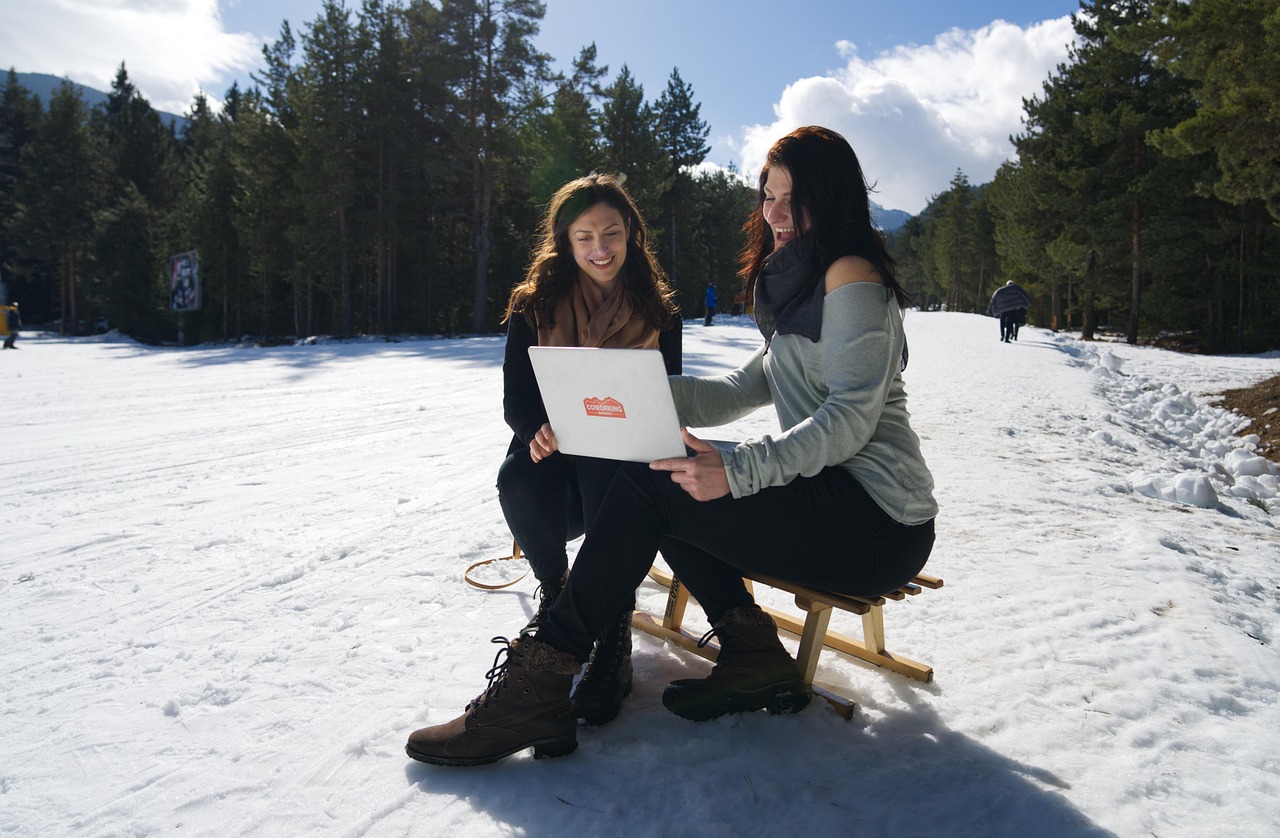
Here's what nobody tells you about that first remote job: You're not just an employee anymore. You're a one-person business. Your employer is your client. This mental shift changes everything.
On $2,000/month, you need to think about:
Income diversification: What happens if this job ends? Start building other income streams immediately, even if it's just $100-200 monthly from a small freelance gig. Platforms like Fiverr can be starting points for offering your existing skills. I spent 5 hours weekly building a small web design side business that now brings in $500 monthly—that's a 25% buffer for my main income.
Skill investment: Allocate 5-10% of your income to learning. That's $100-200 monthly. Use it for courses, books, or certifications that make you more valuable. In 2026, AI collaboration skills, cybersecurity basics, and specialized software knowledge pay dividends.
Network building: Your professional network is your safety net. Join digital nomad communities, attend virtual meetups, connect with people in your industry. I've gotten three job offers through connections made in nomad Slack groups.
The most successful $2,000/month nomads I know treat their finances like a business too. They know their monthly burn rate, their runway if income stops, and their growth targets. They're not just surviving—they're strategically building.
Common Pitfalls and Your Questions Answered
Let's address the specific questions from that Reddit thread and add what I've learned the hard way:
"Should I get a digital nomad visa or just tourist hop?"
If you plan to stay in one country 3+ months, get the proper visa. Overstaying tourist visas burns bridges with countries. The fines and potential bans aren't worth it. Many countries now have affordable nomad visas—use them.
"How do I prove income for visas with a new remote job?"
Contract copy, bank statements showing deposits, and sometimes a letter from employer. Start collecting this documentation immediately.
"Health insurance on $2,000/month?"
Non-negotiable. SafetyWing or World Nomads for basic coverage ($40-100/month). If you're in a country with good public healthcare (like Georgia or Thailand), consider local insurance too.
Biggest mistake I see: People moving to "cheap" countries and immediately living like they're on vacation—eating out daily, taking tours every weekend, staying in expensive Airbnbs. Your $2,000 disappears fast. Live like a local, cook most meals, find monthly rentals (not daily rates), use local transportation.
Second biggest mistake: Not tracking expenses. Use a simple spreadsheet or app. Know where every dollar goes for at least the first 3 months. You'll find surprising money leaks.
Making It Sustainable: The 12-Month Plan
Here's how I'd approach your first year on $2,000/month remote income:
Months 1-3: Stability phase. Stay somewhere familiar or with low moving costs. Morocco might actually be perfect—you know the costs, have support networks. Use this time to establish your payment systems, understand your tax obligations, build your emergency fund to at least $2,000.
Months 4-6: Exploration phase. Try one of the Tier 1 countries for 2-3 months. Georgia, Vietnam, or Mexico. Keep expenses under $1,200 monthly if possible. Test your systems, see what lifestyle works for you.
Months 7-9: Optimization phase. Based on what you learned, choose a home base for 6+ months. Establish potential tax residency if beneficial. Start building local networks.
Months 10-12: Growth phase. With stable systems and lower expenses, you should have surplus. Invest in skills, start side income, or save for bigger goals.
Remember, the goal isn't just to survive on $2,000/month. It's to use this opportunity to build a lifestyle and financial foundation that lets you grow beyond it. I've watched people turn $2,000/month remote jobs into $5,000/month freelance careers within 2-3 years by being strategic.
Your Next Steps
That $2,000/month offer isn't just a job—it's a key to a different life. But keys only work if you know which doors they open and how to turn them properly. Start with the basics: Calculate your actual take-home after taxes and fees. Research 2-3 potential base countries that fit your budget and visa requirements. Set up efficient payment systems. Consult a tax professional about your specific situation.
The digital nomad community sometimes glorifies the "just figure it out" approach, but with $2,000/month, you need more plan than winging it. The good news? Thousands have walked this path before you. The infrastructure in 2026—from nomad visas to payment platforms to co-living spaces—is better than ever for someone at your income level.
Your first move? Don't rush. Take that job, get 2-3 months of stability under your belt while you research, then make your move. That $2,000/month is more than enough if you're smart about it. I'm living proof—and so are thousands of others who started right where you are now.