



Let's be honest—most security cameras today are privacy nightmares. You're trading your family's privacy for convenience, handing over footage to companies who might sell it, share it, or lose it in a data breach. I've tested dozens of these systems, and the trade-offs always left me uneasy. That's why when I saw the ROOT Observer prototype gaining traction in the self-hosted community, I knew this was something different.
This isn't just another camera. It's a statement about what home security should be in 2026: private, secure, and completely under your control. The developer behind it spent months building open-source firmware that actually respects your boundaries. No cloud subscriptions, no third-party data mining, no backdoors. Just pure, local security that works for you, not against you.
In this guide, we'll explore what makes this approach revolutionary. We'll answer the questions real users are asking, address their concerns, and give you the practical knowledge to understand—and maybe even build—your own privacy-first security system. Because in a world where everything seems to be watching you, shouldn't your security cameras be the exception?
The Privacy Problem with Modern Security Cameras
Most people don't realize what they're signing up for when they install that shiny new security camera. I've torn apart enough firmware and analyzed enough network traffic to tell you—it's not pretty. These devices are often designed to be convenient first, secure maybe second, and private… well, that's usually an afterthought if it's considered at all.
Take the typical cloud-connected camera. Your footage travels through multiple servers, gets stored on infrastructure you don't control, and might be analyzed by algorithms you didn't consent to. Some companies even use this data to train their AI models. Think about that—your private moments, your family coming and going, potentially becoming training data for some corporation's profit.
And the security? Don't get me started. Default passwords, unpatched vulnerabilities, weak encryption—I've seen it all. There's a reason why security cameras regularly make headlines for being hacked. They're often the weakest link in your home network.
The ROOT Observer approach flips this entirely. By keeping everything local and implementing proper end-to-end encryption even for notifications, it addresses the core privacy concerns that keep security-conscious users up at night. This isn't just incremental improvement—it's a fundamentally different philosophy.
Understanding the ROOT Observer Architecture
So how does this actually work? Let's break down what makes the ROOT Observer prototype special. The architecture is surprisingly elegant once you understand the components.
First, the camera itself is a standalone device. It doesn't need to phone home to some corporate server to function. All the intelligence—the machine learning for event detection, the video processing, the encryption—happens right on the device. This is crucial. It means your footage never leaves your property unless you specifically choose to share it.
The "dumb relay server" mentioned in the original post is a brilliant design choice. Many people misunderstood this initially, thinking it was a weak point. Actually, it's the opposite. This server merely passes encrypted messages between your camera and your phone. It can't decrypt them. It can't read them. It's just a messenger that doesn't understand the message.
Think of it like sending a locked briefcase through a courier. The courier (the relay server) can deliver the briefcase, but they don't have the key to open it. Only you and your devices have those encryption keys. This architecture means even if someone compromises the relay server—which is much less likely since it handles minimal, encrypted traffic—they still get nothing useful.
End-to-End Encryption: What It Really Means
Everyone throws around "end-to-end encryption" these days, but few implementations actually deliver it properly for security cameras. The ROOT Observer's approach is worth examining closely because it gets the details right.
True end-to-end encryption means your video is encrypted on the camera itself, stays encrypted during transmission, and only gets decrypted on your authorized devices. No intermediate server ever sees the plaintext footage. Not for storage, not for processing, not for anything.
But here's where most systems fail: they encrypt the video stream but not the metadata. The ROOT Observer prototype appears to handle this comprehensively. Push notifications about detected events are also encrypted. Think about that—even the notification that "motion was detected in your backyard at 3 PM" is protected. This prevents someone from learning your patterns just by watching the notification traffic.
The encryption keys are generated and stored on your devices. They never leave your control. If you lose a device, you can revoke its access without compromising the entire system. This is enterprise-grade security applied to home surveillance.
One solution worth considering for securing remote access to your self-hosted systems is a reliable VPN service. When you need to check your cameras while away from home, connecting through a secure VPN adds an extra layer of protection to your network.
On-Device Machine Learning: Privacy-Preserving AI

This is where things get really interesting. Machine learning for event detection—identifying people, vehicles, packages—typically happens in the cloud. Your camera streams footage to some server, the server analyzes it, then tells you what it found. Every frame of that video leaves your network.
The ROOT Observer does this differently. The ML models run directly on the camera hardware. When it detects a person, that processing happens locally. Only the conclusion ("person detected") and maybe a thumbnail get encrypted and sent as a notification. The full video stays put.
This has several advantages beyond privacy. It reduces bandwidth usage significantly. It works even if your internet goes down. And it's faster—no round-trip to a cloud server means near-instant detection.
The challenge, of course, is hardware. Running decent ML models requires processing power. The prototype seems to have solved this with efficient models and appropriate hardware selection. In 2026, we're seeing more chips designed specifically for edge AI—perfect for applications like this.
What I particularly like about this approach is that you can customize the models. Since everything's open-source, you could train the system to recognize specific people (like family members) or ignore certain patterns (like tree branches moving in the wind). The community could share optimized models for different use cases.
Local Storage and Data Sovereignty
"All footage is stored locally." That simple sentence in the original post represents a fundamental shift in control. When your video stays on your property, you decide what happens to it. No company can access it without your permission. No government can subpoena it from a cloud provider. No hacker can steal it from a poorly secured database.
But local storage isn't without challenges. What if someone steals the camera? What about drive failures? How do you access footage remotely?
The smart approach—and what I suspect the ROOT Observer implements—is layered storage with optional redundancy. Primary storage on the device itself (probably microSD), with the ability to automatically back up to a network-attached storage (NAS) device. This gives you both convenience and resilience.
For remote access, the encrypted relay system allows you to view footage securely from anywhere. But the important distinction is that you're pulling the video from your local storage through an encrypted tunnel, not accessing it from some cloud server.
Data retention is completely under your control. You set how long footage is kept. You decide what gets archived. There's no monthly fee for cloud storage that suddenly triples after the first year. The storage hardware might be an upfront cost, but it's a one-time expense that you own forever.
Open-Source Firmware: Transparency and Trust
Here's the part that really excites the self-hosted community: completely open-source firmware. You can read every line of code. You can audit it for security issues. You can modify it for your specific needs. This transparency builds trust in a way proprietary software simply can't.
I've looked at enough closed-source IoT device firmware to be deeply skeptical of claims. Too often, "secure" really means "we hope you don't find the vulnerabilities." With open-source, the community can—and does—find and fix issues collectively.
The ROOT Observer's open-source approach means several things for users:
First, longevity. If the original developer moves on, the community can maintain the project. Your cameras won't become e-waste when a company decides to discontinue support.
Second, customization. Want to add a specific feature? Need integration with your existing home automation system? You can modify the code or hire someone who can. Speaking of which, if you need custom development work but don't have the skills yourself, you can often find expert developers on Fiverr who specialize in IoT and embedded systems.
Third, security. With many eyes on the code, vulnerabilities get found and fixed faster. There's no hiding poor practices behind binary blobs.
The OTA (over-the-air) update mechanism mentioned is particularly important. It means security patches can be deployed quickly and easily. But crucially, because it's open-source, you can choose whether to install updates. You're not forced into changes you don't want.
Building Your Own: Practical Considerations
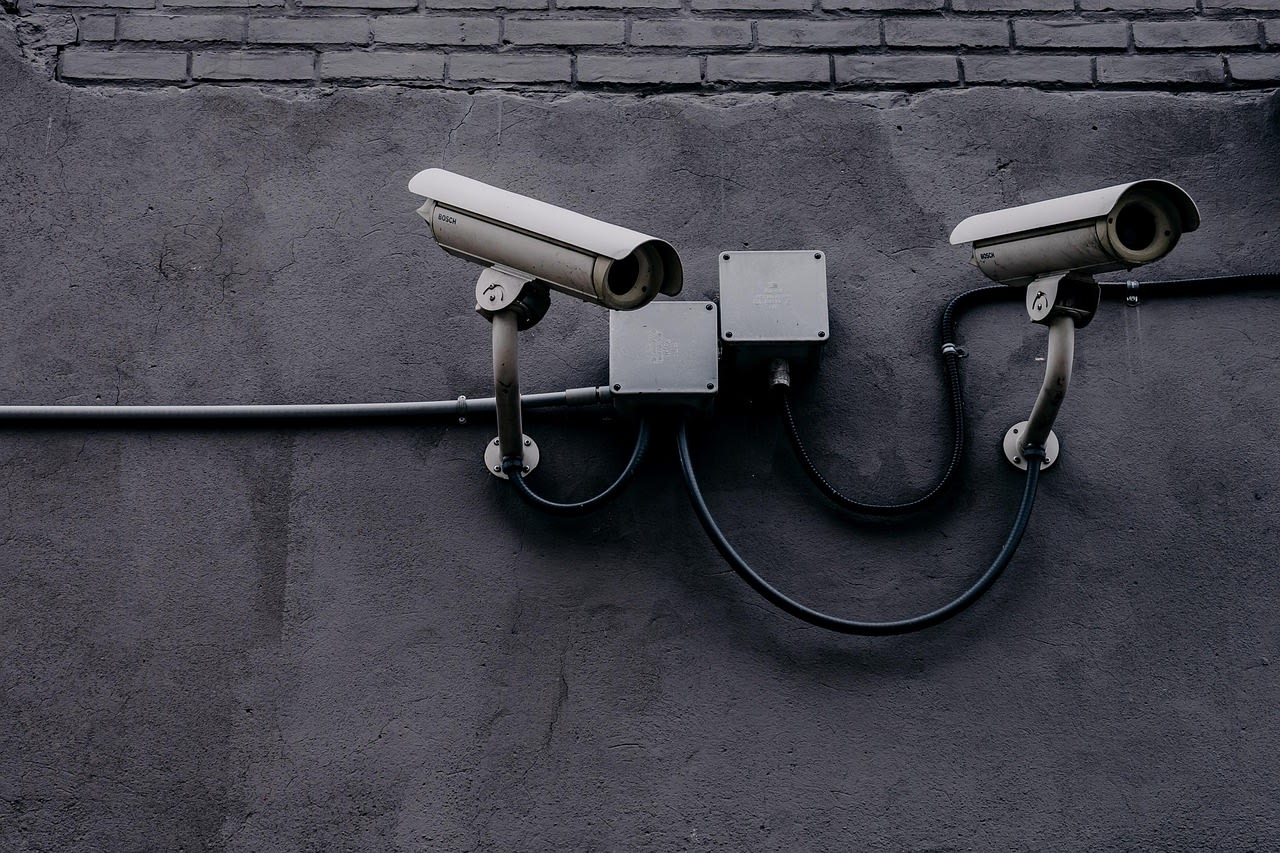
So what if you want to build something similar? Whether you're working with the ROOT Observer specifically or creating your own privacy-first system, here are the practical considerations based on what we've learned from this prototype.
Hardware selection matters more than you might think. You need a camera sensor with good low-light performance, a processor capable of running ML models efficiently, enough RAM for buffering, and reliable storage. The Raspberry Pi Camera Modules have been popular in DIY circles, but in 2026 we're seeing more purpose-built options.
Power consumption is another consideration. Security cameras need to run 24/7. Efficient components and good power management in the firmware make a big difference in electricity costs over time.
Network design is crucial. I recommend putting IoT devices on a separate VLAN from your main devices. This limits the damage if a device is compromised. The ROOT Observer's architecture actually helps here—since it doesn't need broad network access to function, you can restrict it tightly.
For the relay server, you have options. You could use a cheap VPS (virtual private server), run it on a home server with a dynamic DNS service, or even use a peer-to-peer approach. The key is that this server has minimal responsibilities and handles only encrypted data.
Common Questions and Concerns Addressed
Reading through the original discussion, several questions kept coming up. Let me address the most common ones based on what we know about this approach.
"What if someone steals the camera?" This was a frequent concern. With local storage, doesn't the thief get all your footage? Actually, proper implementation would include encryption of the stored footage too. Even with physical access to the storage card, they'd need your encryption keys. Those should be stored separately, perhaps on your phone or a home server.
"How does this compare to existing solutions like Frigate or Shinobi?" Those are excellent self-hosted NVR (network video recorder) solutions, but they typically work with existing cameras that may not have privacy-focused firmware. The ROOT Observer approach is more integrated—the privacy features are built into the camera itself, not just the recording system.
"What about audio?" The original post didn't mention audio, but the same principles apply. Audio would be encrypted end-to-end if implemented. Some jurisdictions have stricter laws about audio recording, so that's something to research for your location.
"Can I access multiple cameras through one app?" A good implementation would support this. Each camera would have its own encryption keys, but your authorized devices could access all of them. The relay server would handle routing encrypted messages to the correct destinations without being able to read them.
"What happens if I lose my phone?" Proper key management includes recovery options. You might have backup keys stored securely, or a process to authorize new devices from existing ones. This is where good UX design meets security—making recovery possible without creating vulnerabilities.
The Future of Privacy-First Security
Looking ahead to 2026 and beyond, I believe the ROOT Observer prototype represents a growing trend. Consumers are becoming more privacy-aware, and regulations are catching up. The days of blanket surveillance in the name of security are numbered.
We're likely to see more devices adopting this architecture. Not just cameras, but doorbells, sensors, and other smart home devices. The combination of on-device processing, local storage, and proper encryption provides a blueprint for IoT that respects user privacy.
Standardization will help. Imagine if there was an open protocol for privacy-first IoT devices—a common way to handle encryption, key exchange, and communication. This would allow different manufacturers' devices to work together while maintaining security.
Hardware will continue to improve. More efficient ML accelerators, better low-light sensors, longer-lasting storage—all these advancements will make privacy-first systems more capable and affordable.
And perhaps most importantly, awareness will grow. Projects like the ROOT Observer show what's possible. They demonstrate that you don't have to sacrifice privacy for security. You can have both.
Getting Started with Privacy-First Security
If you're inspired to take control of your home security, where should you start? Based on what we've learned from this prototype and similar projects, here's my advice.
First, assess your needs. How many cameras? What areas need coverage? What detection capabilities are important? This will guide your hardware choices.
Second, consider your technical comfort level. The ROOT Observer appears to be aimed at the self-hosted community—people comfortable with technology. If that's not you, look for commercial products that adopt similar principles. They're becoming more common.
Third, plan your network. As mentioned earlier, network segmentation is your friend. So is a good router with firewall capabilities. These aren't just for privacy-first systems—they're good practice for any connected home.
Fourth, think about storage. How much footage do you want to keep? For how long? Do you need redundancy? A small Network Attached Storage device can be a good investment for backing up multiple cameras.
Finally, join the community. The self-hosted community is incredibly knowledgeable and supportive. Whether you're building from scratch or deploying an existing solution, you'll find help, advice, and shared experiences that will make your journey easier.
The ROOT Observer prototype shows us what's possible when we prioritize privacy in our security systems. It's not just about keeping bad actors out—it's about keeping control in. In 2026, that control is becoming non-negotiable for more and more people.
Your home should be your sanctuary, not another data point in some corporation's surveillance portfolio. With approaches like this, it can be both secure and private. And really, shouldn't that be the standard we expect?