
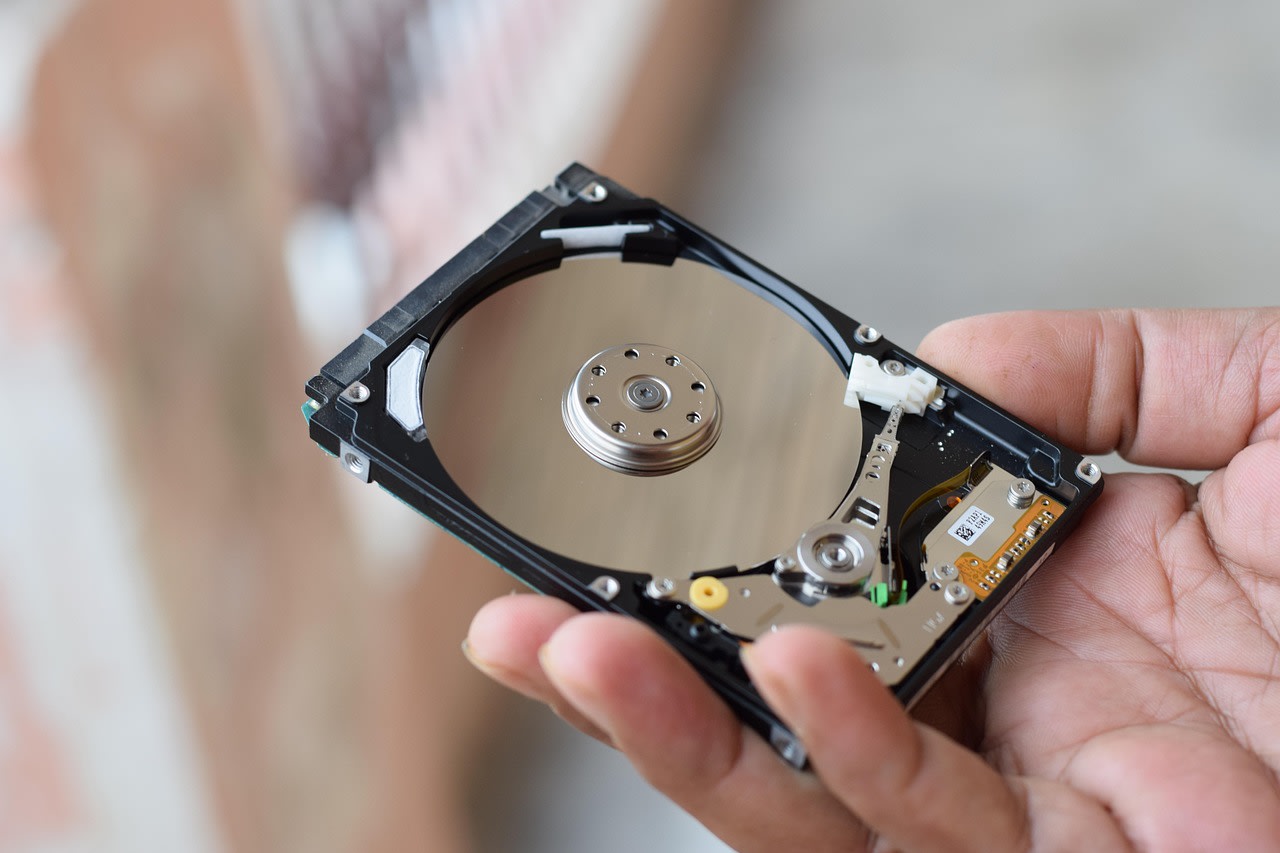


You know that moment when you're about to send another pallet of decommissioned laptops to the recycler, and something just feels... wrong? Like you're throwing away perfectly good money? That's exactly where a lot of sysadmins found themselves a couple years back. The original Reddit post that sparked this conversation hit a nerve—671 upvotes and nearly 200 comments from IT professionals who'd reached the same breaking point.
Here's the reality in 2026: component prices haven't just spiked; they've fundamentally changed how we think about end-of-life hardware. When a 7th-gen Intel laptop can't run Windows 11, the old playbook said "recycle it." The new playbook? That's what we're building right now. And it involves screwdrivers, anti-static bags, and a completely different approach to what "end of life" actually means for enterprise hardware.
The Economics That Changed Everything
Let's talk numbers first, because that's what forced this shift. Back in the early 2020s, you could pick up a 16GB DDR4 SODIMM for maybe $50 on a good day. Fast forward to 2026, and that same module—if you can find it new—might run you $120 or more. NVMe drives followed a similar trajectory. The 512GB drives that were standard in those 7th-gen machines? They're now worth salvaging for spares, test benches, or even secondary storage in newer systems.
But it's not just about component prices. It's about the complete mismatch between hardware capability and software requirements. Windows 11's TPM 2.0 and CPU generation requirements created what I call "the compatibility cliff." Suddenly, thousands of perfectly functional machines—Dell Latitude 7480s, HP EliteBook 840 G5s, Lenovo ThinkPad T470s—were officially obsolete for primary use. Yet their DDR4 RAM and NVMe SSDs were anything but obsolete.
The math becomes painfully obvious when you run it. Say you have 50 decommissioned laptops. At recycling, you might get $5-10 per unit if you're lucky. But strip out the RAM and storage? You're looking at $60-100 worth of components per machine that can keep other systems running. That's the difference between a $500 recycling check and $3,000-$5,000 in usable spare parts. Which would you rather have in your budget?
Building Your Salvage Operation: The Practical Guide
Okay, so you're convinced. Now what? How do you actually implement this without creating a chaotic mess of parts and half-disassembled laptops? From my experience helping multiple organizations make this transition, here's what works.
First, you need a dedicated space. Not a corner of the server room—an actual bench with proper lighting, ESD protection, and organized storage. I've seen teams try to do this on folding tables, and it always ends with lost screws and damaged components. Invest in a proper workstation with magnetic mats, labeled bins, and good lighting. The iFixit Pro Tech Toolkit is worth every penny for this kind of work.
Second, standardize your process. Every machine should go through the same steps: data sanitization (we'll talk about this more later), physical inspection, component removal, testing, and cataloging. Create checklists—physically printed ones work better for this hands-on work than digital forms that require touching your keyboard with greasy fingers.
Third, think about your testing workflow. Pulling a RAM module is useless if you don't know whether it works. You need a known-good test system—often one of the better specimens from your decommissioned batch—where you can quickly verify components. MemTest86 on a bootable USB and CrystalDiskInfo for drives should be in your standard toolkit.
The Data Security Minefield (And How to Navigate It)
This is where I've seen otherwise smart teams make catastrophic mistakes. You cannot—I repeat, cannot—just pull drives and toss them in a bin. Every storage device needs proper sanitization before it leaves the original system.
The Reddit discussion had some terrifying stories: "We found patient records on a drive that was supposed to have been wiped three years ago" or "Our auditor discovered financial data on what we thought were clean spares." These aren't hypotheticals—they're career-ending events waiting to happen.
Here's my absolute rule: Sanitize in place, then remove. For SSDs, that means using the manufacturer's secure erase tool (like Parted Magic or manufacturer-specific utilities) that triggers the drive's internal sanitization. For HDDs in older systems, DoD 5220.22-M standard wiping. Document every wipe with serial numbers and verification.
And here's a pro tip that saved my team countless hours: Create a sanitization station with a USB dock that can handle multiple drives simultaneously. While one batch is wiping, you're working on another machine. Parallel processing isn't just for CPUs—it's for your salvage operation too.
Inventory Management: From Chaos to System
What good are 50 salvaged RAM modules if you can't find the right one when a user's laptop fails? This is where most salvage operations fall apart. You end up with drawers full of unlabeled parts, and when you need a 16GB DDR4-2400 SODIMM, you're digging through 30 different modules trying to find a match.
The solution is what I call "the spare parts matrix." It's a simple spreadsheet (or better yet, a dedicated section in your asset management system) that tracks:
- Component type (RAM, SSD, WiFi card, etc.)
- Specifications (capacity, speed, form factor)
- Quantity available
- Test status and date
- Physical location (which bin, which shelf)
But here's the real secret: You need to be ruthless about organization. Anti-static bags with printed labels. Clear plastic bins. A labeling system that makes sense at 3 AM when you're trying to fix the CEO's laptop before a morning presentation. I prefer color-coded labels by component type—blue for RAM, green for SSDs, red for anything that failed testing.
And don't forget the lifecycle aspect. Components don't last forever. That salvaged SSD has already seen some use. Track installation dates when you deploy salvaged parts, and consider them to have a shorter remaining lifespan than new components.
Automating the Tedious Parts (Because You're Busy)
Here's where we bridge into the Automation & DevOps mindset. Manual processes don't scale. If you're handling dozens or hundreds of machines, you need to automate what you can.
Start with data collection. Instead of manually typing serial numbers and specs, use barcode scanners. Most enterprise laptops have asset tags with barcodes. Scan during intake, and you've started your audit trail automatically. There are plenty of affordable USB barcode scanners that plug right into your workflow.
For drive sanitization, look into batch processing tools. Some of the commercial drive wiping solutions allow you to queue multiple drives and generate automated reports. This is one area where spending a few hundred dollars can save you dozens of hours and eliminate human error.
And here's a clever automation I implemented at my last organization: We used web scraping automation to monitor current market prices for our salvaged components. Why? Because sometimes it makes more sense to sell than to stockpile. If DDR4 prices spike temporarily, we might sell some of our excess inventory to fund new equipment. The automation gave us real-time data to make those decisions.
What About Everything Else? The Complete Salvage Mindset
RAM and SSDs are the low-hanging fruit, but they're not the only salvageable components. Once you've mastered the core process, start looking at other parts.
WiFi cards are often interchangeable across generations. A good Intel AX200 WiFi 6 card from a 10th-gen laptop might give new life to an 8th-gen machine that came with slower WiFi. LCD panels can be kept as emergency spares for when someone inevitably cracks a screen. Even batteries—while they degrade—can be useful for testing or as temporary replacements.
Keyboards, trackpads, power adapters, docking stations... The list goes on. I've seen organizations save thousands just by having a bin of known-good power adapters instead of ordering new ones every time one fails.
But here's the critical balance: Don't become a hoarder. Every component you keep has storage costs, management overhead, and eventually becomes obsolete. My rule is the "18-month window." If I haven't used a component type in 18 months, it's probably time to sell or recycle it. Technology moves fast, and yesterday's premium part is tomorrow's paperweight.
Common Pitfalls (And How to Avoid Them)
Let's address the FAQs and horror stories from that Reddit thread directly, because learning from others' mistakes is cheaper than making your own.
"We mixed up wiped and non-wiped drives." This is the nightmare scenario. The fix is physical separation. Red bins for drives awaiting sanitization, green bins for verified clean drives. Never let them occupy the same space.
"Our spare parts inventory became a black hole." Without tracking, parts disappear. Implement a checkout system—even if it's just a whiteboard or Google Sheet. When someone takes two RAM modules, they record it. When they return one unused, they record that too.
"We damaged more components than we saved." Proper tools matter. Those cheap plastic spudgers break. Metal tools short circuits. Invest in quality tools and train your team. Sometimes it's worth hiring a consultant for a half-day training session if you're dealing with unfamiliar hardware.
"Management saw our salvage operation as a distraction." This is where metrics save you. Track your savings. Show the cost avoidance. When you can demonstrate that $5,000 in salvaged parts prevented $15,000 in new purchases, suddenly you're not "playing with old computers"—you're running a cost-recovery operation.
The Environmental Angle (It's Not Just About Money)
Here's something that doesn't get enough attention: This approach is genuinely better for the environment. E-waste is a massive problem, and every component we reuse is one less that needs manufacturing and one less that ends up in a landfill.
But you have to do it right. Proper recycling of what you can't salvage is just as important. The motherboards, plastics, and screens you're not keeping still need responsible disposal. Partner with a certified e-waste recycler—not just whoever offers the highest price for scrap.
And consider this: Your salvaged parts might have value beyond your organization. Local schools, non-profits, or community centers often need functional components but can't afford new prices. Donating tested, sanitized components can be better PR than any corporate social responsibility report.
Looking Ahead: The Salvage Mindset in 2026 and Beyond
This isn't a temporary trend. As hardware requirements become more specific (looking at you, AI PCs) while component prices remain volatile, the salvage mindset will only become more valuable.
What's next? I'm seeing forward-thinking teams already planning for the DDR5 transition. They're salvaging DDR4 now while it still has value, knowing that in another 2-3 years, their focus will shift. They're also getting smarter about which machines to salvage completely versus which to send whole to specialized refurbishers.
The key insight from that original Reddit discussion—and from hundreds of conversations since—is this: Decommissioning isn't an endpoint. It's a transition point. Some components continue their service life in other systems. Others fund new purchases. Nothing should go from "production" to "landfill" without passing through "opportunity assessment."
So grab your screwdriver. Set up your bench. And start looking at those old laptops not as obsolete hardware, but as component farms waiting to be harvested. Your budget—and maybe your sanity—will thank you.