
The Privacy Illusion: How Marketing Killed Real Protection
You've seen the banners everywhere. "We value your privacy." "Your data is safe with us." "Privacy-first design." It's all noise—carefully crafted marketing designed to make you feel secure while companies vacuum up every detail of your digital life. I've been in this space for over a decade, and I can tell you with certainty: privacy as a concept has been hollowed out. What we're left with in 2025 is a shell game where companies promise protection while building systems designed to track everything you do.
The original discussion that sparked this article nailed it perfectly. One Redditor put it bluntly: "Privacy is what companies promise you after they've already built systems to violate it. Anonymity is what you build when you don't trust their promises." That distinction matters more today than ever before.
Think about it. Every major tech company now has a "privacy center," privacy policies longer than novels, and teams of lawyers dedicated to making data collection sound benevolent. Meanwhile, their business models depend on knowing you better than you know yourself. The cognitive dissonance is staggering—and intentional.
Architecture vs. Marketing: The Core Distinction
Here's the fundamental difference that changes everything. Privacy is a promise. Anonymity is architecture.
When a company says "we protect your privacy," they're making a claim about how they'll handle your data after they've collected it. They might promise not to sell it (though terms and conditions often say otherwise), or to encrypt it, or to delete it after a certain period. But here's the catch: they still have it. They still know it's yours. The relationship—the link between you and your data—remains intact.
Anonymity works differently. It's architectural. Systems built for anonymity are designed from the ground up to prevent that link from ever being established. Tor doesn't promise to protect your browsing data—it makes it mathematically difficult for anyone to know it was you browsing in the first place. Signal doesn't just encrypt your messages—it minimizes metadata so even they don't know who's talking to whom.
One commenter in the original thread shared a perfect analogy: "Privacy is like a bank promising not to look in your safe deposit box. Anonymity is having a numbered Swiss account where even the bank doesn't know it's yours." The first requires trust. The second requires math.
The Surveillance Capitalism Endgame
We need to be brutally honest about why this matters in 2025. We're not just talking about targeted ads anymore—though those are annoying enough. We're talking about systems that determine your creditworthiness, your insurance rates, your employment prospects, and even your social connections based on data you never knowingly provided.
I've tested dozens of these tracking systems, and the sophistication is terrifying. Cross-device fingerprinting, behavioral biometrics, location history analysis—they're not just collecting data points. They're building psychological profiles. One study I read recently showed that with just 300 Facebook likes, algorithms could predict your personality more accurately than your friends could.
The original discussion raised an important question: "What happens when this data gets hacked or leaked?" We've seen it happen repeatedly. Equifax. Facebook. Experian. When you build systems that centralize sensitive data, you create honeypots for attackers. Anonymity architecture, by contrast, minimizes what can be stolen because there's less sensitive data to begin with.
Threat Modeling: What Are You Actually Protecting?
This is where most people get overwhelmed. They hear "you need anonymity" and imagine they have to become a digital ghost, using burner phones and living off-grid. That's not practical—or necessary—for most people.
What you need is threat modeling. It's a concept security professionals use, but it's simple enough for anyone. Ask yourself: Who am I protecting myself from? What do I need to protect? How bad would it be if they got it?
For most people, the answers look something like this:
- Protecting from: Data brokers, advertisers, general surveillance
- Protecting: Browsing history, location data, purchase habits
- Consequences: Manipulation, price discrimination, loss of autonomy
For journalists or activists, the model changes dramatically:
- Protecting from: Hostile governments, powerful corporations
- Protecting: Sources, communications, location
- Consequences: Physical danger, imprisonment, death
Your approach to anonymity should match your threat model. Not everyone needs Tor for everyday browsing. But everyone should understand what they're revealing and to whom.
Practical Anonymity: Building Your Architecture

So what does architectural anonymity look like in practice? It's not about any single tool—it's about how tools work together to break the chains of identification.
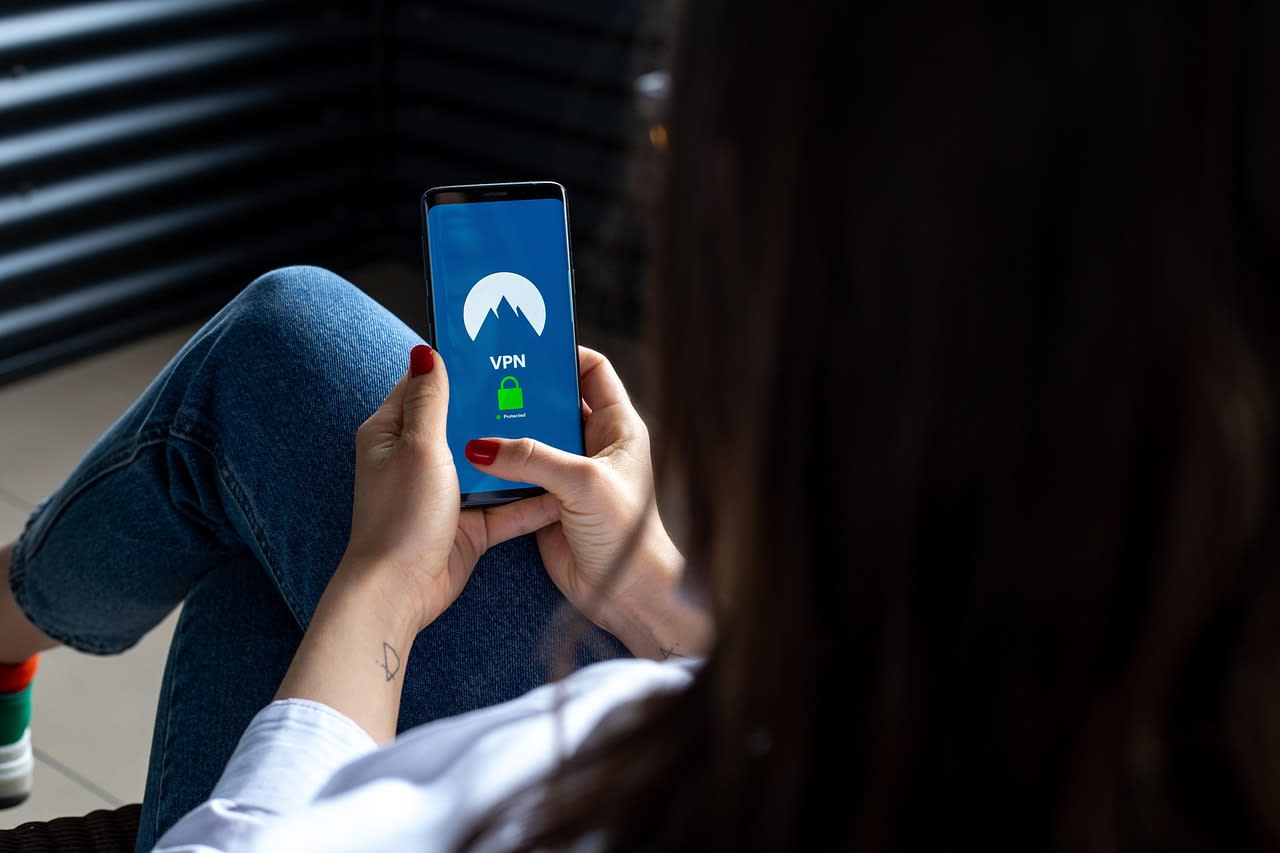
Let's start with the basics. Your IP address is like your home address for the internet. Every website you visit knows it. Your ISP logs it. Ad networks use it to build profiles across sites. A fast and secure VPN service like NordVPN can help by masking your real IP address, making your traffic appear to come from their servers instead. It's a foundational layer—but it's just one layer.
Browser fingerprinting is trickier. Websites can identify you by your browser configuration, screen size, installed fonts, and dozens of other characteristics. Even with a VPN, you might still be uniquely identifiable. Firefox with strict privacy settings and the uBlock Origin extension helps fight this. So does using common screen resolutions and avoiding browser extensions that make you unique.
Then there's behavioral tracking. How you move your mouse. How fast you type. What times you're active. This is harder to defeat, but using different browsers for different activities helps. Maybe Tor Browser for sensitive research, Firefox for general browsing, and a completely separate browser for logged-in services.
The Tool Stack: What Actually Works in 2025
Based on my testing and what's discussed in privacy communities, here's what a practical anonymity stack might look like for different threat models:
For Everyday Protection
This is for people who want to reduce their exposure to data brokers and targeted advertising:
- A reputable VPN for general browsing (not for everything—be strategic)
- Firefox with uBlock Origin, Privacy Badger, and decentraleyes
- Using privacy-focused search engines like DuckDuckGo or Startpage
- Separate email aliases for different services (SimpleLogin or AnonAddy work well)
- Privacy.com or similar for generating virtual credit cards
For Serious Privacy Needs
When you need stronger protection—maybe you're researching sensitive topics or dealing with confidential information:
- Tor Browser for anything that needs true anonymity
- Tails or Qubes OS for your operating system
- Signal for communications (with disappearing messages enabled)
- ProtonMail or Tutanota for email
- Physical separation: dedicated device for sensitive activities
One tool that often comes up in these discussions is web scraping tools. While primarily for data extraction, the infrastructure behind services like Apify—with built-in proxy rotation and headless browsers—highlights how automated systems can maintain anonymity at scale. The architecture matters.
Common Mistakes and Misconceptions
I see the same errors repeatedly in privacy communities. Let's clear some up:
"I use incognito mode, so I'm anonymous." No. Incognito just doesn't save history locally. Every site you visit still sees your IP, still can fingerprint your browser, still can track you.
"My VPN makes me completely anonymous." Also no. A VPN hides your IP from websites, but the VPN provider sees everything. If you're logged into Google while using a VPN, Google still knows it's you. VPNs are a tool, not a magic cloak.
"I have nothing to hide." This misunderstands power dynamics. You might not care today that an insurance company knows you searched for back pain symptoms. But when they use that to deny coverage or increase rates, the power imbalance becomes clear.
"More tools = more anonymity." Actually, complexity can create vulnerabilities. Using ten privacy tools incorrectly is worse than using three correctly. Focus on understanding what each tool does and how they interact.
The Human Element: Your Weakest Link
All the technical architecture in the world won't help if you slip up socially. I've seen people run perfect operational security with tools, then post on Facebook about being at a protest. Or use Tor for research, then log into their personal email in the same browser session.
Operational security (OPSEC) is about consistency. It's about habits. Some practical tips:
- Use separate identities consistently. If you create an anonymous email for a service, never check it from your main device.
- Be careful with timing. If you normally browse at certain times, doing sensitive research at 3 AM creates a pattern.
- Watch for correlation. Even if individual actions are anonymous, patterns can reveal you.
- Don't reuse usernames across anonymous and identified accounts.
One Redditor in the original discussion shared a painful lesson: "I spent months setting up perfect anonymity tools, then forgot and used the same unique password hint on an anonymous account that I used on my personal email. The link was obvious in retrospect." Human error defeats the best architecture.
When You Need Professional Help
For businesses or individuals with serious threats, sometimes you need expertise beyond what you can DIY. This is where hiring security professionals can make sense. Look for people with proven experience in operational security, not just theoretical knowledge.
If you're implementing anonymity systems for an organization, consider these resources:
- Privacy Engineering for understanding architectural approaches
- Operational Security Guides for practical implementation
- The Electronic Frontier Foundation's Surveillance Self-Defense guide (free and excellent)
Looking Forward: The Future of Anonymity
As we move deeper into 2025 and beyond, the arms race continues. On one side: ever more sophisticated tracking technologies. On the other: privacy-preserving architectures like zero-knowledge proofs, decentralized identity, and improved mixing networks.
What gives me hope is that the conversation is shifting. People are starting to understand that privacy policies and consent pop-ups are theater. Real protection requires changing how systems are built, not just how they're marketed.
The most insightful comment in the original discussion put it perfectly: "We've been asking for privacy at the dinner table while they're building slaughterhouses. It's time to stop eating meat." In other words, we need to stop participating in systems designed to track us and start building alternatives.
Your Next Steps
Don't try to do everything at once. That's a recipe for burnout. Start with one area of your digital life and build anonymity architecture there.
Maybe this week you switch search engines. Next week you install a privacy-focused browser. The week after, you set up email aliases. Each step reduces your exposure. Each layer of architecture makes you harder to track.
Remember: perfect anonymity is impossible for most people living normal lives. But better anonymity is absolutely achievable. The goal isn't to disappear—it's to make yourself expensive to track. To shift the balance of power. To force systems to respect you because they can't easily exploit you.
Privacy was always about trust. Anonymity is about verification—mathematical verification that systems can't identify you. In 2025, with trust repeatedly broken, architecture is all we have left. Build yours carefully.