

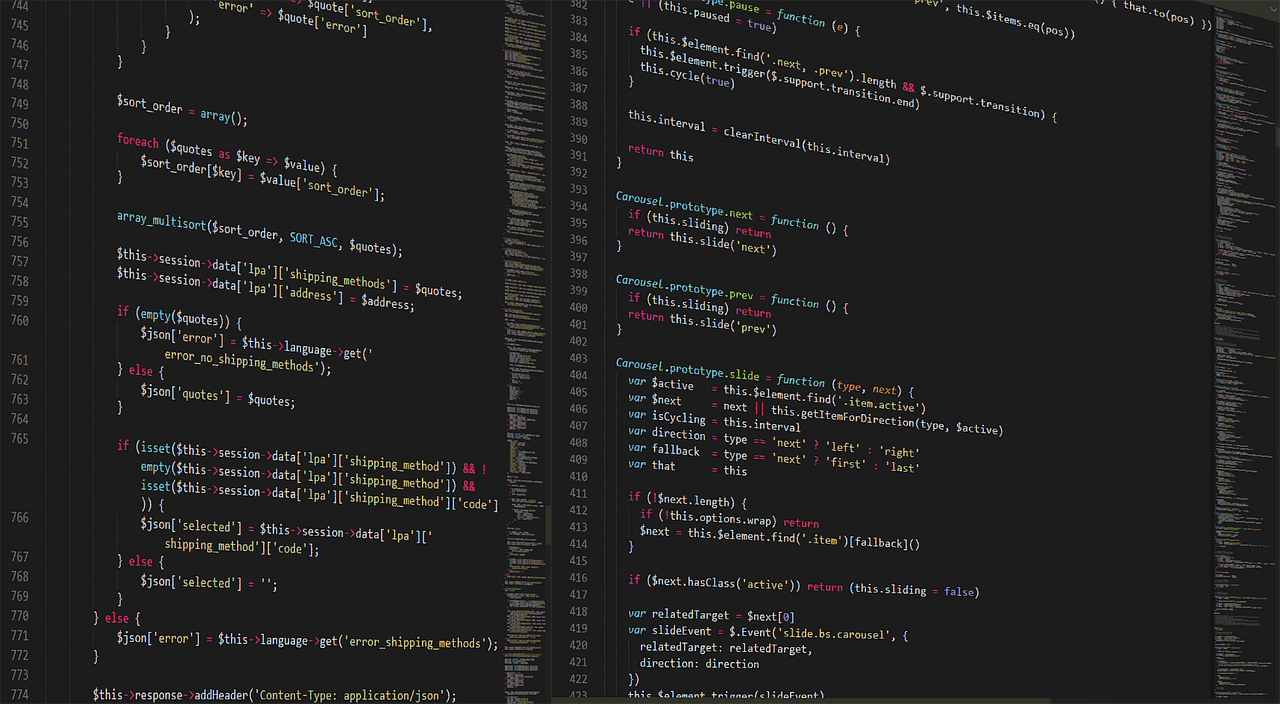
You're happily building your project with PHP and MySQL. The documentation is solid, the syntax feels intuitive, and things just... work. Then you hop on Reddit or Twitter and see the same old comments: "PHP is trash," "Just use something modern," or my personal favorite, "Real developers don't use PHP." It's enough to make you wonder—are you missing something fundamental, or is this just programming language tribalism at its finest?
I've been there. I've built massive systems with PHP that handle millions of users, and I've also worked with Node.js, Python, and Go. Here's what I've learned after 15 years in web development: the PHP hate isn't about what PHP is in 2026. It's about what PHP was—and about some very human tendencies in our developer community.
Let's unpack this properly. We'll look at the historical context, examine whether common criticisms still hold water, and give you the perspective you need to decide for yourself whether PHP deserves its reputation.
The Ghosts of PHP Past: Why First Impressions Last
Most of the visceral hate for PHP comes from people who encountered it during its awkward teenage years—roughly 2004 to 2012. This was the era of "spaghetti code" tutorials, register_globals being enabled by default, and functions with inconsistent parameter ordering. The language was designed to solve immediate problems, not to be elegant or consistent.
Think about it: strpos() returns false if the needle isn't found, but returns 0 if it's found at position zero. That's a classic "wtf" moment for newcomers. Or how about function names? str_replace() uses underscores, but strpos() doesn't. htmlentities() but htmlspecialchars(). The inconsistency was real.
And then there was security. Early PHP made it way too easy to write vulnerable code. Magic quotes (attempting to automatically escape user input) created more problems than they solved. The default error reporting was terrible—often hiding critical issues. Developers coming from more structured languages like Java or C# looked at PHP and saw chaos.
But here's the crucial point: that PHP largely doesn't exist anymore. PHP 5.4 (2012) started cleaning things up. PHP 7 (2015) was a massive performance and consistency overhaul. PHP 8 (2020) and beyond have introduced modern features like union types, attributes, and match expressions. The problem is that first impressions in tech are incredibly sticky—especially when they confirm existing biases.
The $ Symbol and Other Superficial Complaints
"It has too many dollar signs!" This might sound silly, but I've genuinely heard this as a reason to avoid PHP. Let's be honest—this is pure aesthetics. Some people find $variable ugly compared to Python's variable or JavaScript's let variable. That's fine! We all have preferences.
But calling this a technical flaw misses the point. The dollar sign actually serves a purpose: it makes variables instantly identifiable in mixed HTML/PHP templates. In a file with HTML, CSS, JavaScript, and PHP all mixed together (common in the early days), seeing $user immediately tells you "this is PHP." It's a visual cue.
The real issue isn't the dollar sign itself—it's what it represents to some developers. PHP's syntax feels "old" because it looks like C from the 90s. Compare this to modern languages like Rust or Go with their cleaner, more minimalist syntax. PHP's syntax carries the visual weight of its history.
But here's what's interesting: many developers who complain about PHP's syntax love JavaScript. And JavaScript has its own syntax quirks that are objectively worse—== vs ===, hoisting, the entire this keyword behavior. Syntax preferences are largely about what you're used to, not about objective quality.
The Documentation Paradox: Strength and Weakness
The original poster mentioned PHP's excellent documentation, and they're absolutely right. PHP.net has some of the best language documentation in existence. Every function has examples, user comments with additional tips, and clear parameter explanations. Want to know how array_filter() works? The documentation will show you three different ways to use it.
But this abundance creates a strange paradox. Because the documentation is so comprehensive and accessible, it enabled a generation of developers to build things without understanding fundamentals. You could copy-paste examples from PHP.net and Stack Overflow and get something working. This led to the proliferation of poorly architected code.
Contrast this with a language like Rust. The learning curve is steep, and the documentation assumes more background knowledge. This filters out casual users—you generally need to understand concepts to get anything working. PHP's approachability was both its greatest strength and its greatest weakness from a reputation perspective.
In 2026, this is changing. Modern PHP frameworks like Laravel and Symfony enforce much better practices. Composer (PHP's package manager) has brought dependency management up to modern standards. But the memory of that "copy-paste" era still colors perceptions.
JavaScript Envy and the Full-Stack Shift
Here's a perspective you don't hear often: some of the PHP hate comes from JavaScript developers who feel threatened. For years, PHP dominated server-side web development while JavaScript was stuck in the browser doing animations and form validation. Then Node.js happened.
Suddenly, JavaScript developers could work on both frontend and backend. No context switching between languages. One language to rule them all. This created a powerful incentive to promote JavaScript everywhere—and to criticize alternatives.
The original poster mentioned coming from C# and finding JavaScript confusing. That's telling! PHP actually has more in common with C# than JavaScript does. Both PHP and C# are primarily server-side, both have classical OOP inheritance (until recently for PHP), both have type declarations (optional in PHP, but there). JavaScript's prototype-based inheritance and functional tendencies feel alien to developers from more traditional backgrounds.
So when a JavaScript advocate says "PHP is bad," sometimes what they really mean is "I want to use JavaScript for everything, and PHP is in my way." This isn't always conscious, but it's a real dynamic in our industry.
Performance Myths and Modern Reality
"PHP is slow." This was absolutely true in the PHP 5 era. But let's look at 2026 numbers. PHP 8.3 and 8.4 are competitive with Node.js in many benchmarks, and significantly faster than Python in web contexts. The JIT (Just-In-Time compilation) compiler introduced in PHP 8 can make certain workloads scream.
I recently migrated a legacy PHP 5.6 application to PHP 8.4. Without changing a single line of application code, response times dropped by 60%. Memory usage decreased by 40%. That's not a small improvement—that's transformative.
The performance criticism today is largely based on outdated information. Yes, PHP will generally be slower than compiled languages like Go or Rust for CPU-intensive tasks. But for typical web applications—handling HTTP requests, talking to databases, rendering templates—modern PHP is more than fast enough for 99% of use cases.
And here's something else to consider: PHP's shared-nothing architecture. Each request starts fresh. No memory leaks accumulate over time. If a request crashes, it doesn't take down your entire server. This simplicity makes PHP incredibly robust in production at scale. Facebook (Meta) still uses Hack (a PHP derivative) for this reason.
The Framework Renaissance: Laravel and Symfony
If you're judging PHP by raw language features alone, you're missing half the story. The modern PHP ecosystem is dominated by frameworks that provide incredible developer experiences. Laravel in particular has changed the game.
Laravel's Eloquent ORM is arguably better than what you find in many other ecosystems. The migration system is intuitive. Artisan commands automate everything. The entire framework feels designed for developer happiness. Symfony offers enterprise-grade architecture patterns. Both frameworks enforce modern practices: proper MVC separation, dependency injection, testing support.
This is where the original poster's experience makes sense. When they say PHP is "fun to code in," they're probably using a modern framework. Raw PHP can still be messy, but Laravel or Symfony PHP is a completely different experience.
The irony? Many developers who criticize PHP have never tried Laravel. They're judging the language based on experiences with WordPress (which has its own architectural issues) or legacy codebases. It's like judging JavaScript based on jQuery spaghetti code from 2010.
When PHP Actually Is the Wrong Choice
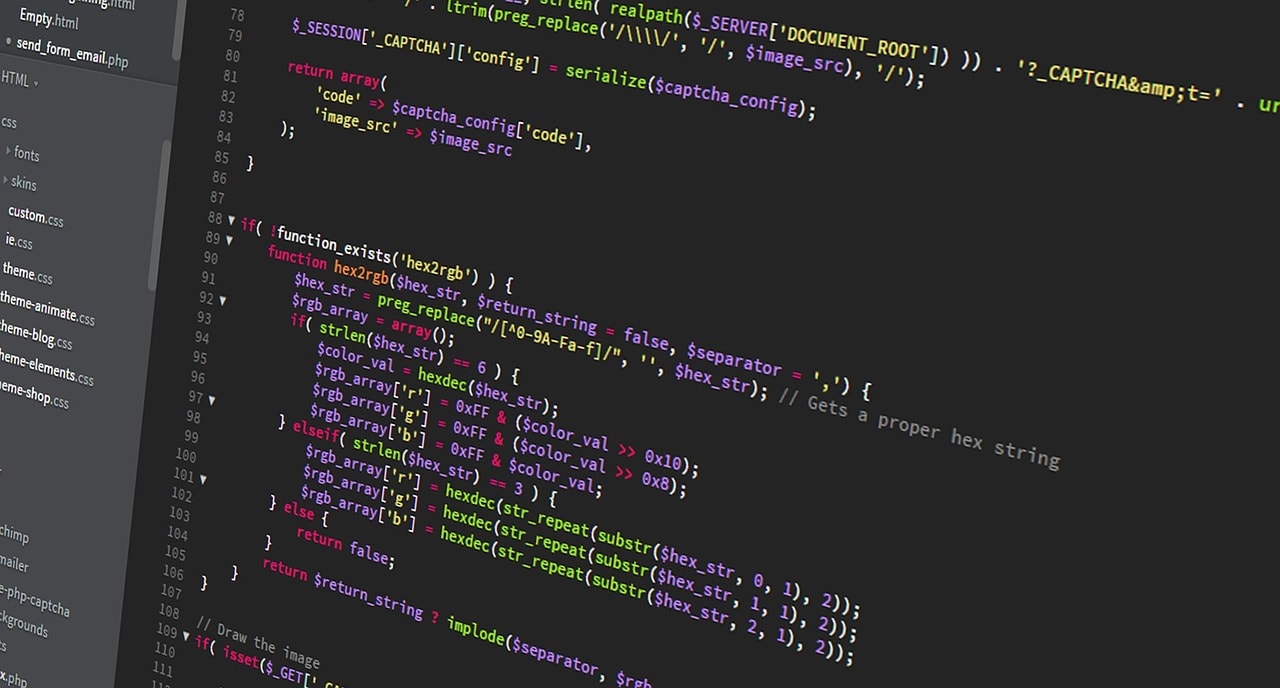
Let's be fair—PHP isn't perfect for everything. There are legitimate reasons to choose something else, and acknowledging this makes the defense stronger.
First, real-time applications. If you're building a chat app, collaborative editor, or anything requiring WebSockets and persistent connections, Node.js or Go are better choices. PHP can do it with ReactPHP or Swoole, but you're fighting the language's fundamental request-response model.
Second, data science and machine learning. Python's ecosystem here is unbeatable. Trying to do serious data analysis in PHP would be masochistic.
Third, system programming or CLI tools where you need fine-grained memory control. Rust or Go win here.
But for traditional web applications—CRUD apps, e-commerce, content management, APIs—PHP remains excellent. The key is matching the tool to the job, not religious devotion to any particular technology.
Practical Advice for PHP Developers in 2026
If you're building with PHP today, here's how to avoid the pitfalls that give the language a bad name:
First, use a modern framework. Don't write raw PHP for web applications. Laravel for rapid development, Symfony for large enterprise systems. These frameworks enforce good practices automatically.
Second, enable strict types. Add declare(strict_types=1); at the top of every file. Use type declarations for all function parameters and return types. This catches errors early and makes your code self-documenting.
Third, use static analysis. PHPStan or Psalm will find bugs before you run your code. They're like having a senior developer review every line you write.
Fourth, embrace dependency injection. Modern PHP frameworks make this easy. It makes your code testable, maintainable, and flexible.
Fifth, write tests. PHPUnit is excellent. Laravel and Symfony have testing baked in. There's no excuse for untested PHP code in 2026.
Common Questions from Skeptics (Answered)
"But WordPress is insecure and slow!" WordPress is a CMS built with PHP, not representative of modern PHP development. That's like blaming JavaScript for a slow jQuery plugin.
"PHP doesn't have good tooling" Composer is one of the best package managers out there. PHPStorm is arguably the best IDE for any language. Docker works perfectly with PHP. The tooling is actually excellent.
"The job market is shrinking" Actually, PHP still powers 77% of all websites. There's massive legacy code that needs maintaining, and new Laravel projects are being started daily. The jobs are there—they're just not as hyped as React or Node.js positions.
"It's not 'cool'" Okay, this one might be true. PHP isn't the shiny new thing. But you know what's cooler than using a trendy language? Shipping reliable software that makes money. PHP lets you do that incredibly efficiently.
The Tribal Nature of Programming Languages
At the end of the day, much of the PHP hate has little to do with technical merits. Programming languages become identity markers. People invest thousands of hours learning a technology, and that investment creates psychological attachment. Criticizing their chosen language feels like criticizing them.
PHP makes an easy target because it has visible scars from its past. The inconsistent function names, the dollar signs, the early security issues—they're right there on the surface. Newer languages can present themselves as clean slates, hiding their own design flaws behind novelty.
But here's what matters: PHP works. It works at massive scale (Facebook, Wikipedia, WordPress). It has evolved dramatically while maintaining backward compatibility (a feat few languages manage). The ecosystem is mature, stable, and productive.
So should you care about the hate? Only if it's coming from someone whose technical opinion you respect. The random Twitter hater who says "PHP is trash" probably hasn't written a line of PHP since version 5.3. The experienced developer who can point to specific architectural limitations? That's worth listening to.
Use what works for you and your project. Build things that matter. And maybe—just maybe—the next time someone dismisses PHP, you can point them to everything it's accomplished while they were busy arguing about semicolons.
