The Surveillance State Arrives: Understanding the UK's Facial Recognition Rollout
Let's be honest—this isn't some distant sci-fi scenario anymore. When I first read about the UK's nationwide facial recognition rollout, my immediate reaction was, "Well, this changes everything." And it does. The government's announcement that facial recognition technology will be integrated into standard police operations across England and Wales represents what might be the most significant expansion of state surveillance powers since the invention of CCTV.
But here's what most news articles miss: this isn't just about catching criminals faster. It's about fundamentally redefining the relationship between citizens and the state. It's about creating a permanent, searchable database of our movements, our associations, and our daily lives. And once this infrastructure is in place, there's no going back.
What I want to do in this article is break down exactly what's happening, why the privacy community is rightfully alarmed, and—most importantly—what you can actually do about it. Because while the technology might seem overwhelming, understanding it is the first step toward protecting yourself.
How We Got Here: The Quiet Normalization of Biometric Surveillance
If you're thinking this came out of nowhere, you're not wrong—but you're not entirely right either. The groundwork has been laid for years through what privacy experts call "surveillance creep." Remember when London first became known as the CCTV capital of the world? That was phase one. Then came automatic number plate recognition (ANPR) cameras tracking every vehicle movement. Now we're at phase three: biometric identification at scale.
The government's justification follows a familiar pattern. There's always a crisis—real or perceived—that demands extraordinary measures. In this case, it's rising crime rates and police resource constraints. The solution? Deploy AI-powered facial recognition that can "do the work of hundreds of officers" simultaneously. It sounds efficient. It sounds modern. It sounds... reasonable.
But here's what they don't tell you in the press releases: the technology has serious accuracy problems, particularly for people of color and women. Independent tests have shown error rates as high as 35% for some demographics. That means one in three people flagged by the system could be completely innocent. Imagine being stopped by police because an algorithm decided you looked like someone else. Now imagine that happening nationwide, every single day.
What's particularly concerning is how this rollout bypasses proper democratic scrutiny. There was no specific legislation passed for this. No comprehensive public consultation. Instead, it's being implemented through what legal experts call "secondary legislation"—regulatory changes that don't require full parliamentary debate. It's governance by stealth, and it sets a dangerous precedent.
How the Technology Actually Works (And Why That's the Problem)
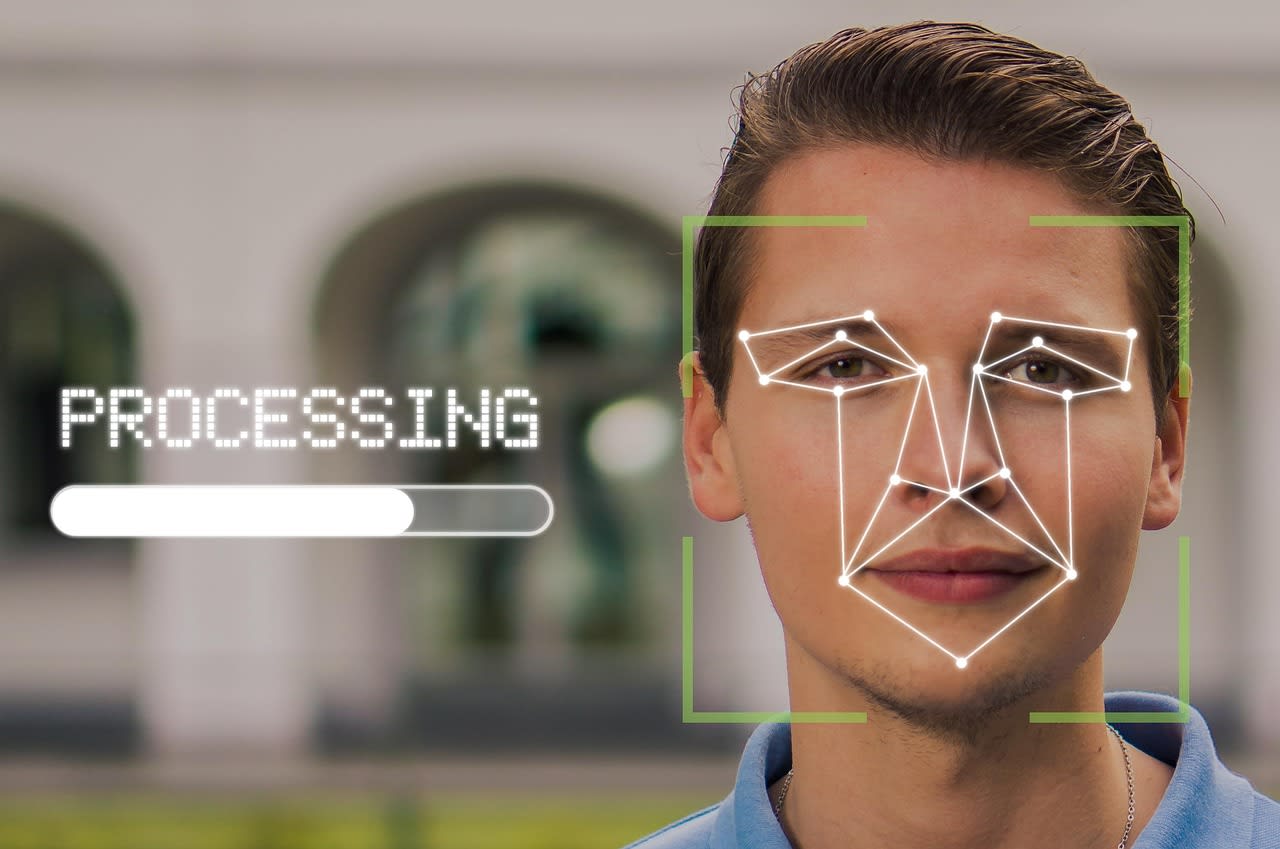
Let's get technical for a moment, because understanding the mechanics reveals why this is so invasive. Modern facial recognition systems don't just compare faces to a database of known criminals. They create what's called a "faceprint"—a mathematical representation of your facial features converted into data points. The distance between your eyes. The shape of your jawline. The contour of your cheekbones. All reduced to numbers.
These systems typically operate in two modes. First, there's "one-to-one" matching—comparing your face against your ID photo when you're stopped by police. That's concerning enough. But the real privacy nightmare is "one-to-many" matching—comparing your face against millions of other faces in a database. And here's the kicker: that database isn't just mugshots. It includes driver's license photos, passport photos, and potentially even images scraped from social media.
The technology being deployed isn't some basic matching algorithm either. We're talking about deep learning systems trained on massive datasets. Systems that can identify you even with sunglasses, hats, or partial obstructions. Systems that work in low light. Systems that can track you across multiple cameras as you move through a city.
But the accuracy claims? They're often exaggerated. Most vendors test their systems under ideal conditions—well-lit, front-facing photos. Real-world conditions are messier. Poor lighting. Angles. People moving. All of which increase error rates. And when you're dealing with millions of scans daily, even a 1% error rate means thousands of false matches every day.
The Data Collection Nightmare: What's Being Stored and For How Long?
This is where things get really concerning. Based on what we know from pilot programs and Freedom of Information requests, the data retention policies are... let's call them "generous" to the state. When your face is scanned and doesn't match anyone in the database, that data might still be stored for "training purposes" or "system improvement." When there's a match, it's definitely stored—along with the time, location, and potentially who you were with.
Think about what this creates: a permanent record of your movements. Your trip to the protest last month? Recorded. Your visit to the abortion clinic? Recorded. Your attendance at a political meeting? Recorded. Even if you're completely innocent, you're building a digital shadow that follows you everywhere.
And here's something most people don't consider: metadata. It's not just your face. The system records the exact time and location of every scan. Over time, this creates what intelligence agencies call a "pattern of life" analysis. They can see where you live, where you work, who you associate with, what your routines are. This metadata is often more revealing than the facial data itself.
The retention periods vary, but some pilot programs have kept data for up to 31 days even for non-matches. For matches, it could be years. And once data is shared with other agencies—which the legislation allows—you lose all control over where it ends up or how it's used.
Real-World Consequences: When Algorithms Get It Wrong
Let me share a story from the Reddit discussion that stuck with me. A user described being falsely flagged by a facial recognition system at a music festival. Security pulled him aside, questioned him for 45 minutes, and only let him go when he could prove he wasn't the person in their database. The psychological impact? He said he now feels anxious every time he sees a camera. He feels like he's being watched—because he is.
This isn't hypothetical. In London's early deployments, the Metropolitan Police's own data showed that 81% of "matches" were false positives. That's not just an inconvenience—it's a fundamental failure of the technology. And when you scale that nationwide, you're talking about hundreds of thousands of innocent people being stopped and questioned based on faulty algorithms.
The consequences aren't evenly distributed either. Multiple studies have shown these systems are significantly less accurate for people with darker skin tones. One famous MIT study found error rates of up to 34% for darker-skinned women compared to less than 1% for lighter-skinned men. In a diverse country like the UK, this means the surveillance burden falls disproportionately on minority communities.
Then there's the chilling effect on public life. Knowing you're being constantly scanned changes how people behave. Will you attend that political rally if you know facial recognition is scanning the crowd? Will you visit that controversial art exhibition? Will you participate in a protest? When surveillance becomes ubiquitous, freedom of assembly becomes theoretical rather than practical.
Legal Loopholes and Accountability Gaps
Here's what keeps me up at night: the legal framework—or lack thereof. The UK doesn't have a comprehensive biometrics regulation law. Instead, facial recognition operates in a patchwork of existing legislation that was never designed for this technology. The Data Protection Act 2018, the Human Rights Act, the Police and Criminal Evidence Act—they all touch on aspects of surveillance but none provide clear, specific rules for facial recognition.
The oversight mechanisms are weak at best. Police forces are largely left to self-regulate their use of the technology. There's no independent body specifically tasked with auditing these systems. No requirement for regular accuracy testing. No standardized rules for data retention. It's the wild west, but with multi-million-pound government contracts.
And here's a technicality that matters: consent. When you walk down a public street, you're implicitly consenting to being recorded by CCTV. But facial recognition adds a new layer—biometric processing. Under GDPR, biometric data receives special protection. Yet the government argues that "public interest" and "law enforcement" exemptions apply. It's a legal gray area being exploited for mass surveillance.
The most concerning precedent comes from court cases that have already challenged facial recognition. In one landmark case, the Court of Appeal ruled that South Wales Police's use of the technology violated privacy rights and data protection laws. But rather than stopping the rollout, the government is simply adjusting the rules to make it "compliant." It's regulation by litigation, and it means we're always playing catch-up.
Practical Protection: What You Can Actually Do in 2026
Okay, enough doom and gloom. Let's talk about what you can actually do. First, understand that complete anonymity in public spaces is becoming nearly impossible. But you can make yourself harder to track. Anti-facial recognition clothing and accessories have improved dramatically. Specially designed patterns that confuse algorithms, infrared-blocking makeup, even certain hairstyles can reduce accuracy rates.
Consider investing in IR-Blocking Glasses. These don't just look like regular sunglasses—they actually block the infrared light that many facial recognition systems use for 3D mapping. They're not perfect, but they add another layer of difficulty for the algorithms.
Digital hygiene matters too. Be careful about what photos you share online. Every clear facial photo on social media becomes potential training data. Adjust your privacy settings to prevent search engines from indexing your images. Consider using different photos for different platforms to make cross-referencing harder.
But here's the most important protection: political action. Write to your MP. Support organizations like Big Brother Watch and Privacy International. Attend consultations when they happen (though they're often poorly advertised). Surveillance technology expands in the absence of public pushback. Your voice matters more than you think.
Technical Countermeasures and Digital Self-Defense
For the technically inclined, there are more advanced options. Some developers have created apps that use your phone's camera to detect facial recognition cameras in real-time. These work by identifying the specific infrared patterns emitted by these systems. They're not widely available yet, but open-source versions are emerging.
If you're really concerned about your online images being used for training data, consider using automated tools to monitor where your images appear online. These can help you find and request removal of your photos from databases and websites you didn't authorize.
Another approach: data poisoning. This involves subtly altering your public images in ways that are invisible to humans but confuse AI systems. Special filters can add digital "noise" that prevents accurate faceprint creation. It's a cat-and-mouse game, but as the surveillance expands, so do the countermeasures.
For businesses and organizations, consider implementing your own policies. Will you allow facial recognition on your premises? Will you inform customers? Taking a privacy-first stance sends a message and creates pressure for broader change.
Common Misconceptions and FAQs
"I have nothing to hide, so I have nothing to fear." This is the most dangerous misconception. Privacy isn't about hiding wrongdoing—it's about autonomy and dignity. It's about controlling your personal information. Once you lose that control, you can't get it back.
"The technology only targets criminals." False. It scans everyone. The database includes millions of innocent people's photos. You're in the system whether you've committed a crime or not.
"It's just like CCTV." Not even close. CCTV records video that humans might review. Facial recognition automatically identifies and tracks individuals across locations and time. It's qualitative difference, not just quantitative.
"The accuracy issues will be solved soon." Maybe. But we're deploying at scale now with known problems. And "solved" for whom? The bias issues are fundamental to how these systems are trained.
"I can opt out." How? By never leaving your house? By wearing a mask everywhere? There's no meaningful opt-out mechanism for public space surveillance.
The Future We're Building (And How to Change It)
Here's the uncomfortable truth: once this infrastructure is built, it will be used for purposes beyond catching criminals. We've seen this pattern before with every surveillance technology. ANPR cameras were supposed to be for stolen vehicles—now they're used for tax enforcement, insurance checks, and tracking protesters.
The facial recognition database will inevitably expand. Immigration enforcement. Social security fraud. Tracking attendance at schools or workplaces. The scope creep is predictable because the capability exists. As one Reddit commenter put it: "First they say it's for terrorists, then for serious criminals, then for petty theft, then for outstanding parking tickets."
But it's not inevitable. Other countries have taken different paths. The European Union is considering banning facial recognition in public spaces entirely. Several US cities have banned government use. The UK is choosing the most expansive approach, but that choice can be challenged.
What gives me hope is the growing public awareness. The Reddit discussion showed hundreds of people asking smart questions, sharing concerns, looking for solutions. That awareness is the first step toward change. The second step is action—both personal protection and political pressure.
We're at a crossroads in 2026. The surveillance state is being built around us, often without our consent or even our knowledge. But we're not powerless. Understand the technology. Protect yourself where you can. And most importantly, demand accountability. Because once we normalize being constantly scanned, identified, and tracked, we've lost something fundamental about what it means to be free in a democratic society.
The cameras are watching. The question is: are we?