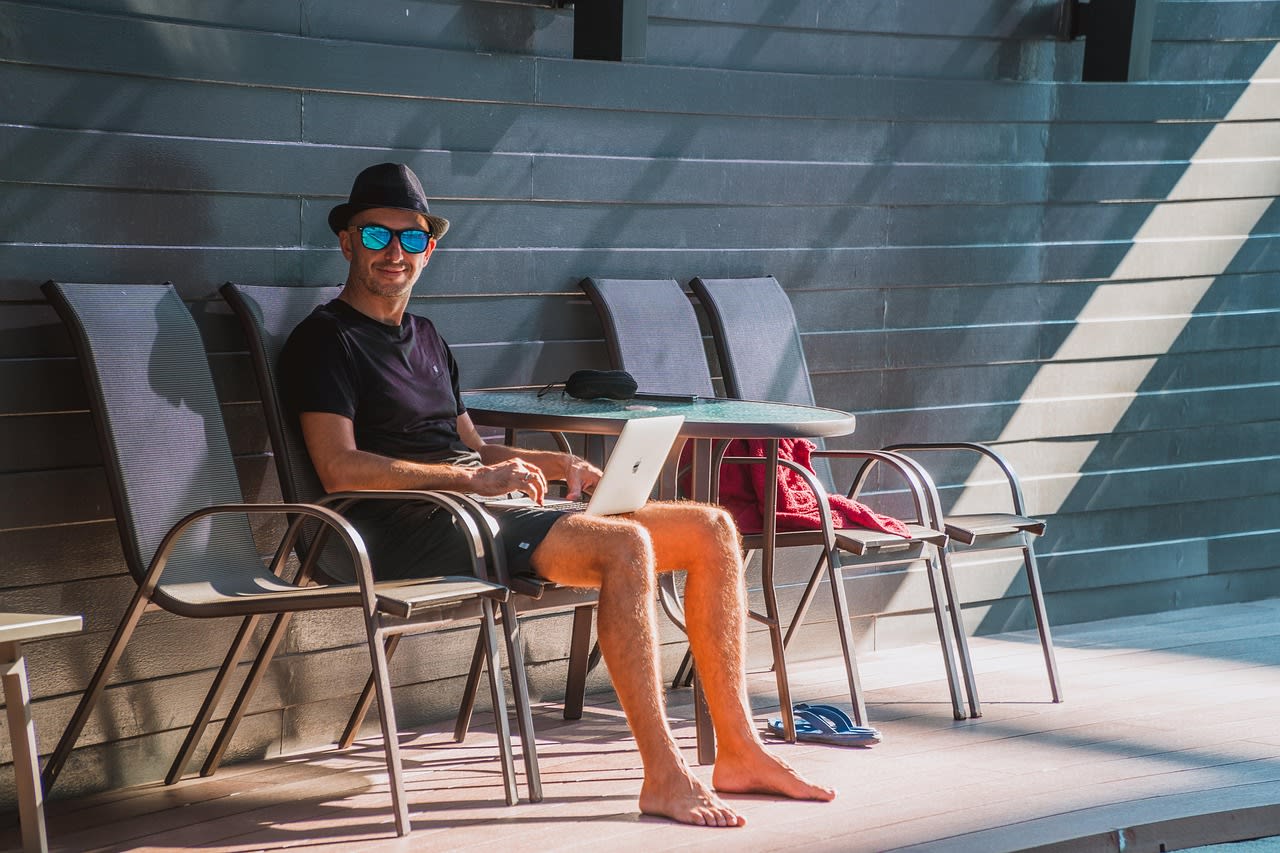


You've seen it happen. Maybe you've even been the person muttering under your breath about it. A tranquil beachside restaurant, a quiet hostel common area, a peaceful hotel lobby—suddenly transformed into someone's personal office complete with loud Zoom calls and keyboard clacking. The original Reddit post that sparked this discussion captures that exact frustration: "We are in Thailand on a super chill island and 2 guys have set up their office in our bungalows' restaurant. My missus is fully ready to kick off and inform them that she did not pay to listen to their work calls!"
That sentiment—"it WAS peaceful"—echoes through digital nomad communities worldwide. As remote work becomes more mainstream in 2025, this tension between productivity and public courtesy has reached a boiling point. But here's the thing: most digital nomads don't want to be inconsiderate. Many simply don't realize they're crossing lines, or they haven't developed the awareness needed to work respectfully in diverse environments.
This isn't about shaming remote workers. It's about creating a sustainable culture where we can all enjoy the freedom of location independence without becoming "those twonks" everyone complains about. Over the next 1500+ words, we'll explore why this happens, how to avoid common pitfalls, and practical strategies for working anywhere without annoying everyone around you.
The Psychology Behind the Annoying Nomad
Let's start with understanding why otherwise reasonable people become public nuisances. That guy in Thailand who started his call with "Yeah, it's very peaceful. Like The Beach" probably wasn't trying to ruin anyone's vacation. He was likely genuinely excited about his surroundings and wanted to share that with his colleagues back home. But in doing so, he failed to recognize that his experience was actively diminishing others' experiences.
This disconnect often stems from what psychologists call "context collapse." When you're working remotely, especially while traveling, the boundaries between different life contexts—work, leisure, public space, private space—all blur together. The restaurant isn't just a restaurant; it's your office for the day. The beach isn't just a beach; it's your background for that important client call. This cognitive shift, while useful for productivity, can make us oblivious to social norms that would be obvious in more traditional settings.
There's also what I call "digital nomad privilege" at play. When you've paid good money to travel somewhere beautiful, there's a subtle (sometimes not-so-subtle) sense that you're entitled to use spaces as you see fit. After all, you're supporting the local economy, right? But this mindset ignores that other travelers—and locals—have equal rights to enjoy these spaces without your work life intruding.
From my experience living and working across three continents, I've noticed this behavior peaks in certain situations: when someone is new to remote work and hasn't developed spatial awareness yet, when they're under work pressure and hyper-focused, or when they're in environments that subtly encourage this behavior (like hostels that market themselves as "digital nomad hubs" without providing proper workspaces).
The Four Types of Space Violations
Not all annoying nomad behaviors are created equal. Based on hundreds of community discussions and personal observations, I've identified four main categories of space violations that trigger the most complaints.
1. The Audio Offender
This is the most common complaint—the person having loud work calls in quiet spaces. What makes this particularly frustrating is that it's often completely unnecessary. In 2025, we have better technology than ever for discrete communication. Yet some remote workers still conduct full-volume meetings as if they're in a private office.
The Reddit poster's experience is textbook: "I did not pay to listen to their work calls!" When you're on vacation or even just trying to enjoy a meal, being forced to listen to someone's sales pitch or project management discussion feels like a violation. It's not just about volume either—it's about content. Most people don't want to hear about quarterly reports while sipping their morning coffee.
2. The Space Hog
This nomad transforms public tables into permanent workstations. They'll spread out laptops, notebooks, multiple phones, and sometimes even portable monitors across surfaces meant for dining or socializing. What starts as "just getting some work done" turns into an eight-hour occupation of prime real estate.
I've seen this in cafes from Lisbon to Bali: one person occupying a four-top table for hours, nursing a single coffee while preventing actual dining customers from using the space. During peak hours, this creates real problems for businesses and genuine frustration for other patrons.
3. The Power Parasite
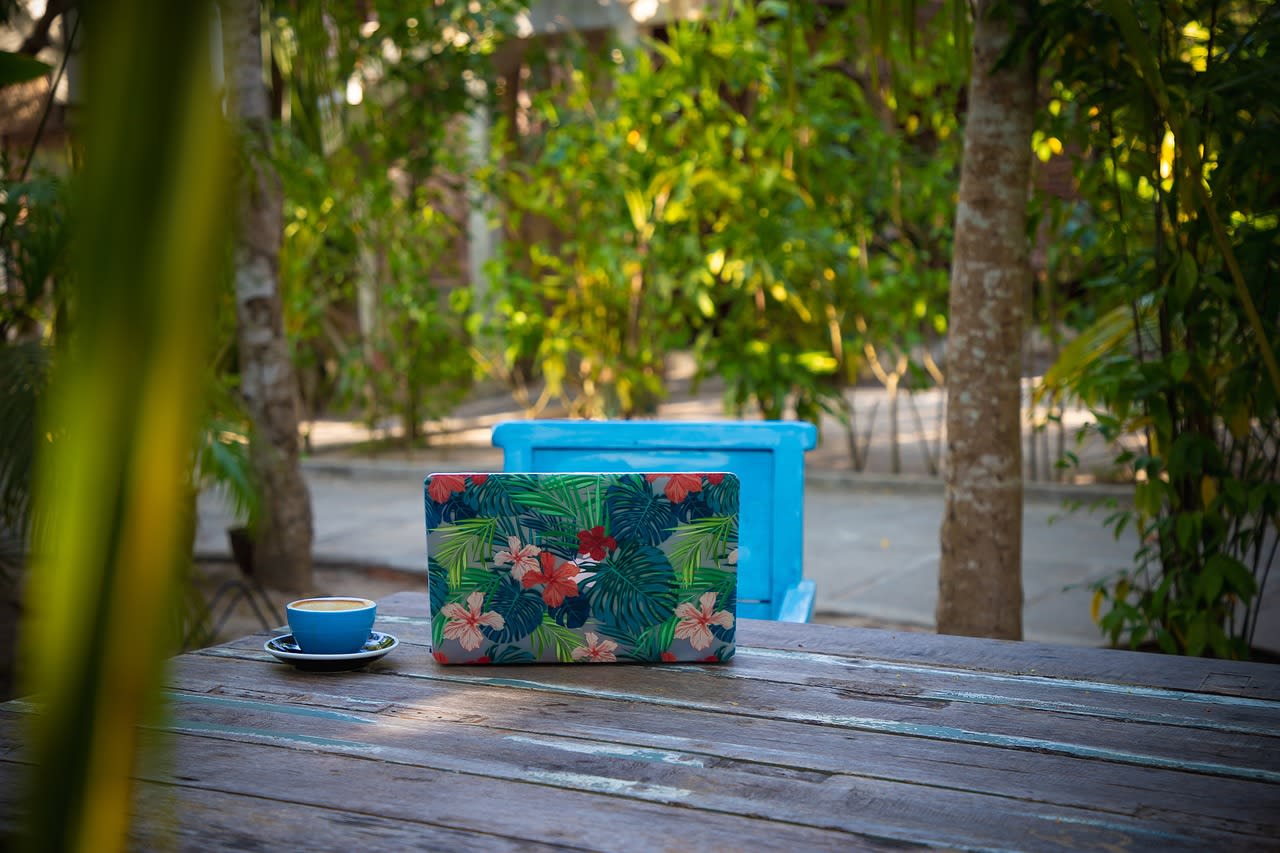
We've all witnessed this scene: someone camped near the only available outlet, multiple devices plugged in, creating a tripping hazard with cables snaking across walkways. While staying powered up is essential for remote work, monopolizing electrical access in public spaces shows a lack of consideration for others' needs.
In developing countries where reliable power might be limited, this behavior is especially problematic. That outlet might be needed for medical devices, local business operations, or other travelers with genuine emergencies.
4. The Background Bragger
This is a newer phenomenon amplified by social media and video calls. The person who intentionally positions themselves with the most impressive backdrop—beach, mountain view, famous landmark—and then proceeds to have meetings that essentially say "look where I am!" to colleagues stuck in traditional offices.
While there's nothing wrong with enjoying your surroundings, making it a performance for others often involves disregarding the people actually trying to enjoy that same view without your work conversation as background noise.
Why This Matters More Than You Think
Some might argue this is just minor etiquette—first-world problems of the remote work community. But the implications run deeper than simple annoyance.
First, there's the local business impact. When cafes and restaurants become de facto coworking spaces, their actual customer base—people coming to eat and drink—gets displaced. I've spoken with business owners in popular nomad destinations who've had to implement time limits or minimum purchases specifically because remote workers were killing their atmosphere and turnover. One cafe owner in Mexico told me, "I love the digital nomad community, but when one person buys a $3 coffee and stays six hours, I'm losing money on that table."
Then there's the community backlash. As the original poster noted, "Inconsiderate twonks everywhere these days." This growing resentment affects all remote workers. Locations that were once welcoming to digital nomads are starting to push back. Some hotels now explicitly ban work in common areas during certain hours. Popular destinations are creating stricter rules about work behavior in public spaces.
Most importantly, there's the simple principle of shared humanity. The digital nomad lifestyle is built on freedom and flexibility, but those shouldn't come at the cost of others' experiences. As one commenter on the original thread put it, "The irony of someone talking about how peaceful it is while actively destroying that peace is just... chef's kiss."
The 2025 Remote Worker's Toolkit for Respectful Productivity
Okay, so we've identified the problem. Now let's talk solutions. Being a considerate remote worker in 2025 doesn't mean sacrificing productivity—it just requires some planning and awareness.
Audio Management Essentials

Invest in quality noise-canceling headphones for listening and a high-quality, directional microphone for speaking. The difference between someone using laptop speakers/mic versus proper audio gear is night and day. For calls, use transcription services when possible—many meetings can be handled via chat if you're in a sensitive environment.
Here's a pro tip I've developed after years on the road: schedule "call blocks" and plan your location accordingly. If you know you have meetings from 2-4 PM, be in a proper coworking space or private accommodation during those hours. Save cafe work for heads-down, quiet tasks.
Space Selection Strategy
Not all public spaces are created equal for remote work. Learn to read the room—literally. A bustling city cafe with background music is different from a quiet beachside restaurant. Look for established coworking spaces, which are proliferating even in smaller towns worldwide. Many offer day passes for reasonable prices.
When you do work from hospitality venues, follow what I call the "two-hour rule": after two hours, either make another purchase or move locations. This shows respect for the business and ensures tables turnover. Better yet, ask management about their policy—many will appreciate you checking and might even offer suggestions for slower times when extended work is more acceptable.
Power and Connectivity Planning
Modern power banks can charge a laptop multiple times. Invest in a high-capacity model and keep it charged. For connectivity, have backup options—a local SIM with good data, a portable WiFi device, or knowledge of nearby locations with reliable internet.
If you absolutely need to use public outlets, be strategic. Don't camp at the most convenient one if it's in high demand. Look for less obvious locations, and always unplug when you're done charging rather than leaving devices unattended.
When You Need Professional Help
Sometimes, creating a respectful remote work setup requires skills or tools beyond what you can manage alone. This is where knowing when to bring in professionals makes all the difference.
For instance, maybe you need a custom solution for managing your digital presence across time zones without being disruptive. Or perhaps you want to analyze local venue policies and peak hours to optimize your work locations without annoying others. While you could spend weeks figuring this out manually, there are smarter approaches.
You could use automation platforms like Apify to gather data on venue policies, peak hours, and even sentiment from local reviews about remote worker friendliness. This kind of data-driven approach helps you make informed decisions about where and when to work without becoming "that person" everyone complains about.
Similarly, if you're building a more permanent remote setup and need technical help—whether it's optimizing your audio/video configuration for minimal public disruption or creating custom notifications for when you're being too loud—you can find specialized freelancers on Fiverr who've solved these exact problems for other digital nomads. Sometimes investing in a professional solution is cheaper than the social capital you lose by repeatedly annoying people.
Common Mistakes Even Experienced Nomads Make
After a while on the road, it's easy to develop blind spots. Here are some pitfalls that catch even seasoned remote workers.
Assuming silence equals permission: Just because no one has complained doesn't mean you're not bothering people. Many people—especially in cultures that value non-confrontation—will suffer in silence rather than speak up. Be proactive about checking if your setup is appropriate.
Overestimating how quiet you are: That keyboard isn't as quiet as you think. Those earbuds leak more sound than you realize. Video calls are always louder for those around you than they seem from your perspective. When in doubt, err on the side of being too quiet rather than too loud.
Forgetting about time zones: Your 2 PM call might be at a reasonable hour for you, but if you're taking it in a common area where others are trying to relax, the timing doesn't matter—the disruption does. The content of your call isn't the issue; the fact that you're having a call in that space is.
Ignoring local norms: What's acceptable in a Berlin coworking space might be deeply offensive in a Tokyo cafe. Research local expectations around public behavior, noise, and technology use. When you're a guest somewhere—whether a country or a specific venue—it's on you to adapt to their norms, not the other way around.
What to Do When You Encounter the Problem
Let's flip the perspective for a moment. What should you do when you're the one annoyed by someone else's remote work behavior?
First, assess whether it's worth addressing. Is this a brief disturbance or an ongoing issue? If it's the latter, consider polite, direct communication. The original Reddit poster's wife was "fully ready to kick off," but escalation should be a last resort. A simple "I'm sorry, but would you mind taking your call elsewhere? We're trying to enjoy the peace here" often works wonders.
If direct communication feels uncomfortable or unsafe, involve staff. That's what they're there for. A good approach: "Excuse me, I'm having trouble enjoying my meal with the work call happening nearby. Would you be able to help with this?" This frames it as a request for assistance rather than a complaint.
Remember that most offenders aren't malicious—they're just unaware. Giving someone the benefit of the doubt and a gentle nudge toward better behavior helps everyone. As someone who's been on both sides of this situation, I can tell you that most people respond well to polite feedback when it's delivered without accusation.
The Future of Remote Work Etiquette
As we move deeper into 2025 and beyond, these issues aren't going away—they're evolving. The proliferation of AR glasses, more immersive meeting technologies, and increasingly blurred lines between work and life will create new challenges for public space etiquette.
What gives me hope is seeing how the digital nomad community is maturing. More experienced remote workers are mentoring newcomers. Online communities are having honest conversations about these friction points. Businesses are creating clearer guidelines and designated spaces.
The solution isn't to stop working remotely or to confine ourselves to traditional offices. It's to develop what I call "spatial intelligence"—the ability to read environments and understand how our presence affects them. It's about recognizing that our freedom to work anywhere comes with responsibility to work respectfully.
That guy in Thailand who compared his location to "The Beach"? With a little more awareness, he could have enjoyed that same peaceful environment without ruining it for others. He could have taken his call on a walk along the shore with headphones. He could have scheduled it for when he was back in his accommodation. He could have used text-based communication instead of voice.
The digital nomad lifestyle at its best isn't about taking—it's about integrating. It's about adding to the places we visit rather than subtracting from them. It's about proving that remote work can be sustainable, considerate, and beneficial for everyone involved—not just those with laptops and wanderlust.
Next time you set up to work in a beautiful location, take a moment. Look around. Listen. Ask yourself: "Am I enhancing this space or diminishing it?" The answer might just determine whether you're living the dream—or becoming someone else's annoyance.