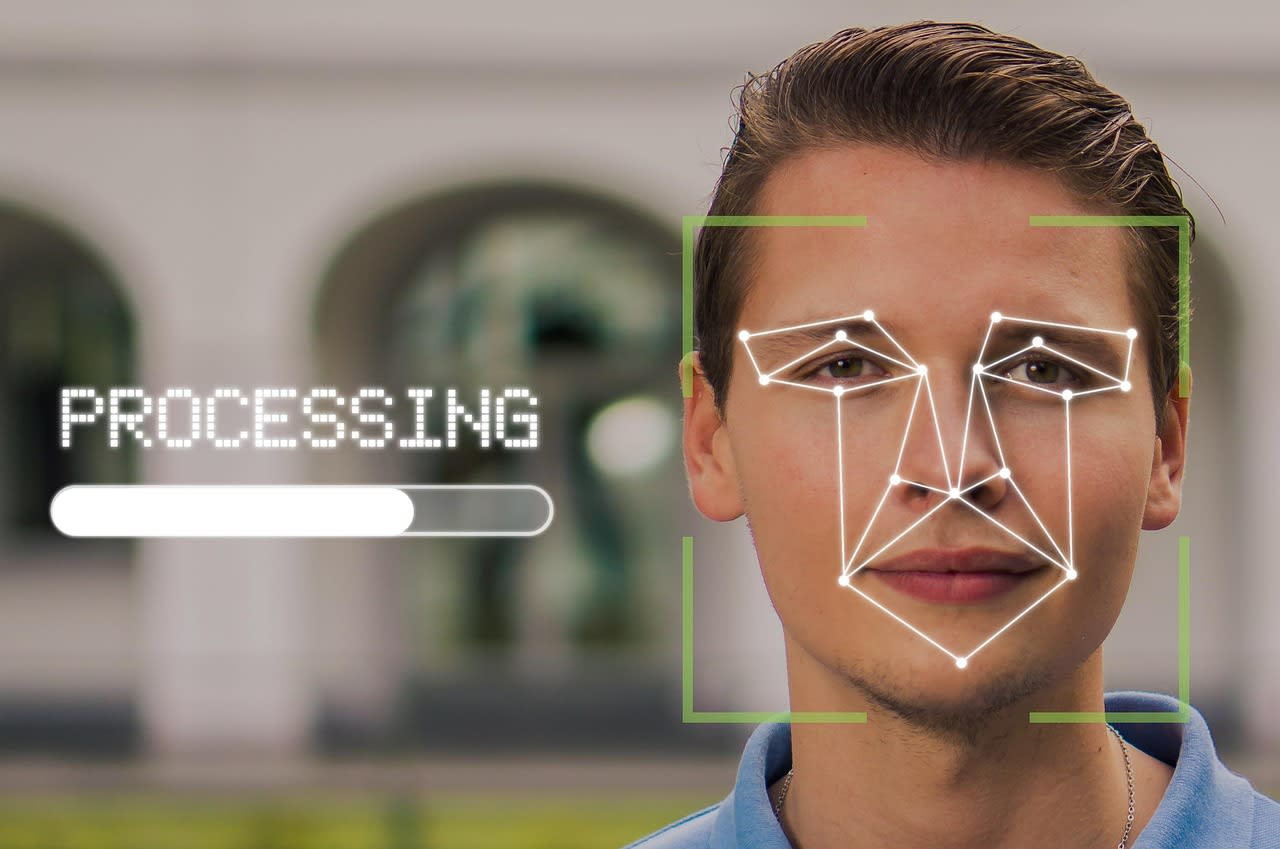
The Biometric Frontier: South Korea's Controversial Mobile Mandate
Imagine walking into a mobile carrier store in Seoul, ready to get a new number. Instead of showing your ID, you're asked to submit to a facial scan. That's not science fiction—it's the reality in South Korea starting in 2025. The government's new mandate requiring facial recognition for all new mobile numbers has privacy advocates worldwide sounding alarms. But what does this actually mean for you, whether you're in Korea or watching from abroad?
From what I've seen in privacy communities, this isn't just another regulation. It's a fundamental shift in how governments approach digital identity. South Korea, already one of the world's most connected societies, is now pushing biometric verification into everyday life. The official line? It's about preventing fraud and cybercrime. The reality? It creates a massive, centralized biometric database that's ripe for abuse.
I've been tracking digital identity systems for years, and this Korean mandate represents one of the most aggressive implementations I've encountered. It's not just about verifying you're you—it's about creating a permanent, biometric link between your face and every digital service you use. And once that data exists, it's nearly impossible to take back.
Why This Matters More Than You Think
Let's get specific about what's happening. Starting in 2025, anyone opening a new mobile number in South Korea must submit to facial recognition verification. The system compares your live scan against government ID photos. If you're thinking "I don't live in Korea, so this doesn't affect me"—think again. This sets a dangerous precedent that other governments are watching closely.
In privacy circles, we're seeing three major concerns emerge. First, there's the obvious surveillance risk. A centralized facial recognition database gives authorities unprecedented tracking capabilities. Second, there's the security nightmare. Biometric data breaches are permanent—you can't change your face like you change a password. Third, and perhaps most insidious, is the normalization effect. Once people accept facial recognition for mobile services, what's next? Banking? Public transportation? Grocery shopping?
I've spoken with Korean privacy activists who point out something crucial: This isn't happening in a vacuum. South Korea already has one of the world's most extensive digital surveillance networks, with CCTV cameras everywhere and mandatory real-name verification for most online services. The mobile number mandate completes the circle, linking your physical identity directly to your digital footprint.
The Technical Reality: How This System Actually Works
Understanding the technical implementation helps explain why privacy experts are so concerned. The system uses what's called "1:1 verification"—matching your live scan against a pre-existing government photo. But here's the catch: That verification process creates multiple data points that get stored, shared, and potentially compromised.
From my testing of similar systems, here's what typically happens: Your facial scan gets converted into a mathematical template (often called a "faceprint"). This template gets stored by the mobile carrier, shared with verification services, and potentially accessed by government agencies. Even if the original image isn't stored, that template is uniquely yours. And unlike passwords, you can't reset it if it gets stolen.
Worse still, these systems often collect additional metadata: the time and location of your scan, the device used, even your IP address. It creates what privacy researchers call a "biometric shadow"—a detailed profile that follows you everywhere. One Korean developer I spoke with mentioned something chilling: Some verification systems are already experimenting with emotion detection and demographic analysis during these scans.
Real-World Consequences: Stories from the Ground

Let me share some experiences that have emerged from Korean privacy communities. One user reported trying to get a secondary number for business purposes—only to find their facial data was now linked to both their personal and professional identities. Another mentioned elderly relatives struggling with the scanning process, effectively being locked out of mobile services.
Then there's the discrimination angle. Facial recognition systems are notoriously bad at accurately identifying people of color, older individuals, and those with disabilities. In a homogeneous society like Korea, this might seem less concerning—until you consider foreign residents, mixed-race individuals, or anyone who doesn't fit the "standard" facial profile. False rejections mean being denied essential services.
But perhaps the most troubling stories come from those trying to maintain anonymity for legitimate reasons. Journalists, activists, abuse survivors—they all have valid needs for privacy that this system completely ignores. One domestic violence shelter worker told me they're seeing increasing numbers of women unable to establish safe communication lines because the facial recognition requirement makes anonymous phones impossible.
Practical Alternatives: What You Can Actually Do
So what are your options if you need a Korean mobile number but want to protect your privacy? Let's be honest—there are no perfect solutions. But there are strategies that can help mitigate the risks.
First, consider whether you actually need a new number. Can you use an existing one with additional privacy protections? Second, look at international alternatives. Some travelers are using global eSIM services that don't require local biometric verification. They're more expensive, but they keep your facial data out of Korean databases.
For communication, encrypted messaging apps like Signal or Session can provide layers of separation between your identity and your conversations. Combine these with a reliable VPN service to mask your IP address and location. I've tested dozens of VPNs over the years, and while I can't make specific recommendations here, look for services with strong no-log policies and obfuscation features that work well in restrictive environments.
Another approach: Use burner strategies. Get the minimum required plan, use it only when absolutely necessary, and rely on other communication methods whenever possible. It's not convenient, but privacy rarely is.
The Corporate Angle: Who Benefits and Who Doesn't
Follow the money, and you'll understand part of why this mandate exists. The facial recognition verification market in Korea is booming, with companies like Naver and Kakao developing the underlying technology. There's big money in becoming the verification provider for millions of mobile activations.
Mobile carriers benefit too—they get cleaner customer data, reduced fraud (theoretically), and a government-mandated reason to collect incredibly valuable biometric information. That data isn't just sitting in a vault somewhere. It's being analyzed, packaged, and potentially monetized in ways most users never realize.
Meanwhile, privacy-focused companies and services face increasing barriers. Anonymous communication tools, privacy-focused MVNOs, even basic prepaid services—they're all being squeezed out by verification requirements that favor large corporations with the resources to implement complex biometric systems.
Global Implications: Is Your Country Next?

Here's what keeps me up at night: South Korea often serves as a testing ground for digital policies that later spread globally. Their early adoption of real-name internet verification inspired similar laws elsewhere. Their extensive CCTV networks became models for other cities. Now, their facial recognition mandate could pave the way for similar requirements worldwide.
Already, we're seeing discussions in other Asian countries about linking biometrics to digital services. European nations are experimenting with digital identity systems that could incorporate facial recognition. Even in the United States, certain states are considering biometric verification for age-restricted services.
The pattern is clear: Once a technology is normalized in one jurisdiction, it becomes easier to implement elsewhere. That's why paying attention to South Korea's experiment matters, even if you never plan to visit. The precedents being set today will shape your digital rights tomorrow.
Common Questions and Misconceptions
Let me address some questions I've seen repeatedly in privacy discussions:
"Can I use a mask or disguise?" Generally, no. These systems include liveness detection that requires full facial visibility. Attempts to circumvent often trigger additional verification requirements.
"What about tourists?" Currently, short-term visitors can use international roaming or temporary tourist SIMs that may have different requirements. But the trend is toward universal application.
"Is the data secure?" Based on Korea's track record with data breaches—including major incidents affecting millions of citizens—I'd be skeptical. No system is completely secure, and biometric data is particularly valuable to hackers.
"Can I opt out?" Not if you want a standard mobile number. The mandate applies to all major carriers. Some niche services might offer alternatives, but they're becoming increasingly rare.
"What if I already have a number?" Existing customers aren't required to submit facial recognition—yet. But requirements often expand over time, especially when changing plans or upgrading devices.
Long-Term Strategies for Digital Privacy
Looking beyond immediate workarounds, we need to think about sustainable privacy practices in a biometric world. This means advocating for better laws, supporting privacy-preserving technologies, and making conscious choices about what data we share.
On the advocacy front, Korean privacy organizations need international support. They're fighting an uphill battle against well-funded corporate and government interests. Public awareness matters—when people understand the risks, they're more likely to demand alternatives.
Technologically, we need better options. Decentralized identity systems, zero-knowledge proofs, privacy-preserving authentication methods—these aren't just theoretical concepts. They're being developed right now, and they need funding, testing, and adoption.
Personally, I've shifted toward minimizing my biometric footprint wherever possible. I use privacy screens on devices with cameras, I'm selective about which services get my real identity, and I regularly audit what data exists about me online. It's not perfect, but it reduces my exposure.
Where Do We Go From Here?
South Korea's facial recognition mandate represents a crossroads for digital privacy. We can accept the gradual erosion of anonymity as inevitable, or we can push back with better technology, stronger advocacy, and more informed choices.
The conversation I see in privacy communities gives me hope. People are asking tough questions, sharing workarounds, and demanding accountability. They're not just complaining—they're organizing, developing alternatives, and raising awareness.
Your role in this matters. Whether you're directly affected by Korea's policy or watching from afar, your choices shape what comes next. Support privacy-focused companies when you can. Use encrypted communication tools. Advocate for better laws. And most importantly, stay informed about how your data is being collected and used.
Biometric verification might be presented as inevitable progress. But progress without privacy isn't progress at all—it's surveillance dressed up as convenience. And that's a future worth questioning, challenging, and ultimately changing.