

If you're in IT, you've got a drawer, a box, or a shelf dedicated to the ghosts of upgrades past. Old RAM sticks—pulled from decommissioned servers, retired workstations, or leftover from builds. For years, they've been clutter. In 2025, they're turning into cash. A Reddit thread in r/sysadmin blew up recently with users reporting they're making hundreds of dollars in just days by listing old memory. This isn't a fluke. It's a direct result of a complex market squeeze that's creating a lucrative secondary market for memory you probably wrote off. Let's break down why this is happening, what your stash is actually worth, and how you can turn those silicon sticks into real money without getting scammed.
The Perfect Storm: Why RAM Prices Are Spiking in 2025
This isn't just a typical post-holiday price bump. We're looking at a confluence of factors that have tightened supply while demand has remained stubbornly high. First, the ongoing consolidation in the DRAM manufacturing sector means fewer players control the supply. When production hiccups occur—and they have—there's less slack in the system to absorb them. Second, the enterprise upgrade cycle is in full swing. Companies that deferred hardware refreshes during earlier economic uncertainty are now moving to newer platforms, but they're also extending the life of existing infrastructure. That means they need drop-in upgrades for aging, yet critical, systems.
And here's the kicker for the sysadmin and DevOps crowd: virtualization and containerization haven't reduced memory demand—they've exploded it. Modern applications, microservices architectures, and dense virtual environments are memory-hungry beasts. A single modern server might need 512GB or even 1TB of RAM to run efficiently. That demand trickles down. When a data center can't get a timely shipment of new 64GB DDR5 RDIMMs for their new cluster, they'll look to max out the older one with more DDR4. That demand ripples back to the secondary market for DDR3 and DDR4. Suddenly, that 16GB PC3-12800R (DDR3-1600) RDIMM from a 2014 server isn't obsolete; it's a cost-effective lifeline for a business trying to keep a legacy application running for one more fiscal year.
What's Actually Valuable in Your Junk Drawer?
Not all RAM is created equal, and the price spikes aren't uniform. Before you get too excited about that 2GB DDR2 stick from 2007, let's categorize the winners. The high-value categories right now are Server/ECC Memory and Specific Consumer DDR4.
Server/ECC RAM (The Big Money): This is where the real action is. Registered ECC (RDIMM) and Load-Reduced ECC (LRDIMM) modules for servers are in incredibly high demand. Why? Enterprise hardware has a much longer lifecycle. A server purchased in 2018 with DDR4 might be slated for replacement in 2026, but it needs to run reliably until then. Adding RAM is the cheapest way to boost its performance and delay a capital expenditure. Modules like 16GB and 32GB DDR4-2666 RDIMMs are selling like hotcakes. Even older DDR3 ECC memory for platforms like Intel's Xeon E5 v2/v3 (like the popular 16GB PC3-12800R) has seen a notable price resurgence.
Consumer DDR4 (The Volume Play): High-density, high-speed consumer DDR4 is also valuable. Think 16GB and 32GB DDR4-3200/3600 DIMMs. Gamers, homelab enthusiasts, and small businesses looking to upgrade existing PCs without a full platform change are driving this market. A matched pair of 16GB sticks in good condition can easily fetch 60-70% of their original retail price, which is insane for used computer parts.
The Low-Value & Obsolete: Don't waste your time on most DDR3 consumer memory (unless it's 8GB+ sticks), any DDR2, or very low-density ECC sticks (4GB and below). The effort to list and ship them often outweighs the return.
How to Identify and Test Your RAM Sticks

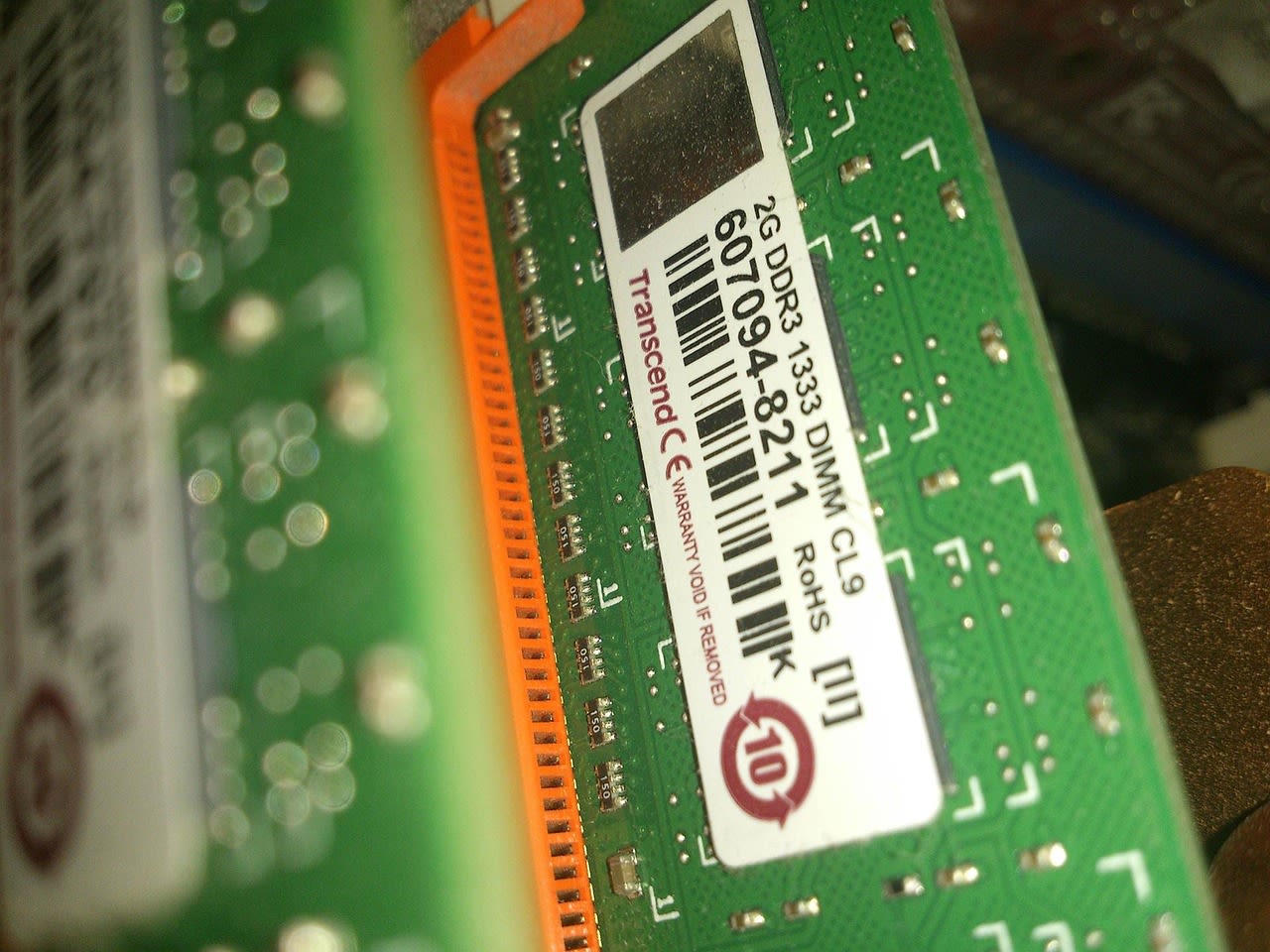
You can't sell what you can't identify. Grab a stack of sticks and a good light. The most critical information is on the label. You're looking for:
- Capacity: 4GB, 8GB, 16GB, 32GB, etc.
- Type: DDR3, DDR4, DDR5. Also, note if it's ECC. The label will usually say "ECC," "RDIMM," "LRDIMM," "UDIMM," or "SODIMM" (for laptops).
- Speed: Expressed as PC3-10600R (DDR3-1333) or PC4-25600 (DDR4-3200). The number after "PC" is the theoretical bandwidth; the DDRx-xxxx is the data rate.
- Part Number: A crucial string like "M393A2K40BB1-CRC." This is your golden ticket for accurate pricing.
Once identified, you must test them. Selling dead RAM is a one-way ticket to negative feedback and refunds. If you have a spare compatible system, use MemTest86. Boot from a USB, run it for a few passes—it's the gold standard. No spare system? For a small investment, a RAM Memory Tester can save you huge headaches. These simple PCIe or standalone devices can verify a stick is recognized and functional in minutes. It's worth it for peace of mind.
Pricing Your RAM: The Art and Science
This is where most people leave money on the table. Don't just guess or look at one listing. You need to do your market research. Head to eBay, but search for SOLD listings, not just what people are asking for. Filter by "Sold Items" to see the actual transaction prices for your exact part number. This is your baseline.
Next, check specialized hardware marketplaces like r/hardwareswap (for consumer stuff) or the ServerBuilds.net forum and eBay for server memory. Prices can vary by 20-30% between platforms. Generally, eBay has the broadest audience but the highest fees (~13%). Forums and Reddit have lower fees (PayPal Goods & Services is ~3%) but a smaller, more knowledgeable buyer pool.
Here's a pro tip from the trenches: Kit your memory. A matched set of 4x 16GB sticks from the same manufacturer and part number is worth more than four individual 16GB sticks sold separately. Enterprises and enthusiasts pay a premium for guaranteed compatibility. If you have a pile of mixed 8GB sticks, try to make pairs or sets of four with matching specs.
Where and How to Sell: Platforms Compared

Choosing the right platform is half the battle. Each has its own vibe, fee structure, and buyer type.
eBay: The giant. Maximum exposure, but maximum competition and fees. Use it for higher-value server RAM and oddball stuff. Be meticulous with your listings—clear photos of the label, honesty about testing, and detailed specs. eBay's buyer protection heavily favors the buyer, so document everything. Shipping is key: use proper anti-static bags and plenty of padding.
r/hardwareswap & Tech Forums: Ideal for consumer DDR4, gaming RAM, and smaller lots. You'll deal with more savvy buyers who know what they want. Transactions use PayPal Invoice (for buyer/seller protection) or local cash. Fees are lower, but you need to build reputation (through confirmed trades) for the best deals. The community is generally good at self-policing scammers.
Facebook Marketplace & Craigslist: Best for local, cash-in-hand sales of consumer RAM. Great for avoiding shipping and fees entirely. The downside? You'll get lowball offers and have to coordinate meetups. Stick to public places.
Consider this: if you have a massive lot of mixed server RAM, the effort to list individually can be daunting. In that case, you might want to hire a virtual assistant on Fiverr to help manage creating dozens of listings across platforms. It can be a worthwhile investment to scale your operation.
Shipping and Scam Avoidance: Protecting Your Profit
This is the part that worries people. Let's demystify it. For shipping, you need anti-static bags. You can buy them in bulk cheaply, or reuse ones from your own component purchases. Wrap the stick in the bag, then wrap in bubble wrap or use a small cardboard partition box. A regular padded envelope is usually fine for 1-2 sticks; for more, use a small box.
Avoiding Scams: The most common scam for sellers is the "item not received" or "item not as described" claim. Your defense is documentation.
- Photograph everything: The stick, the label, it working in a system (if possible), and the packaged item before sealing the box.
- Use tracked shipping with signature confirmation on high-value items (over $100). It's worth the extra few dollars.
- For eBay, ship only to the address on the PayPal/eBay transaction. Never change it, even if the buyer asks nicely.
- Be wary of new accounts with zero feedback making large purchases.
If you're automating the research side—like tracking price trends across multiple part numbers—tools can help. While not for the faint of heart, you could use a platform like Apify to build a simple scraper that monitors sold prices for your specific RAM models on eBay, giving you a real-time dashboard of the market. It's a next-level move for serious flippers.
The DevOps Angle: Automating Asset Recovery
For the sysadmins and DevOps engineers reading this, think bigger. This isn't just about your desk drawer. Your company probably has racks of decommissioned hardware sitting in a closet or headed to e-waste. That's untapped capital. Propose a simple asset recovery pipeline.
- Inventory: As part of your decommissioning runbook, add a step to remove, label (with asset tag), and test RAM/CPUs.
- Testing & Cataloging: Use a known-good test server or a memory tester. Log the part number and test result in a simple spreadsheet or a CMDB like Snipe-IT.
- Bulk Listing: Instead of selling one-off, batch identical modules and list them as enterprise lots. A lot of 20x 32GB DDR4-2666 RDIMMs is incredibly attractive to a refurbisher or another company.
The revenue generated can be a nice justification for new tooling or even go back into your team's budget. It turns IT from a pure cost center into a modest revenue generator, which is a fantastic look. Automating the data collection and listing creation is a perfect small project for an intern or a script-happy engineer.
Common Pitfalls and FAQs
Q: Is this even legal? Selling company property?
A: Only if it's yours to sell. If it's your personal old RAM, go for it. If it came from work, you must have explicit permission. Many companies have policies against employees profiting from decommissioned gear. Check first. Better yet, get your company to sell it and suggest the profit funds a team lunch or new tool.
Q: My RAM doesn't have a label. Is it worthless?
A: Not necessarily, but it's much harder to sell. Tech-savvy buyers might take a chance on untested, unlabeled memory for a deep discount, but your market shrinks. It's often not worth the hassle.
Q: How long will this price boom last?
A: Market analysts suggest tight supply through at least Q3 2025. It won't last forever. The time to act is now, while demand is high and before new manufacturing capacity comes fully online.
Q: Should I sell now or hold for higher prices?
A> Sell now. Trying to time the peak is a gamble. The current prices are excellent. Turning inventory into cash now is a sure thing.
Conclusion: From Clutter to Cash
That box of old RAM isn't just e-waste-in-waiting anymore. In 2025's unique market, it's an unexpected asset. By taking a few hours to identify, test, and strategically list your modules, you can generate significant cash—whether it's for your own pocket or your IT department's budget. The process teaches valuable skills in hardware identification, market research, and online commerce. So this weekend, dig out that drawer. Check those part numbers. Run MemTest86. You might be surprised at how much your silicon skeletons are worth. List them, sell them, and put that money toward something new—maybe even some of that overpriced DDR5 you've been eyeing.