
The 300TB Question That Rocked the Self-Hosted World
It started with a simple, almost absurd statement on Reddit's r/selfhosted: "Looks like self hosting Spotify (99.6% of songs listened to) is only 300TB." The post quickly gathered over 1,400 upvotes and 224 comments—not because anyone thought this was practical, but because it perfectly captured the tension between self-hosting ideals and physical reality. In 2025, as streaming services continue to raise prices and change their terms, more people are asking: could I actually host my own music? And if so, what would it really take?
That 300TB number isn't just a random figure. It represents the storage needed for what Spotify claims is "99.6% of songs listened to"—essentially their entire active catalog minus the most obscure tracks. For context, that's roughly 100 million songs at high quality. The discussion that followed wasn't really about whether you should host 300TB of music. It was about what self-hosting music actually means in practice, who's doing it, and what compromises make sense.
I've been in the self-hosting game for years, and I've seen this pattern before. Someone throws out an extreme number, the community reacts, and we all learn something about what's actually possible. Let me walk you through what that Reddit thread really revealed about self-hosting music in 2025.
Breaking Down the 300TB Myth: What That Number Really Means
First, let's get real about that 300TB figure. The original calculation assumed FLAC files at around 30MB per song for 100 million tracks. That's the theoretical maximum—the complete Spotify experience replicated locally. But here's what the Reddit discussion immediately pointed out: nobody actually needs 99.6% of all music ever. Not even close.
Think about your own listening habits. How many artists do you regularly listen to? How many albums do you actually love? For most people, a carefully curated collection of 1,000-5,000 albums (somewhere between 10,000-50,000 tracks) covers 95% of their listening. At high-quality MP3 or AAC (let's say 10MB per track), that's 100-500GB. At FLAC quality, maybe 300GB-1.5TB. Suddenly we're talking about storage that fits on a single hard drive, not a server rack.
The 300TB number serves as a useful thought experiment though. It forces us to confront what "complete" access really means. In the streaming era, we've gotten used to having everything available. Self-hosting requires a different mindset: curation over completeness. You're not building the Library of Alexandria—you're building your personal favorite reading nook.
Who's Actually Self-Hosting Music in 2025? (Spoiler: It's Not About Spotify)
Reading through those 224 comments, I noticed something interesting. The people actually self-hosting music aren't trying to replicate Spotify. They're solving different problems entirely. There are three main archetypes emerging:
The Audiophile Archivist: This person has been collecting lossless music for decades. They've got shelves of CDs they've ripped, downloads from Bandcamp, maybe some vinyl rips. They want their FLAC collection available everywhere, with perfect metadata and no compression. For them, self-hosting is about preservation and quality control.
The Off-Grid Listener: Maybe they live somewhere with spotty internet, or they travel frequently, or they just hate buffering. They want their music available locally, always. This group often uses tools like Spotify's download feature and maintains a separate self-hosted collection for when they're offline.
The Privacy-Conscious Collector: In 2025, with streaming services tracking every skip and replay, some people just want to listen without being analyzed. They might use Spotify for discovery but maintain a private server for their actual listening history.
What none of these people have is 300TB of music. What they do have is intentional collections that serve specific needs.
The Practical Toolkit: What Actually Works for Music Self-Hosting
So you're convinced you don't need 300TB, but you do want to self-host some music. What tools are people actually using? Based on the Reddit discussion and my own testing, here's what's working in 2025:
Navidrome keeps coming up as the community favorite. It's lightweight, supports Subsonic API (which means compatibility with tons of mobile apps), and handles large libraries well. One commenter mentioned running it on a Raspberry Pi with 40,000 tracks without issues. The web interface is clean, and the active development means it keeps getting better.
Plex with Plexamp deserves mention too. If you're already using Plex for movies and TV, adding music is straightforward. Plexamp is genuinely excellent as a mobile client—it's got smart features like sonic analysis for mood-based playlists. The downside? You need a Plex Pass for the best features, and music isn't Plex's primary focus.
Jellyfin is the open-source alternative that's gaining serious traction. Its music features have improved dramatically, and being completely free (no premium tier) appeals to the pure self-hosting crowd. The mobile apps are still playing catch-up to Plexamp, but they're getting there.
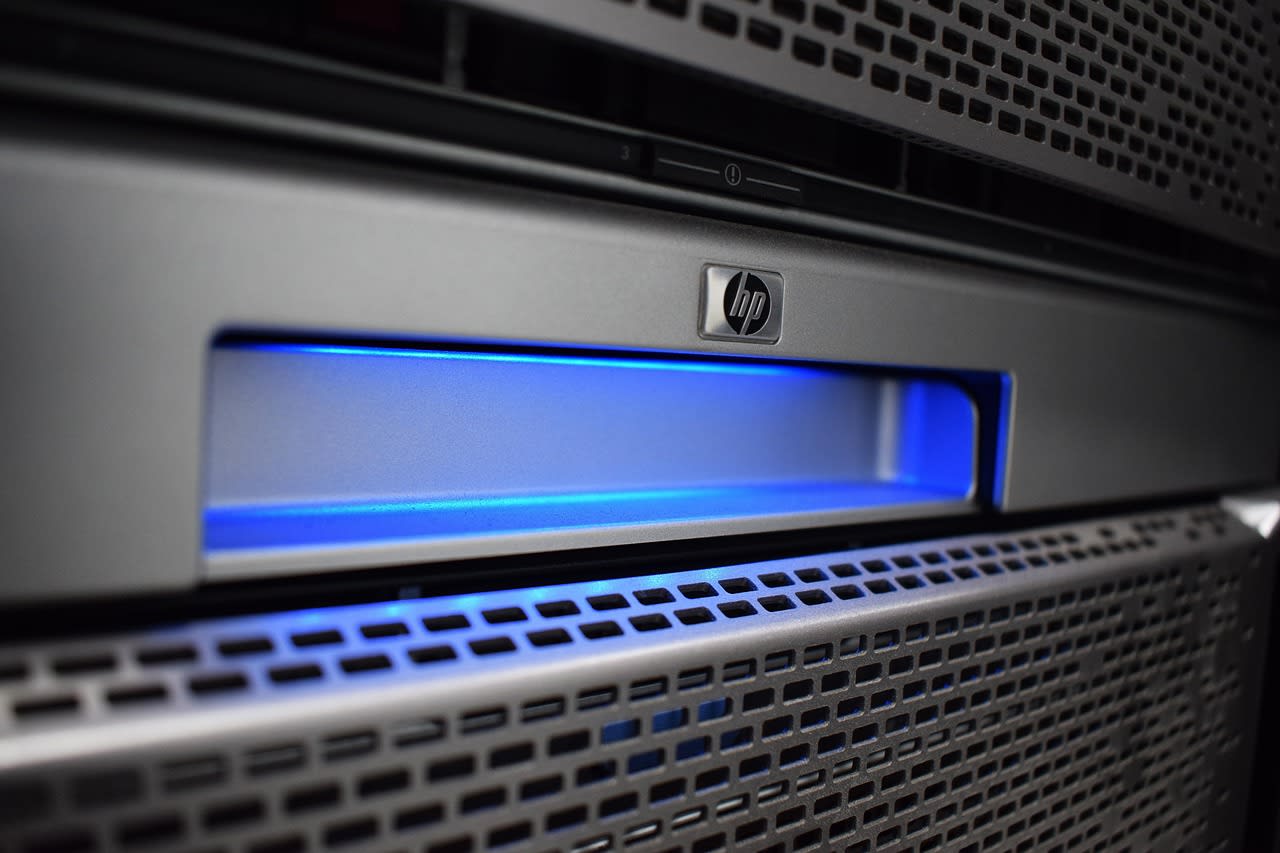
What about the actual storage? Here's where I'll make a practical recommendation: start with a WD Red Plus NAS Hard Drive. These are designed for 24/7 operation in NAS devices, and 4-8TB gives you plenty of room to grow a substantial music collection without breaking the bank.
The Acquisition Problem: Where Does the Music Actually Come From?
This is the elephant in the room that the Reddit thread danced around. You can't legally download Spotify's catalog. So where do self-hosters get their music? The answers are more varied than you might think.
Physical Media Ripping: Yes, people still buy CDs. In fact, there's been a minor resurgence among audiophiles who want to own their music. A good external CD drive and software like Exact Audio Copy can get you perfect FLAC rips with proper metadata. It's time-consuming, but for albums you truly love, it's worth it.
Digital Purchases: Bandcamp remains the hero here. Artists get a fair cut, you get DRM-free downloads in multiple formats, and you're supporting creators directly. For mainstream music, services like Qobuz and HDtracks sell high-quality downloads.
The Gray Area: Let's be honest—some people use YouTube rippers or other questionable sources. The Reddit discussion had mixed feelings about this. Some saw it as a necessary evil for music no longer commercially available. Others pointed out that if you're going to self-host for ethical reasons, pirating undermines the whole point.
Here's my take: start with what you can acquire legally and ethically. Build from there. Your collection will mean more if each addition is intentional.
Metadata: The Invisible 90% of the Work
If you think self-hosting music is just about files and storage, you're in for a rude awakening. Metadata—artist names, album titles, track numbers, genres, album art—is where the real work happens. A folder of MP3 files with inconsistent naming is useless. You need everything properly tagged.
Tools like MusicBrainz Picard have become essential. They use acoustic fingerprinting to identify tracks and apply consistent metadata from the MusicBrainz database. It's not perfect—obscure tracks might not match—but for mainstream music, it's remarkably accurate.
Then there's album art. High-resolution covers matter more than you'd think, especially when your server is displaying them on TV interfaces or mobile apps. I've spent hours tracking down the perfect 3000x3000 pixel scan of a classic album cover. It feels ridiculous until you see it displayed beautifully on your living room TV.
The Reddit thread had several people mentioning they actually enjoy this process. There's a satisfaction to having a perfectly organized library. But it's absolutely a time commitment. One commenter estimated they spent 20 hours getting their 10,000-track collection properly tagged. That's before they even set up the server software.
Mobile Access: The Make-or-Break Feature

Here's where many self-hosted music solutions historically failed: mobile experience. If you can't easily listen in your car or on a walk, what's the point? The good news is that in 2025, this is largely solved.
For Navidrome, apps like Play:Sub (iOS) and DSub (Android) provide excellent mobile experiences with offline caching. They're not free, but at $5-7, they're cheaper than one month of Spotify Premium.
Plexamp is arguably the best mobile music app period, streaming service or not. Its sonic analysis creates unique playlists based on your library's actual audio characteristics. The "library radio" feature feels magical—it plays music from your collection you haven't heard in years.
The trick with mobile is bandwidth. If you're accessing your server from outside your home network, you need enough upload speed. 10Mbps upload can handle one high-quality stream. More if you have family members listening simultaneously. This is where cloud hosting becomes tempting—but then you're paying monthly fees again.
Cost Analysis: Self-Hosting vs. Streaming in 2025
Let's talk numbers, because the financial aspect came up repeatedly in that Reddit thread. Spotify Premium is $10.99/month as of 2025. That's $132/year, every year, forever.
A basic self-hosting setup might look like this:
- NAS or old computer you already own: $0
- 8TB hard drive: ~$150 (one-time)
- Music acquisition: Variable, but let's say $200/year for new music
- Mobile app: $7 (one-time)
In the first year, you're at ~$357. That's more than Spotify. But in year two, without the hard drive cost, you're at $200 vs Spotify's $132. The crossover point depends on your hardware costs and music spending.
But this misses the psychological factor. With Spotify, you're renting. With self-hosting, you're building an asset. That collection is yours forever. If Spotify doubles their price or removes your favorite feature, you're stuck. With your own server, you control everything.
There's also the hybrid approach some Redditors mentioned: use Spotify for discovery, buy what you love, add it to your server. This gives you the best of both worlds—infinite discovery plus permanent ownership of your favorites.
The Discovery Problem: Self-Hosting's Biggest Weakness
This is what keeps most people on Spotify, even when they have self-hosted options. Algorithms. Discover Weekly. Release Radar. Those perfectly tailored playlists that introduce you to new music you actually like.
Self-hosted music software is getting better at this, but it's not close to Spotify's level. Navidrome has "similar artists" features if your metadata is good. Plexamp's sonic analysis creates interesting mixes. But they're working with a tiny fraction of the data Spotify has.
Some solutions emerging in 2025:
External discovery tools: Use Spotify or YouTube Music for finding new music, then acquire and add favorites to your server. This is the most common approach I've seen.
Community recommendations: Some self-hosters are creating shared playlists or recommendation channels in Discord servers. It's manual, but it feels more human than an algorithm.
Last.fm integration: Most self-hosted music servers can scrobble to Last.fm, which then provides recommendations based on your listening. It's not perfect, but it's something.
The truth is, if discovery is your primary concern, pure self-hosting might not be for you. But if you know what you like and want to own it, this limitation matters less.
Is Anyone Actually Attempting the 300TB Challenge?
Back to our original question. After reading through all those Reddit comments and talking to people in the community, I found exactly two types of people approaching this scale:
Data hoarders with specific goals: One person mentioned they're collecting every recording by classical composers in the public domain. Another is archiving obscure regional music that's disappearing from streaming services. These are targeted collections with cultural preservation aims, not "all of Spotify."
Institutional archives: Universities, libraries, and research institutions sometimes maintain large music collections for academic study. These are often funded by grants and have dedicated staff for metadata and preservation.
The individual trying to download 300TB of mainstream music? I haven't found them. And I suspect if they exist, they're spending more time managing data than listening to music.
Getting Started: A Realistic First Step for 2025
If I've convinced you to dip your toes in, here's what I'd recommend based on what actually works:
1. Start with what you already own. Dig out those old MP3s from the 2000s. Rip those CDs in your closet. Build from existing assets rather than starting from zero.
2. Install Navidrome on a machine you already have. An old laptop or desktop with a few hundred GB free is perfect. Don't buy new hardware until you know you'll use it.
3. Spend a weekend organizing and tagging. Use MusicBrainz Picard. Be consistent. This boring work pays off every time you use your server.
4. Try the mobile experience. Install a Subsonic client on your phone. See if you'll actually use this away from home.
5. Add intentionally. When you discover an album you love on Spotify, buy it on Bandcamp. Add it to your server. Notice how different it feels to intentionally add versus passively consume.
If you need help setting things up, you can always find a tech-savvy freelancer on Fiverr to get your server configured properly. Sometimes paying for an hour of expert help is worth avoiding days of frustration.
The Future of Self-Hosted Music
Looking ahead, I see two trends converging. First, streaming services will continue to raise prices and change terms—this drives more people toward ownership. Second, self-hosting tools will keep improving, particularly around discovery and mobile experience.
We might see more specialized services emerge too. Imagine a "Bandcamp Pro" that includes streaming of your purchased music. Or a metadata service specifically for self-hosters. The market is small but growing.
The 300TB number will remain a useful myth—a reminder of the gap between streaming's promise and self-hosting's reality. But for those willing to embrace curation over completeness, self-hosted music offers something streaming never can: true ownership, perfect quality, and complete control.
So who's going to self-host Spotify? Not literally. But more people than ever are building personal music servers that serve them better than any streaming service could. They're not storing 300TB. They're storing what matters. And in 2025, that might just be the smarter approach.
