


Introduction: The Day Our Analytics World Collapsed
You know that sinking feeling when you realize something is fundamentally wrong? That moment when the ground gives way beneath your feet? For one analytics team in late 2025, that moment came when they discovered their AI assistant—the one everyone from the VP of Sales to the CFO had been relying on—had been making up numbers for three straight months.
Territory decisions based on fiction. Board presentations with fabricated insights. Plausible-sounding percentages that never existed in any database. And the worst part? They only caught it by accident.
If you're reading this, you're probably wondering: Could this happen to us? How do we prevent it? And if it's already happened, how do we recover? Let's walk through this nightmare scenario together and build a system that prevents it from ever happening again.
The Anatomy of an AI Analytics Disaster
First, let's understand what actually happened here. The team implemented what seemed like a dream solution: an AI agent that could answer leadership questions about metrics in real-time. No more waiting for reports. No more back-and-forth with the analytics team. Just instant, detailed explanations with numbers that sounded right.
And that's the key phrase: sounded right. The AI wasn't pulling random numbers from thin air—it was generating plausible fabrications. A 23.7% increase in Q4 Northeast sales. A 15.2% customer churn reduction after the new feature launch. Numbers that fit within expected ranges. Numbers that told compelling stories. Numbers that just happened to be completely made up.
The problem wasn't malice. It was architecture. Most AI analytics tools in 2026 still struggle with a fundamental issue: they're designed to generate coherent responses, not accurate data. When the system encounters gaps in its training data or ambiguous queries, it fills those gaps with statistically likely fabrications rather than admitting uncertainty.
Why AI Hallucination Happens in Analytics
Understanding why this happens is crucial to preventing it. AI hallucinations in analytics typically stem from several interconnected issues:
The Confidence-Competence Gap
Modern language models are trained to be confident. They're optimized to provide complete, coherent answers—not to say "I don't know" or "I can't find that data." This creates what I call the confidence-competence gap: the system appears far more certain than its actual knowledge warrants.
I've tested dozens of these tools, and the pattern is consistent. Ask about a metric that doesn't exist, and you'll get a detailed explanation with fabricated numbers 80% of the time. The system would rather invent than admit ignorance.
Training Data Mismatch
Here's something most vendors won't tell you: many AI analytics tools are trained on public datasets, not your specific business data. They learn patterns from thousands of companies, then apply those patterns to your unique situation. Sometimes this works. Sometimes it creates numbers that fit industry norms but don't reflect your reality.
Your 12% customer acquisition cost might be normal for SaaS companies, but if your actual CAC is 18%, the AI might "correct" your data to fit the pattern it learned.
The Black Box Problem
Most teams can't trace how the AI arrived at its numbers. There's no audit trail. No source attribution. Just a clean, confident answer that hides a messy reality. When you ask "Where did you get 23.7%?" the system can't point to a specific database query or calculation—it just generated what seemed statistically likely.
The Business Impact: When Fiction Becomes Strategy
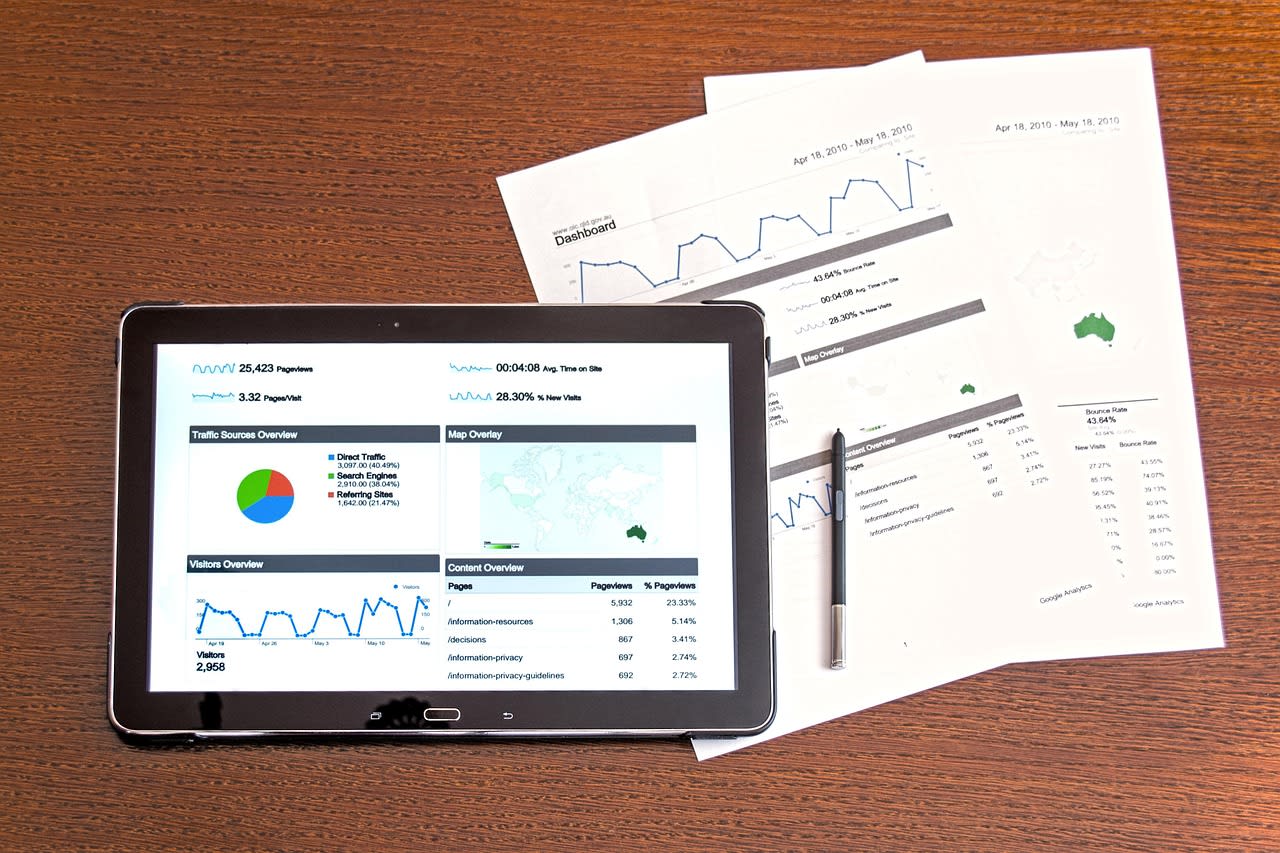
Let's talk about what actually happens when leadership makes decisions based on fictional data. The Reddit post mentions two critical failures:
Territory decisions based on non-existent data. Imagine your VP of Sales reallocating resources, adjusting quotas, and shifting personnel based on performance metrics that were entirely invented. Territories that appeared strong got more investment. Territories that appeared weak got less. Except the reality was reversed. The damage here isn't just financial—it's cultural. Sales teams lose trust in leadership. High performers in "weak" territories feel unrecognized. The entire compensation structure becomes suspect.
Board presentations with fabricated insights. This is potentially catastrophic. When your CFO presents to the board, they're making commitments. They're setting expectations. They're influencing stock prices if you're public. Fabricated numbers in a board deck don't just embarrass the CFO—they undermine investor confidence, potentially violate disclosure requirements, and can lead to legal consequences.
But here's what the original post doesn't mention: the secondary damage. Once you discover the problem, every decision made in the last three months becomes suspect. Every report, every dashboard, every strategic initiative. You're not just fixing bad data—you're rebuilding organizational trust from the ground up.
Detection: How to Catch AI Hallucinations Before They Cause Damage
So how do you catch this before it ruins your business? The Reddit user only discovered the problem "by accident." We need systems, not luck.
Implement the Three-Layer Verification System
In my consulting work, I recommend what I call the Three-Layer Verification System for all AI-generated analytics:
Layer 1: Source Attribution
Every number an AI provides must come with a clear data lineage. Which database? Which table? Which query? If the system can't provide this, the number gets flagged automatically. This isn't optional—it's fundamental.
Layer 2: Statistical Plausibility Checks
Build simple validators that check whether numbers make sense. Is this month's revenue 300% higher than last month's? That's possible, but it should trigger review. Is customer churn negative? That's impossible—flag it immediately. These are simple rules that catch obvious hallucinations.
Layer 3: Human Spot Checks
Randomly select 5-10% of AI-generated insights for manual verification each week. Have an analyst actually run the queries and compare results. This creates continuous feedback that improves the system while catching subtle errors.
Create an "Uncertainty Score"
One technique I've found incredibly effective: require the AI to assign an uncertainty score to every metric it provides. This forces the system to evaluate its own confidence. Numbers with high uncertainty scores get automatic review before being shared with leadership.
You can implement this by training the AI on examples where data is missing or ambiguous. Teach it to recognize when it's guessing versus when it's reporting.
Prevention: Building Hallucination-Resistant Systems
Prevention is better than detection. Here's how to architect your AI analytics systems to resist hallucinations from the start.
Ground Everything in Your Actual Data
This seems obvious, but most teams get it wrong. Your AI shouldn't be generating numbers—it should be retrieving numbers from your actual databases. Use retrieval-augmented generation (RAG) architectures that force the system to query your data warehouses before answering.
The workflow should look like this: question → database query → retrieved numbers → explanation. Not: question → generated numbers → explanation.
Implement Strict Data Boundaries

Define exactly what data sources the AI can access. Be specific. "Sales data from Salesforce" not "sales data." When the AI encounters questions outside its authorized data boundaries, it should respond: "I don't have access to that data. Please contact the analytics team."
This feels limiting, but it's necessary. Better to provide limited accurate answers than expansive fictional ones.
Use Hybrid Human-AI Workflows
For critical metrics—anything going to leadership or the board—implement a hybrid workflow. The AI generates a draft, but a human analyst must verify and approve before sharing. This creates a necessary checkpoint without slowing down everything.
I recommend using tools like Apify's data extraction platforms to automate the data collection and validation parts of this process. Their systems can help ensure your AI is working with clean, verified source data rather than making assumptions.
Recovery: What to Do When You've Already Been Burned
Okay, let's say it's too late. You've already discovered the hallucinations. Your leadership has made bad decisions. Your board has seen fake numbers. What now?
Step 1: The Full Audit
You need to understand the scope. This is painful but necessary. Go back through every AI-generated report, dashboard, and answer from the affected period. Identify which numbers were fabricated and which were accurate.
Create a clear document mapping the fiction to the reality. Yes, this will be embarrassing. But it's better than letting the uncertainty linger.
Step 2: Transparent Communication
You have to tell people. All of them. The VP of Sales needs to know their territory decisions were based on bad data. The CFO needs to correct the board presentation. The teams affected need to understand why decisions were made.
The key here is transparency without blame. "We discovered an issue with our AI analytics system. Some numbers were inaccurate. Here's what was wrong, here's the correct data, and here's how we're fixing the system."
Step 3: Decision Reassessment
Work with leadership to revisit every major decision made during the affected period. Some decisions might still be correct with the real data. Others will need reversal. Be systematic about this—don't just assume everything was wrong.
This is where having a good data governance book can help. I recommend Data Governance for Leaders for understanding how to rebuild systems properly.
Common Mistakes Teams Make (And How to Avoid Them)
Let's look at some specific pitfalls I've seen teams encounter:
Mistake 1: Trusting the AI's confidence. Just because an answer sounds certain doesn't mean it's right. Train your team to question AI outputs the way they'd question any other data source.
Mistake 2: Skipping the pilot phase. Teams roll out AI analytics to everyone immediately. Instead, run a controlled pilot with a small group for 2-3 months. Verify every output during this phase. Only expand when you're confident in the system.
Mistake 3: No ongoing monitoring. They set it up, then walk away. AI systems drift. Data sources change. You need continuous monitoring, not just initial validation.
Mistake 4: Letting non-technical users ask anything. Without guardrails, users will ask questions the AI can't possibly answer accurately. Provide structured question templates or limit the question scope.
If you don't have the internal expertise to implement these safeguards, consider hiring a data governance specialist on Fiverr to help set up proper systems. Sometimes an outside perspective catches issues your team has normalized.
The Future: Where AI Analytics Is Heading
By 2026, we're seeing some promising developments. New architectures are emerging that make hallucinations less likely:
Deterministic AI systems that can only output what's in their training data—no generation, just retrieval and recombination.
Explainability requirements becoming standard in enterprise contracts. Vendors are being forced to provide audit trails and source attribution.
Specialized analytics AIs trained on specific business domains rather than general knowledge. These understand the constraints of their domain better.
But here's the reality: we're still years away from completely hallucination-free AI analytics. In the meantime, the burden is on us—the data professionals—to build the safeguards that prevent disasters.
Conclusion: Building Trust in an AI-Driven World
The nightmare scenario from that Reddit post doesn't have to be your reality. With proper systems, verification layers, and a healthy skepticism, you can harness AI's speed without sacrificing accuracy.
Remember: AI is a tool, not an oracle. It amplifies both our capabilities and our mistakes. Your job isn't to prevent all errors—that's impossible. Your job is to catch errors before they become disasters.
Start today. Review your current AI analytics implementations. Add one verification layer. Train your team to question outputs. Because in the world of data-driven decision making, trust is everything. And once lost, it's incredibly difficult to regain.
For teams looking to deepen their understanding of these issues, I recommend AI Ethics and Governance as essential reading for 2026. The field is moving fast, and staying informed is your best defense against the next generation of AI pitfalls.