



The Quiet Revolution in Self-Hosting Communities
You know that feeling when you stumble into a technical community and everything just... works? The discussions are productive, the tools are relevant, and people actually help each other instead of arguing about ideological purity. That's exactly what happened in the self-hosting community recently, and honestly, it's kind of remarkable.
Here's the thing—back in 2024 and early 2025, there was this growing tension. On one side, you had traditional developers who'd been self-hosting for years, running their own servers, tweaking config files by hand, and building everything from scratch. On the other side, you had this new wave of AI automation enthusiasts who wanted to automate everything, use AI-assisted tools, and optimize for efficiency over manual control. And for a while, it felt like these two groups were talking past each other.
But something shifted. The community moderators implemented some thoughtful rules, people started listening more than they argued, and suddenly we had this beautiful equilibrium where both approaches could coexist. The original Reddit post that inspired this article captured it perfectly: "Rules are working, AI people are happy, Traditional People are happy." That's not just a nice sentiment—it's a blueprint for how technical communities can evolve in 2026.
Why This Balance Matters More Than Ever
Let's be real for a second. The self-hosting world isn't just about running a personal Nextcloud instance anymore. In 2026, we're talking about complex home labs that rival small business infrastructure, AI model hosting, automated data pipelines, and IoT ecosystems that would make a sysadmin from 2015 break out in a cold sweat. The stakes are higher, and the tools are more diverse than ever.
What I've noticed—and what the community discussion highlighted—is that both traditional and AI approaches bring something essential to the table. The traditional folks? They understand the fundamentals in a way that's almost instinctual. They know why that Docker container is failing just by looking at the logs. They can troubleshoot network issues without reaching for an AI assistant. This foundational knowledge is irreplaceable.
Meanwhile, the AI automation crowd is pushing boundaries in ways that were literally impossible a few years ago. I've seen people automate entire deployment pipelines that would have taken weeks to build manually. They're using tools that can predict resource usage, automatically scale services, and even suggest optimizations based on patterns in the data. It's not about replacing human expertise—it's about augmenting it.
The real magic happens when these perspectives collide productively. A traditional developer might spot a fundamental flaw in an AI-generated deployment script. An AI enthusiast might show that same developer how to automate away hours of repetitive maintenance work. Everyone wins.
The Rules That Actually Worked (And Why)

So what specific rules made this harmony possible? From what I've observed across multiple communities, a few key principles emerged that actually stuck:
First, there's the "right tool for the job" principle. Discussions that start with "AI tools are always better" or "real developers don't use AI" get redirected. Instead, the focus shifted to specific use cases. Need to monitor 50 different services? An AI-powered monitoring tool might save you hours. Building a custom application with very specific requirements? You might need to roll your own solution.
Second, there's mandatory context. You can't just post "Use this AI tool" without explaining what problem it solves, what alternatives exist, and what the trade-offs are. Similarly, traditional solutions need to acknowledge when automation might be appropriate. This creates discussions that are actually useful rather than ideological battlegrounds.
Third—and this is crucial—there's respect for different experience levels. Someone who's just getting into self-hosting might genuinely benefit from AI tools that simplify complex processes. An experienced sysadmin might prefer manual control. Both approaches are valid depending on where someone is in their journey.
What surprised me is how quickly these rules became self-enforcing. Once the community culture shifted, people started naturally applying these principles. The moderators didn't need to intervene constantly because the community itself maintained the balance.
Real-World Examples: Where AI Shines (And Where It Doesn't)
Let's get concrete. In my own home lab—which has evolved significantly since 2025—I use a mix of approaches. Here's what that actually looks like in practice:
For log analysis across multiple services, I use an AI-powered tool that can spot anomalies and correlate events. Manually sifting through gigabytes of logs just isn't practical anymore. The AI identifies patterns I might miss and surfaces the important stuff. But here's the key: I still need to understand what those logs mean. The AI doesn't replace my knowledge—it helps me apply it more efficiently.
For infrastructure deployment, I've moved to Infrastructure as Code (IaC) with some AI-assisted optimization. The AI suggests resource allocations based on actual usage patterns, which has saved me money on cloud costs. But the actual architecture decisions? Those are still mine. The AI is a consultant, not an architect.
Where do I still go fully traditional? Security configurations. Network rules. Backup strategies. These are areas where I want complete understanding and control. An AI might suggest a security rule, but I need to know exactly why that rule exists and what implications it has.
The community discussions reflect this pragmatic approach. People share specific scenarios: "Here's how I used an AI tool to automate certificate renewals" followed by "Here's why I still manually configure my reverse proxy." It's all about context.
The Tools That Bridge the Divide
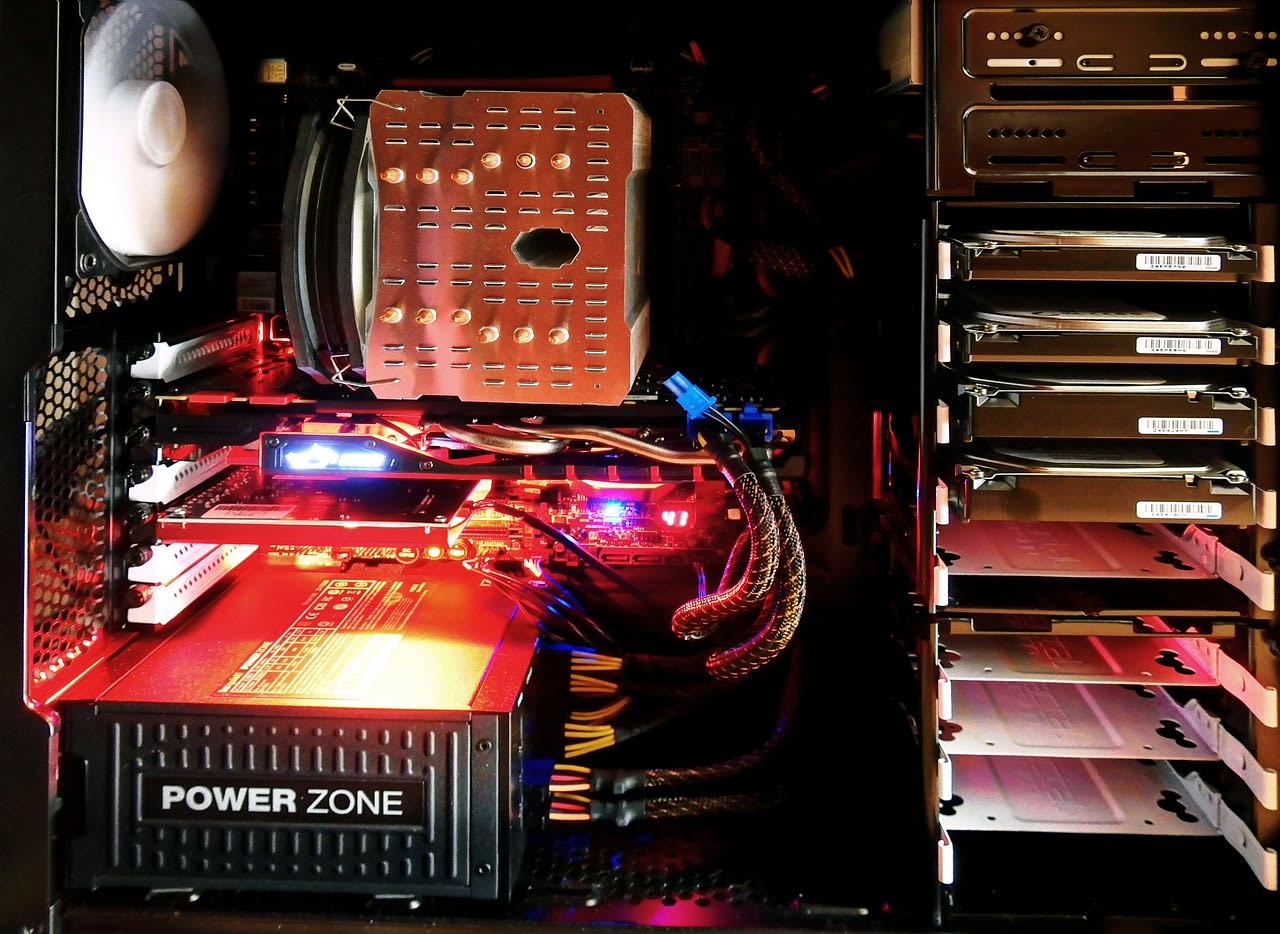
Interestingly, some of the most popular tools in the self-hosting community right now are ones that serve both approaches. Take Docker and Kubernetes—they're fundamentally automation tools, but they require deep understanding to use effectively. They don't replace knowledge; they structure it.
Monitoring tools have evolved in fascinating ways. You've got traditional tools like Nagios and Grafana now incorporating AI features for anomaly detection. But they still expose the raw data and traditional alerting systems for those who want them. It's not an either/or proposition.
Configuration management shows a similar pattern. Ansible playbooks can be written traditionally or generated with AI assistance. The community has developed best practices for when each approach makes sense. Simple, repetitive tasks? AI generation might save time. Complex, conditional logic? Manual creation ensures understanding.
What's emerging—and this is the exciting part—are tools designed specifically for this hybrid approach. They offer AI suggestions but make the underlying mechanisms transparent. They automate routine tasks but provide escape hatches for manual control. They're built for people who want efficiency without sacrificing understanding.
Practical Tips for Your Own Setup
So how do you apply these lessons to your own self-hosting journey in 2026? Based on what's working in the community, here's my approach:
Start with fundamentals. Before you automate anything, understand what you're automating. Deploy a service manually at least once. Read the documentation. Know what each configuration option does. This foundation makes you better at using automation tools because you'll know when they're working correctly—and when they're not.
Adopt tools incrementally. Don't try to AI-automate your entire stack at once. Pick one area—backups, monitoring, deployment—and explore automation there. See what works for your specific needs. The community is great for this because you can find people with similar setups who've already navigated these decisions.
Maintain visibility. However much you automate, keep the ability to see what's happening under the hood. Use tools that provide logs, metrics, and clear reporting. If something goes wrong at 2 AM, you don't want to be debugging an AI's decisions through three layers of abstraction.
Participate in the community balance. Share both your automation successes and your traditional solutions. When you see someone taking an approach different from yours, ask questions instead of criticizing. You might learn something—I certainly have.
Common Pitfalls (And How to Avoid Them)
Even with the community's progress, I still see people making some predictable mistakes. Here's what to watch out for:
The "set it and forget it" trap with AI tools. Automation isn't abdication. I've seen people deploy AI-managed infrastructure and then ignore it for months, only to discover it's been making suboptimal decisions the whole time. Regular check-ins are essential—automate the routine, but keep the oversight.
The "everything must be manual" resistance. Some traditionalists dismiss any automation as "not real self-hosting." But that's like saying driving isn't real transportation because you're not walking. Tools are tools. The skill is in choosing and using them well.
The tool overload problem. With so many options available—both traditional and AI-enhanced—it's easy to constantly switch tools without mastering any. Pick a stack that works and stick with it long enough to really understand it. The community can help here by providing long-term experience reports rather than just shiny new tool announcements.
The knowledge gap danger. This is the big one. If you automate something without understanding it, you create a vulnerability. When that automation breaks—and it will—you won't know how to fix it. The solution isn't to avoid automation; it's to build understanding alongside it.
The Future of Self-Hosting Communities
Looking ahead to the rest of 2026 and beyond, I think we're seeing a model for how technical communities can evolve. The self-hosting community's success isn't about everyone agreeing—it's about creating spaces where different approaches can coexist productively.
What's particularly encouraging is how this balance is spreading to related communities. The homelab, DevOps, and open source spaces are all grappling with similar tensions between automation and control, between new tools and proven methods. The principles that worked for self-hosting—contextual discussions, respect for different experience levels, pragmatic tool evaluation—are proving effective elsewhere too.
For me, the most important lesson is this: technology communities thrive when they focus on solving problems rather than defending ideologies. The original post said it perfectly: "In the end this what this subreddit all about, community development." Not AI development. Not traditional development. Community development.
So whether you're an AI automation enthusiast, a traditional sysadmin, or somewhere in between, there's space for you. The tools will keep evolving. The technologies will change. But the need for communities where people can share knowledge, solve problems, and build things together? That's constant. And right now, in 2026, we're getting better at creating those communities than ever before.
Now if you'll excuse me, I need to go check on my automated backup system—which is currently managed by an AI tool, but which I understand well enough to fix manually if needed. Because that's the balance that actually works.