

Imagine this: you attend a peaceful protest. You visit a gun store to exercise your Second Amendment rights. You go to a political rally. Now imagine the government getting a warrant not for your data specifically, but for everyone's data in that entire area—and using it to identify, track, and potentially investigate you. That's not dystopian fiction. It's the reality of geofence warrants, and the Supreme Court is about to decide their fate in Chatrie v United States. This case doesn't just pose a threat to the Fourth Amendment—it's a loaded gun pointed at the entire Bill of Rights. And in 2026, with location tracking more pervasive than ever, the stakes couldn't be higher.
What you'll learn here isn't just legal theory. We're going to break down exactly how geofence warrants work, why the privacy community is rightfully alarmed, and—most importantly—what you can actually do to protect yourself. This isn't about paranoia. It's about understanding that when the government can track your movements without suspecting you of anything, every constitutional right becomes conditional.
What Exactly Is a Geofence Warrant? Breaking Down the Technical Nightmare
Let's start with the basics, because the terminology matters. A geofence warrant (sometimes called a reverse location warrant) isn't like traditional warrants you see on TV. Police don't go to a judge with evidence about a specific person. Instead, they draw a digital fence—a "geofence"—around a location where a crime might have occurred. Then they demand from companies like Google the location data of every single device that was inside that fence during a specific time window.
Think about that for a second. They're not starting with a suspect. They're starting with a location and casting the widest possible net. Google's Sensorvault—a massive database containing location history from billions of Android devices and iPhone users who use Google services—becomes their fishing pond. Law enforcement gets anonymized data first, then asks for more details on devices that match certain patterns, eventually de-anonymizing people who were simply… present.
The technical execution is chillingly simple. Your phone is constantly pinging cell towers and connecting to WiFi. Google Maps, even when not actively navigating, often tracks your location for "improved services." This data gets timestamped and stored with remarkable precision. A warrant compels Google to hand over a list of every device ID within coordinates, say, a 200-meter radius around a bank from 2:00 PM to 4:00 PM. From there, it's a process of elimination to find "persons of interest."
And here's the kicker: you don't have to be a Google user. If you're near an Android user, or your device connects to a WiFi network Google knows about, you could be swept up in the dragnet. The scale is unprecedented. One warrant in 2020 sought data on every single person near a Minneapolis protest—thousands of innocent individuals exercising their First Amendment rights.
Chatrie v United States: The Case That Could Unlock Mass Surveillance
So, who is Chatrie, and why does his case matter so much? In 2019, Okello Chatrie was identified via a geofence warrant as a suspect in a bank robbery in Virginia. The warrant captured data from 19 devices near the bank. Chatrie's lawyers didn't just argue he was innocent (which he was, of the robbery in question). They argued the warrant itself was unconstitutional—a general warrant of the exact sort the Fourth Amendment was designed to prohibit.
The Fourth Amendment requires warrants to be specific, describing "the place to be searched, and the persons or things to be seized." A geofence warrant inverts this. It seizes data from all persons in a place. Lower courts have been split. Some have allowed the evidence; others have thrown it out. The Supreme Court taking the case in 2026 means they're ready to set a national standard.
The government's argument will likely hinge on the "third-party doctrine"—the idea that you have no reasonable expectation of privacy in data you voluntarily share with a company like Google. But that doctrine is on shaky ground. In the 2018 Carpenter v United States case, the Court ruled that accessing seven days of cell-site location information did require a warrant, acknowledging the deeply revealing nature of location data.
The privacy community's fear, echoed in that Reddit discussion, is that the Court might create a dangerous middle ground. They could rule geofence warrants constitutional but with "safeguards," like requiring them to be narrow or a last resort. The problem? Once the legal door is open, those safeguards tend to erode. What starts as a tool for bank robberies becomes a tool for tracking protesters, monitoring clinic visits, or identifying gun owners.
The Domino Effect: How the 4th Amendment Protects All Other Rights
This is where the Reddit post's central insight hits home: undermining the Fourth Amendment undermines everything. The Bill of Rights isn't a menu of à la carte options. It's an interlocking system. The Fourth Amendment's protection against unreasonable searches is the foundational wall that lets the other rights exist freely within your home and life.
Let's walk through the scenarios people were worried about:
First Amendment - Freedom of Speech & Assembly: A geofence warrant around a political rally, a controversial lecture, or a protest gives the government a perfect attendance list. The chilling effect is immediate. Would you go to a rally for a cause you believe in if you knew the state could easily ID you and your friends from location data? This turns the right to assemble into a risk-assessment exercise.
Second Amendment - Right to Bear Arms: As one commenter pointed out, a warrant around a gun store or a shooting range creates a registry by proxy. Even in states without official registries, law enforcement could build a list of every device that visited such locations. This isn't speculation—similar techniques have been used.
Other Privacy-Dependent Rights: What about visiting a reproductive health clinic? An addiction support meeting? A mosque or church? The ability to move and associate privately is the bedrock of a free society. When every movement can be retroactively audited, privacy ceases to exist, and with it, the practical ability to exercise rights without fear of observation.
The Founding Fathers feared general warrants—"writs of assistance"—that let British agents search anywhere for anything. They called them "instruments of slavery." A digital geofence warrant is the 21st-century version: a general warrant for the digital soul.
Google's Role: The Unwilling (or Willing?) Data Reservoir
The discussion rightly focuses on Google. They're not the villain in the legal sense—they're compelled by court order. But they built the reservoir. Google's business model is predicated on collecting as much data as possible to fuel its advertising machine. That same data is a goldmine for law enforcement.
Google publishes a transparency report showing a staggering increase in geofence warrant requests—from 982 in 2018 to over 11,554 in 2020 (the last year they broke out the category). They claim they push back, requiring specificity and sometimes challenging warrants in court. But ultimately, if the warrant is valid, they comply.
The real issue is architectural. By making constant, passive location collection the default for billions of users—often with confusing and buried privacy settings—Google created a surveillance infrastructure of unparalleled scope. Even if you turn "Location History" off, other services like Web & App Activity can still store your location with timestamped photos or searches. It's a labyrinth designed for data extraction, not user privacy.
And Google is just the most prominent source. Apple, with its focus on privacy, also receives similar warrants for iCloud data. Wireless carriers have vast stores of cell-tower location data. Amazon Ring cameras and license plate readers create their own de facto geofences. The ecosystem is vast, and a Supreme Court blessing for the technique would open the floodgates across all these platforms.
Practical Privacy in 2026: How to Make Yourself a Harder Target
Okay, enough doom-scrolling. What can you actually do? You can't single-handedly change Supreme Court precedent, but you can significantly reduce your digital footprint. The goal isn't to become a ghost (nearly impossible), but to make dragnet surveillance like geofence warrants less effective against you.
1. Nuke Your Location History & Limit Data Collection:
This is step zero. Go into your Google Account (myactivity.google.com), find Location History, and turn it off. Don't just pause it—turn it off and delete all past history. Do the same for "Web & App Activity," which can store location from searches. On iPhone, go to Privacy & Security > Location Services and review each app. Set maps to "While Using" only. Be ruthless.
2. Embrace a Real VPN, Religiously:
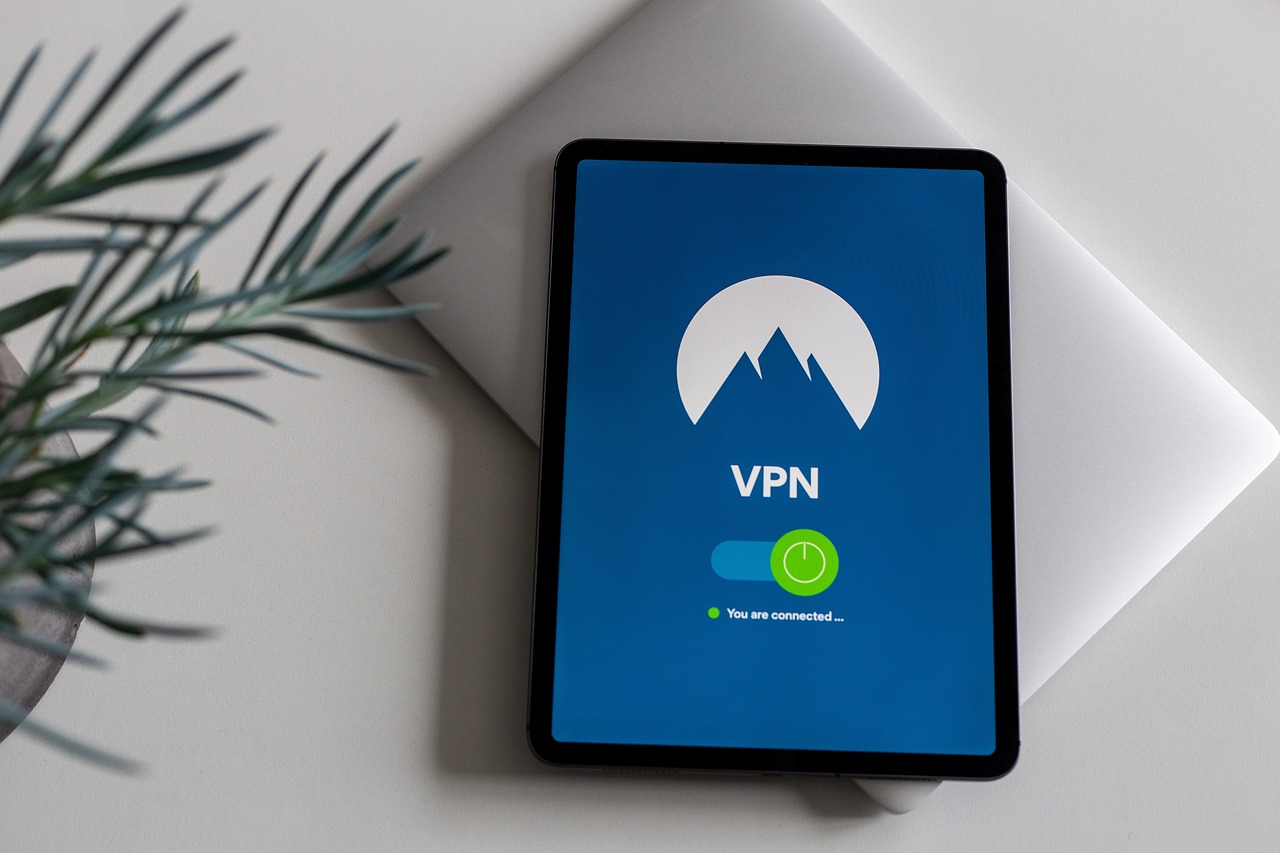
A good VPN isn't just for streaming. It encrypts your internet traffic and masks your IP address, making it harder to link your online activity to your physical location. But you need a reputable, no-logs provider. Free VPNs are often data-sellers in disguise. I've tested dozens, and for this specific threat, you want one with a proven no-logs policy and obfuscated servers. Run it on your router if possible, so all home devices are covered.
3. Ditch or Segment Your Digital Life:
Consider using a separate, locked-down device for sensitive activities. A burner phone (even a cheap Android with no Google services) paid for with cash for attending a protest isn't paranoid—it's prudent. Don't carry your primary, data-leaking device everywhere. For daily use, look into privacy-focused mobile OSes like GrapheneOS for Pixel phones, which give you far more control over what apps can access.
4. Use Privacy-Focused Alternatives:
Switch your maps. Apple Maps (with significant location limits set) or open-source options like Organic Maps download maps for offline use and don't constantly phone home. Use DuckDuckGo for search. Consider leaving the Google ecosystem entirely for email and cloud storage, though that's a bigger lift for most people.
Common Mistakes & Misconceptions About Location Privacy
Let's clear up some confusion I see constantly, even in tech-savvy circles.
Mistake #1: "I have nothing to hide." This misunderstands the threat. The issue isn't hiding guilt; it's preserving innocence. A geofence warrant investigates everyone as a potential suspect. You should care about the power being created, not just how it might be used against you today.
Mistake #2: "Turning off GPS is enough." Nope. Your phone triangulates position via cell towers and WiFi networks with scary accuracy. Airplane mode is better, but turning the device off is the only surefire way. Even then, if it's near other devices, you might be inferred.
Mistake #3: "Apple is completely safe." Apple is better on device-side processing, but iCloud backups can contain location data. If you back up to iCloud and law enforcement serves Apple with a valid warrant for your account, they may get data. The key is end-to-end encryption for backups, which Apple offers for some data types—turn it on.
Mistake #4: "This only matters if you're a criminal." The Chatrie case is the perfect rebuttal. Chatrie was innocent of the crime he was investigated for. He was targeted solely for being in an area. In a mass surveillance regime, we're all just data points waiting for a pattern-matching algorithm to flag us.
The Legal & Activist Fight: What You Can Do Beyond Your Phone
Individual protection is crucial, but systemic problems demand systemic solutions. The digital privacy fight needs bodies and voices.
Support Organizations: Donate to or get involved with groups like the Electronic Frontier Foundation (EFF), the ACLU, and the Electronic Privacy Information Center (EPIC). These are the organizations filing amicus briefs in cases like Chatrie. They're the legal backbone of the resistance.
Demand Legislative Action: The Supreme Court interprets the law, but Congress can make new ones. Support bills like the Fourth Amendment Is Not For Sale Act, which would close the loophole allowing law enforcement to buy data from data brokers without a warrant. Call your representatives. Make it clear this is a voting issue.
Raise Awareness: Talk about this. Most people have no idea what a geofence warrant is. Explain it in simple terms. Share articles (like this one). The more public understanding there is, the harder it is for courts and lawmakers to expand these powers in the dark.
If you need help understanding the technical aspects to advocate more effectively, you can sometimes find great explainers or even hire a tech-savvy freelance writer on platforms like Fiverr to help translate complex topics into clear language for petitions or community education.
Looking Ahead: The Future of Privacy Post-Chatrie
By the end of 2026, we'll likely have a ruling. The best-case scenario is a clear, strong rejection of geofence warrants as unconstitutional general searches. The worst-case is a green light. The probable case is a messy, split decision with confusing standards that lower courts will interpret wildly for another decade.
Regardless of the outcome, the genie is partly out of the bottle. The technology exists, and law enforcement's appetite for it is proven. The fight will continue in state legislatures (some states like California and New York have proposed bans), in tech company boardrooms (pressure to design more private systems), and in our own daily choices.
Privacy isn't about having something to hide. It's about having something to protect—your autonomy, your freedom of thought, your right to live without being perpetually monitored by your own government. The Chatrie v United States case is a battle for the soul of the Fourth Amendment in the digital age. And as that Reddit thread grasped immediately, when the government can search everyone to find someone, no right is truly secure.
Start by locking down your own data today. Then, look up. Get informed. Get involved. The Constitution is just a document. It's only as strong as the people willing to stand up for what it means.