

Bye Bye Data: The 2026 Guide to Surviving Catastrophic Drive Failure
You come home after a long day, ready to unwind with your media collection. You power on the TV, load Jellyfin, and... "server not found." That sinking feeling hits. You check your TrueNAS server—no disks detected. You swap the HBA, test individual drives—all eight HDDs dead as doornails. Your Linux ISOs, your media library, years of carefully curated data: gone. But strangely, the SSDs survived.
This isn't a hypothetical scenario. It happened to a Reddit user in our self-hosted community, sparking a 235-comment discussion filled with horror stories, technical analysis, and hard-won wisdom. In 2026, with more of us running sophisticated home servers than ever, understanding why this happens and how to prevent it isn't just technical—it's emotional. We're not just protecting bits; we're protecting memories, projects, and countless hours of work.
Let's unpack what really happened that day, answer the community's burning questions, and build a survival guide that ensures you never have to say "bye bye" to your data.
The Anatomy of a Mass Drive Funeral
First, let's diagnose the crime scene. Eight hard drives failing simultaneously isn't random bad luck—it's a systemic failure. The community immediately zeroed in on the power outage mentioned by the poster's "missus." But why would a power outage kill HDDs while sparing SSDs? The answer lies in physics and mechanical vulnerability.
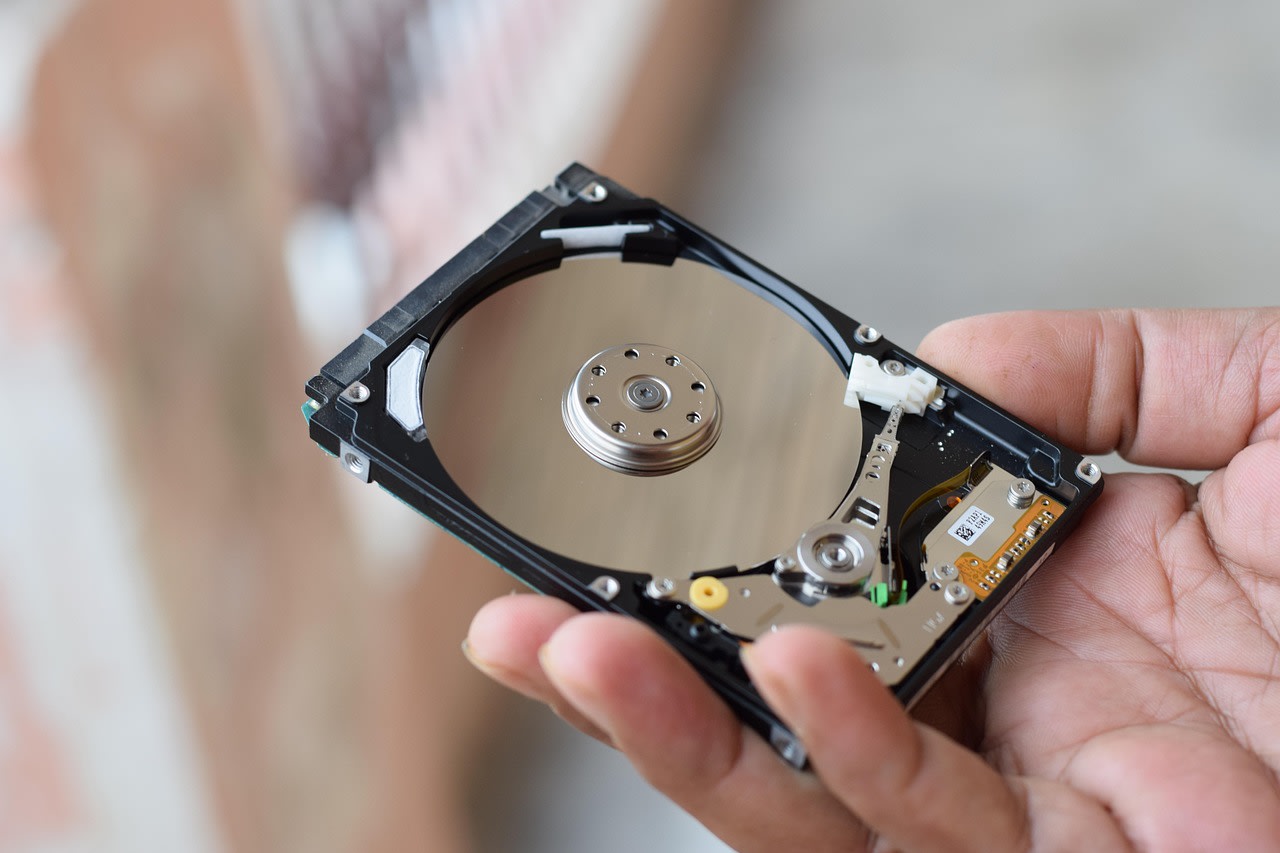
Traditional hard drives are miniature mechanical marvels. Platters spin at 5,400 to 7,200 RPM, with read/write heads floating nanometers above the surface. A sudden power loss during operation doesn't give these heads time to "park" safely in their landing zone. They can crash onto the platters, causing physical damage. Multiple drives in an array experiencing the same dirty power event—a surge, a brownout, or a particularly harsh restoration of power—can all suffer similar fates simultaneously.
SSDs, being entirely solid-state with no moving parts, are inherently more resilient to physical shock and sudden power loss. They can still suffer data corruption or controller failure, but the physical destruction scenario is far less likely. The original poster's experience perfectly illustrates this dichotomy: the mechanical components failed en masse, while the electronic storage survived.
One theory from the discussion that holds weight: if the server was using a single power supply unit (PSU) to feed all those drives, a fault in that PSU during the outage could have sent incorrect voltages down the line. A failing PSU doesn't always die quietly—it can take its components with it. This is why enterprise servers use redundant power supplies, and why your home lab might need similar protection.
RAID is Not a Backup (And Other Hard Truths)
The comments section echoed a mantra every sysadmin knows but many home users learn the hard way: "RAID is not a backup." The poster was running a ZFS array in TrueNAS, likely in a RAID-Z configuration that provided redundancy. Redundancy protects against individual drive failure. It allows the array to continue operating and rebuild when one drive (or sometimes two, depending on configuration) dies. It is fundamentally a high-availability feature.
Backup, on the other hand, is about recoverability. A proper backup exists on separate media, ideally in a separate physical location, and follows the 3-2-1 rule: 3 total copies of your data, 2 of which are local but on different devices, and 1 copy offsite. When eight drives die from the same event, no RAID level can save you. Only a backup can.
This leads to the painful but necessary question the community asked: what was the actual backup strategy? For many home lab enthusiasts, backing up tens of terabytes of Linux ISOs and media feels impractical. The cost of duplicate storage is high, and the bandwidth for offsite backup is often prohibitive. This creates a risk calculation: how much pain is the loss of this data? For some, it's a minor inconvenience. For others, it's a devastating loss of irreplaceable content. Defining your own Recovery Point Objective (RPO—how much data you can afford to lose) and Recovery Time Objective (RTO—how long you can be without it) is the first step in building a sane strategy.
Power: The Silent Data Killer in Your Home
If power events are the culprit, then power management is the cure. The discussion was filled with recommendations for Uninterruptible Power Supplies (UPS). But not all UPS units are created equal, and simply having one isn't enough.
You need a line-interactiveonline/double-conversion UPS. Basic standby UPS units switch to battery power only when they detect an outage, which can take milliseconds—enough time for a sensitive system to glitch. Line-interactive models constantly condition the incoming power, smoothing out sags and surges before they reach your equipment. For a critical server, this is the minimum. The UPS must also be properly sized. Its VA (Volt-Ampere) and Watt ratings need to account for the total load of your server, especially the high spin-up current required by multiple hard drives.
Then comes the software side: communication. Your TrueNAS, UnRAID, or Proxmox server needs to talk to the UPS via USB or network card. Using software like NUT (Network UPS Tools), you can configure the server to monitor the UPS. When a power outage occurs and the UPS switches to battery, the software can trigger a graceful, automated shutdown after a set period, ensuring all drives park their heads and filesystems are unmounted cleanly before the power finally cuts. This single setup could have prevented the entire disaster.
Consider this your non-negotiable foundation. A good UPS is cheaper than eight new hard drives. I personally use and recommend units from CyberPower or APC that include a management card. CyberPower CP1500PFCLCD PFC Sinewave UPS is a fantastic line-interactive model with pure sine wave output, which is gentler on modern PSUs than simulated sine wave.
Building a Bulletproof Backup Strategy for the Self-Hoster
Okay, you've got a UPS. Now let's tackle the backup problem for real-world, data-hoarding self-hosters. The goal isn't necessarily to back up every single byte, but to protect what matters most.
Tier Your Data: Not all data is equal. Break it into tiers. Tier 1: Irreplaceable. Personal documents, family photos, home videos, important projects. This gets the full 3-2-1 treatment. Tier 2: Hard to replace. Your curated media library, specific software ISOs. Maybe you back up the metadata (playlists, watch status, Jellyfin library info) religiously, but the actual media files get a more relaxed strategy. Tier 3: Easily replaceable. Linux ISOs that can be re-downloaded. This tier might get no backup at all, or a single external drive copy.
Leverage Snapshots and Replication: TrueNAS Scale and Core have brilliant snapshot and replication features. Schedule frequent snapshots (e.g., every 4 hours) on your primary pool. These are cheap, space-efficient point-in-time copies. Then, set up replication to a second pool—even a single, large external drive connected via USB. This gives you versioned history and a local backup. For offsite, consider a cloud service like Backblaze B2 or Wasabi, which are far cheaper than S3 for backup purposes. Use TrueNAS's cloud sync tasks to incrementally push your Tier 1 data.
Automate Verification: A backup you don't test is a wish, not a plan. Schedule a quarterly "fire drill." Pick a random sample of files from your backup target and verify they restore correctly. Some advanced users script this with checksum comparisons. Automation is key here; manual processes get forgotten.
Hardware Choices: Are You Asking for Trouble?

The community dissection also turned to hardware selection. Were these drives all from the same batch? Consumer-grade vs. NAS/Enterprise-grade? Shucked drives from external enclosures? Each choice carries risk.
Using drives from the same manufacturing batch increases the chance of correlated failures—they've lived identical lives and may share a latent defect. Mixing drive models and purchase dates is a simple hedge. More importantly, drives marketed as "NAS" or "Enterprise" (like WD Red Plus/Pro or Seagate IronWolf) have firmware optimized for 24/7 operation, better vibration resistance in multi-drive chassis, and often include features like TLER (Time-Limited Error Recovery) that prevent a single struggling drive from causing the whole array to timeout and drop.
Shucked drives—consumer drives pulled from cheap external enclosures—are popular for budget builds. But they can be a gamble. They might be desktop-grade drives with firmware not suited for RAID, or they might use SMR (Shingled Magnetic Recording) technology, which performs terribly in ZFS resilvering operations. For a critical array, the extra cost for certified NAS drives is insurance. Seagate IronWolf 16TB NAS Hard Drive represents the kind of drive built for this punishing environment.
And don't forget the power supply! A single, cheap, non-modular PSU is a single point of failure. Consider a redundant PSU setup or at least invest in a high-quality, single unit from a reputable brand like Seasonic or Corsair with ample headroom on the 12V rail where drives draw their power.
Automated Monitoring: Your Early Warning System
Could this failure have been predicted? Often, yes. Drives usually don't die instantly without warning. They broadcast their distress through S.M.A.R.T. (Self-Monitoring, Analysis and Reporting Technology) attributes.
Tools like `smartd` (part of the smartmontools package) can run in the background on your TrueNAS or Linux server, constantly polling your drives. You can configure it to watch for specific thresholds: a growing count of reallocated sectors, a spike in seek error rates, or an impending temperature problem. When a threshold is crossed, it can send an email, a push notification via Gotify or Apprise, or even trigger an automated script to start evacuating data from the failing drive.
Take this further with a full monitoring stack. I love using a combination of Prometheus for metrics collection, with the node_exporter providing hardware stats, and Grafana for dashboards. You can build a beautiful dashboard that shows the health of every drive in your array, their temperatures, load cycles, and error counts at a glance. Pair this with Alertmanager, and you'll get a notification the moment a drive starts acting suspicious, long before it takes your array down.
This is where automation shines. You're not just reacting to failure; you're proactively managing health. A simple cron job that runs a short SMART test weekly and a long test monthly, logging the results, is a huge step forward from complete blindness.
The Recovery Mindset: What to Do When Disaster Strikes
Let's say the worst happens. You're staring at a dead array. The community advice here was crucial: don't panic, and don't start swapping components randomly.
1. Document Everything: Before you touch a cable, take photos of the setup. Note which drive was in which bay. Write down every error message verbatim. This documentation is gold if you need to seek professional help or post for community support.
2. Isolate the Failure Domain: The poster did this correctly. They started with the HBA (Host Bus Adapter), swapping in a known-good spare. When that didn't work, they tested individual drives in a known-good system. This systematic elimination identified the true culprit: the drives themselves, not the controller or cabling.
3. Consider Professional Recovery (For Tier 1 Data): If you've lost irreplaceable data and have no backup, professional data recovery services exist. They're expensive—often thousands of dollars—and not guaranteed. But for truly priceless data, they can perform miracles in clean rooms. This is a last resort, but knowing it's an option can reduce panic.
4. Begin the Restore: This is where your backup strategy pays off. Start with your most recent, verified backup. If you're using ZFS snapshots that were replicated, the restore process can be remarkably straightforward—a matter of promoting the backup pool or rolling back to a known-good snapshot.
Beyond the Basics: The 2026 Self-Hosting Philosophy
The "bye bye data" incident is more than a technical failure; it's a philosophical lesson for everyone running a home server in 2026. We're past the hobbyist stage. Our self-hosted services—Jellyfin for media, Nextcloud for files, Home Assistant for automation—are core parts of our daily lives. We must treat their infrastructure with appropriate seriousness.
This means embracing infrastructure as code where possible. Your server configuration (users, shares, services) should be defined in Ansible playbooks, Docker Compose files, or TrueNAS configuration backups. If the hardware dies, you can rebuild the system on new drives from a script, then just restore the data. The data is unique; the setup shouldn't be.
It also means designing for failure. Assume components will fail. Build systems that are resilient, not just redundant. Have a documented recovery playbook. Practice it. The peace of mind that comes from knowing you can recover from a total loss is worth more than any piece of hardware.
Finally, engage with the community. The 235 comments on that Reddit post weren't just schadenfreude; they were collective problem-solving, empathy, and knowledge sharing. Your weird edge case is someone else's solved problem.
Your Data's Future Starts Now
That original poster's loss was heartbreaking, but it served as a powerful wake-up call for thousands of us. In 2026, data is personal. Protecting it is a responsibility.
Start today, even if it's small. Buy that UPS. Configure automated shutdown. Set up a single external drive for your most important files and make a weekly backup ritual. Enable SMART monitoring and actually check the alerts. Tier your data and accept that not everything needs a gold-plated backup.
The goal isn't to build a fortress that never fails—that's impossible. The goal is to build a system that fails gracefully, predictably, and recoverably. So you can spend your evenings watching your media, not mourning it. Because "bye bye data" should only ever refer to files you intentionally deleted, not a catastrophe that leaves you empty-handed.