



Here's a scenario you might recognize: your local utility announces a rate hike, citing "increased infrastructure demands." You grumble, pay the bill, and move on. But what if a significant chunk of that demand—and cost—was being driven not by your neighbors running air conditioners, but by massive, power-hungry data centers training the next generation of AI? That's the core of a fiery debate ignited by the President's recent declaration that AI tech companies need to start footing their own astronomical electricity bills. He promised "major changes" to ensure Americans don't "pick up the tab" for data centers. This isn't just political rhetoric; it's a direct response to a looming infrastructure crisis. In this article, we'll unpack what this policy shift really means, how we got here, and the profound implications for everything from your monthly budget to the pace of technological innovation.
The Spark: Why AI's Appetite for Power Is a National Issue
Let's rewind a bit. The AI boom of the early 2020s wasn't just a software revolution—it was a hardware and energy revolution. Training a single large language model like GPT-4 could consume more electricity than 100 US homes use in an entire year. And that's just for training. The inferencing—the actual use of these models by billions of queries daily—adds a constant, massive load. Data centers, once relatively modest power consumers, transformed into industrial-scale electricity guzzlers. A single massive campus can draw as much power as a medium-sized city.
The problem? Much of this growth happened faster than the grid could adapt. In many regions, utilities and municipalities, eager for the tax revenue and "tech hub" status, offered sweetheart deals. These often included subsidized electricity rates or agreements where the utility would shoulder the cost of building new substations and transmission lines to serve these facilities—costs ultimately socialized across all ratepayers. The President's statement is essentially calling time on that model. The bill for the AI revolution, at least the power part, is coming due, and the administration is saying it should be addressed to the companies cashing the checks.
Decoding "Pay Their Own Way": More Than Just a Meter
So, what does "pay their own way" actually entail? From what policy experts are parsing, it's a multi-layered mandate that goes far beyond just charging market rates for kilowatt-hours.
First, it means full cost recovery for grid upgrades. If an AI company wants to build a 500-megawatt data center in a town with a 600-megawatt grid capacity, the company—not the utility and its broader customer base—would be responsible for funding the new transformers, transmission lines, and potentially even new generation (like natural gas peaker plants or renewable installations) required to support it. This is a seismic shift from the current practice in many areas.
Second, it implies the end of indirect subsidies. Many data centers benefit from tax abatements and development incentives that lower their effective operational cost, indirectly offsetting energy expenses. The new stance suggests a move toward making these companies directly responsible for their full infrastructure footprint, potentially rolling back those incentives unless they invest in on-site, non-grid-dependent power solutions.
Finally, there's a push for transparency and impact fees. We might see new federal guidelines requiring utilities to clearly delineate how much of a rate increase is attributable to data center demand, allowing for targeted fees or tariffs. This directly answers the community concern of "Why is my bill going up for their servers?"
The Grid at Breaking Point: A Technical Reality Check
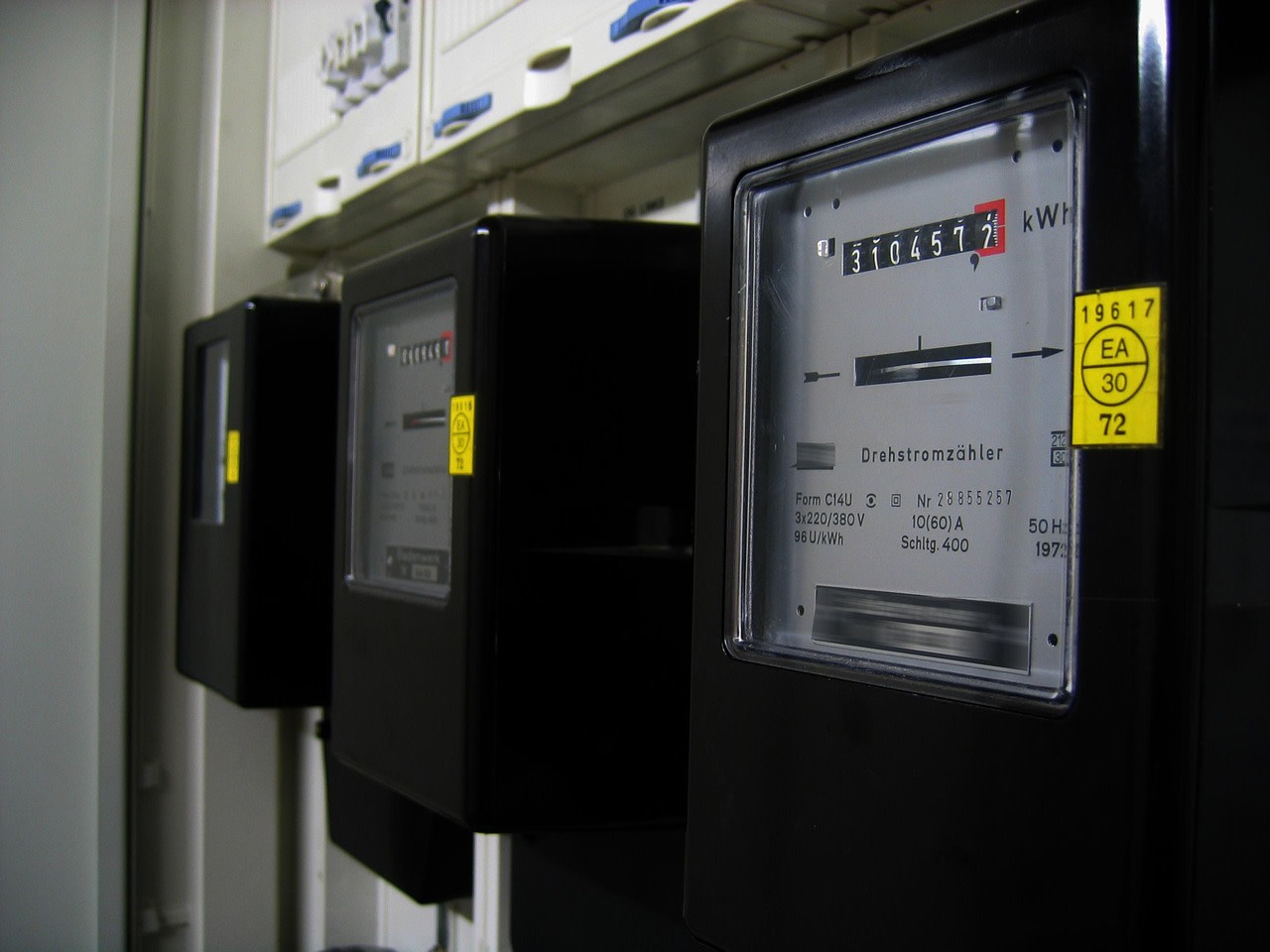
Beyond the politics, there's a harsh engineering reality. The US electrical grid is old, fragmented, and struggling. The rapid, concentrated load from data centers is causing tangible strain. In places like Northern Virginia (dubbed "Data Center Alley"), the situation is critical. Utilities have warned of potential reliability risks and have had to pause new connections.
The traditional utility business model isn't built for this. They plan for gradual, distributed load growth—more houses, a new shopping center. A single entity requesting power equivalent to a steel mill, but with far more critical uptime requirements (a data center can't tolerate brownouts), breaks the model. Building new infrastructure takes years and billions of dollars. The "pay their own way" doctrine forces the companies creating this demand spike to become active partners in the solution, financing and accelerating the build-out rather than just being passive consumers waiting for the grid to catch up.
This isn't anti-innovation; it's about sustainable innovation. Without this shift, we risk widespread blackouts or stifling moratoriums on new data center construction, which would halt AI progress far more effectively than a higher electricity bill.
The Ripple Effect: What This Means for Tech Companies and Startups
For the Googles, Microsofts, and Metas of the world, this policy is a massive new line item on the balance sheet. Their operational costs for AI research and cloud services are set to skyrocket. We'll likely see a few immediate strategic shifts.
First, a massive acceleration in renewable energy investments. It's no longer just about ESG reports; it's economic survival. Companies will be incentivized to build solar farms, wind plants, and battery storage systems directly adjacent to their data centers, creating microgrids to offset grid draw and stabilize costs. The race for advanced nuclear (like Small Modular Reactors) will also intensify, as they offer dense, constant power.
Second, geography will be re-evaluated. The era of building solely near fiber optic hubs will evolve. Future data centers will be built where energy is cheap, abundant, and where grid interconnection is feasible without massive public subsidy. Think regions with strong geothermal, hydro, or wind resources, not just Northern Virginia.
For startups and smaller AI firms, the landscape gets tougher. They rely on cloud credits and renting GPU time from the big players. As those big players' costs rise, so will the price of cloud compute. This could centralize AI development further among the wealthiest corporations or push innovation toward more computationally efficient AI models—a potential silver lining for algorithmic research.
Practical Impacts: What This Means for You and Your Community

Okay, so the giants of tech are having a boardroom headache. Why should you care? The effects will trickle down in very real ways.
Your Utility Bills: This is the most direct promise. The intent is to decouple data center demand from your residential rate base. In theory, if a company fully pays for the new substation your town needs because of its data center, your rates shouldn't jump to cover it. That's the ideal outcome. Monitoring your utility commission's filings will become more important than ever.
Local Infrastructure and Taxes: There's a trade-off. If companies can't negotiate tax breaks for building, some municipalities might lose out on promised jobs and investment. The new model might involve higher direct payments (PILOTs—Payments in Lieu of Taxes) for infrastructure, which could benefit schools and roads, but could also scare off some developments.
The Pace of AI Tools: Get ready for more tiered subscriptions. The free, unlimited-use AI chatbot might become a relic. As compute costs become a more explicit, unsubsidized part of the business model, users will likely feel it. We'll see more metered APIs, usage caps on "free" tiers, and higher prices for premium AI services. The cost of innovation gets passed down the chain.
Navigating the New Landscape: A Guide for Tech Professionals
If you're a developer, data scientist, or tech leader, this policy shift changes your calculus. Here's how to adapt.
Embrace Efficiency as a Core Metric: Model efficiency—achieving the same results with fewer parameters and less compute—will move from a research niche to a business imperative. Tools like quantization, pruning, and knowledge distillation will become standard practice, not academic curiosities. Start learning them now.
Rethink Your Cloud Strategy: Blindly spinning up massive GPU instances will become prohibitively expensive. You'll need to develop rigorous cost-monitoring and optimization protocols. Consider exploring edge computing for inference tasks—processing data locally on devices rather than sending everything to the cloud—to reduce centralized data center load and cost.
Advocate for Smarter Architecture: Push for architectural decisions that prioritize efficiency. This might mean choosing smaller, specialized models over monolithic giants for specific tasks, or implementing aggressive caching and model serving strategies. The most valuable engineer in 2026 might be the one who can cut a model's inference cost by 30% without losing accuracy.
For smaller teams needing to gather competitive intelligence or market data to make these strategic calls, manually monitoring the web is impossible. This is where automation platforms shine. A tool like Apify can be configured to track energy policy announcements, utility rate changes, and competitor AI service pricing, letting you focus on analysis instead of data collection.
Common Misconceptions and FAQs
"Won't this just kill American AI competitiveness?" It's a risk, but the alternative might be worse. An unreliable, overburdened grid would kill it more definitively. The policy aims to force a sustainable, market-driven foundation for growth. Other countries will face the same energy constraints.
"Can't they just use more renewable energy and solve the problem?" Renewables are crucial, but they're intermittent. The sun doesn't always shine, and the wind doesn't always blow—but a data center needs 24/7 power. The solution requires a mix of renewables, storage (which is expensive), and potentially advanced baseload power like nuclear, all of which require huge upfront capital—the very capital the "pay your own way" policy aims to unlock.
"Is this just a tax on innovation?" It's more accurately a correction of a hidden subsidy. For years, the public infrastructure subsidized the private sector's data boom. This policy makes that cost explicit, which should, in theory, lead to more economically efficient innovation. It rewards those who innovate in energy efficiency as well as AI capability.
"What about blockchain and crypto mining?" They were the canary in the coal mine, drawing attention to the issue of concentrated electricity use for digital assets. While the current focus is on AI, the same principles of grid cost responsibility would logically apply to any large, discretionary industrial power user.
The Road Ahead: A More Honest, and Perhaps Harder, Tech Future
The President's stance marks a pivotal moment. It's the end of the invisible infrastructure era for big tech. The conversation has shifted from "How fast can we build it?" to "Who pays to power it, and how?"
This will undoubtedly create friction and short-term pain. Tech stock valuations might wobble as analysts digest the new cost structure. Some planned data center projects may get canceled or moved overseas (though many other countries are enacting similar policies). The price of using advanced AI will likely increase.
But it also creates opportunities. It will supercharge the green energy and grid storage sectors. It will make computational efficiency a primary driver of AI progress, leading to leaner, smarter models. And it promises a fairer deal for communities that host this infrastructure, ensuring they aren't left with strained grids and higher bills while corporate profits are shipped elsewhere.
The ultimate takeaway? The age of easy, subsidized compute is over. The next phase of AI will be built not just on brilliant algorithms, but on a honest accounting of its physical cost. For everyone in tech, from the CEO to the casual user, it's time to start thinking in watts as well as parameters.
