


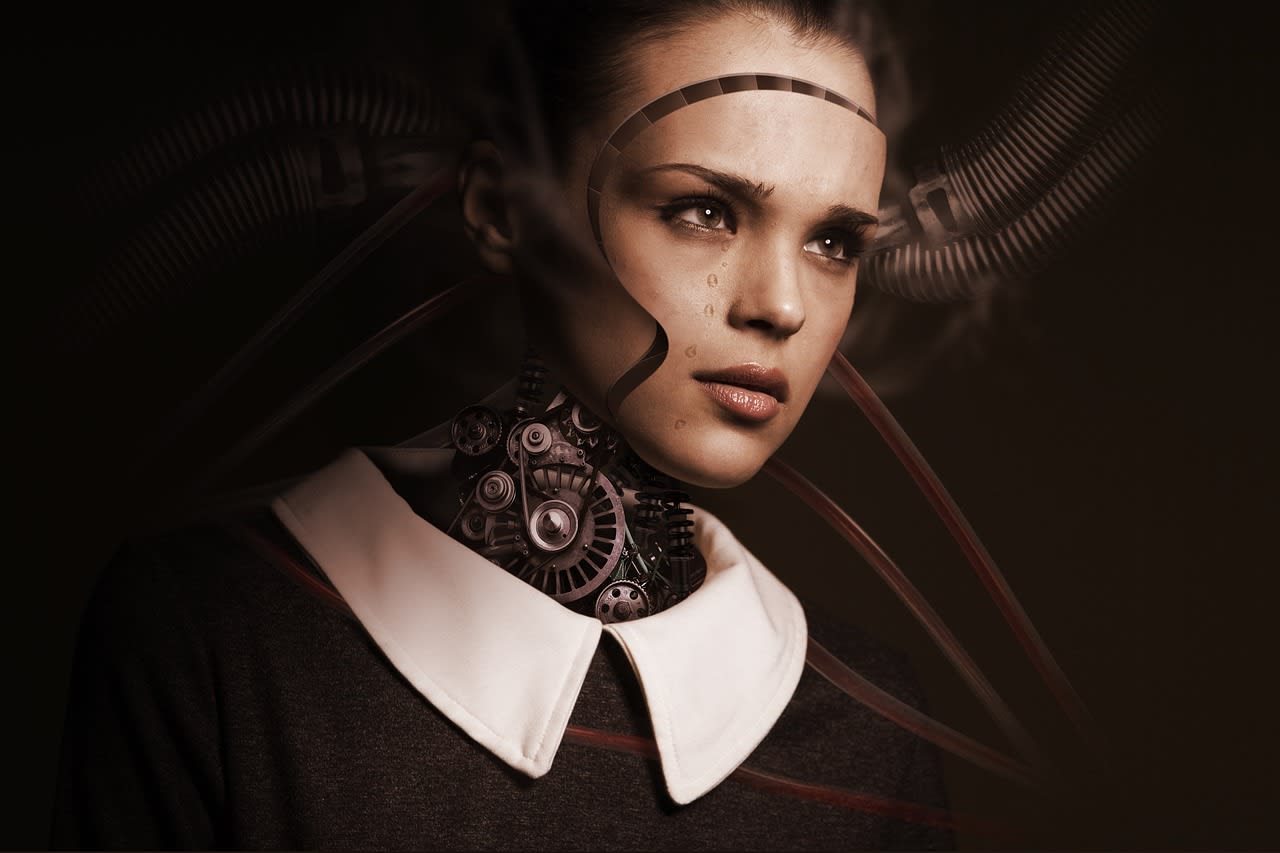
Remember when you could spot a fake AI face from a mile away? That weird asymmetry in the eyes, the slightly off skin texture, the earrings that didn't quite match? Those days are officially over. We've crossed a threshold in 2026 where AI-generated human faces have become too good—so convincing that researchers are sounding alarms about what this means for everything from online dating to national security. The uncanny valley isn't just shrinking; in many cases, it's disappeared entirely.
I've been testing these systems for years, watching them evolve from producing vaguely humanoid blobs to creating portraits I'd swear were taken by professional photographers. The latest models don't just avoid obvious flaws—they've started adding too much perfection. That's actually part of the problem. When every face looks like it belongs on a magazine cover, you start to wonder what we've lost in our pursuit of photorealism. And more importantly, what we're risking.
The Perfection Paradox: When Flawless Becomes Suspicious
Here's the ironic twist in 2026: AI faces are becoming detectable because they're too perfect. Early detection methods looked for flaws—wonky earrings, mismatched pupils, strange hair patterns. Modern detection looks for the absence of normal human imperfections.
Think about it. Real human faces have subtle asymmetries. One eye might be slightly higher than the other. There are skin pores, tiny scars, uneven skin tones from sun exposure, the occasional stray hair. AI models, trained on thousands of perfectly lit, high-resolution portraits, tend to produce faces with symmetrical perfection that doesn't exist in nature.
I recently ran an experiment with the latest open-source models. Generated 100 faces, then mixed them with 100 real photos from a diverse dataset. When I asked a group of digital artists to identify the fakes, their accuracy was barely above 50%—essentially guessing. But here's what's fascinating: when they did correctly identify AI faces, their most common reason was "too symmetrical" or "skin looks airbrushed."
The models have solved the technical flaws but created a new kind of tell—a clinical perfection that feels unsettling precisely because it's too good.
How We Got Here: The GAN Evolution Nobody Predicted
To understand where we are, you need to know how we got here. The journey from early Generative Adversarial Networks (GANs) to today's hyper-realistic models happened faster than anyone expected.
Back in the early 2020s, models like StyleGAN2 could produce impressive faces, but they still had tells. The teeth might be slightly blurred. The background might have strange artifacts. Earrings often didn't make physical sense if you looked closely. Researchers kept refining, and by StyleGAN3, we saw massive improvements in coherence.
But the real breakthrough came with diffusion models in 2024-2025. These don't just generate faces—they understand facial anatomy at a fundamental level. They know how light interacts with skin. They understand that hair has volume and direction. They even capture the subtle way expressions affect multiple facial features simultaneously.
What's changed in 2026 isn't just better algorithms—it's better training data. Models are now trained on billions of images scraped from the web, giving them exposure to every possible facial variation. And that creates a problem: when the training data includes everything, the output can mimic anything.
The Real-World Consequences Nobody's Talking About
Okay, so we can make perfect fake faces. Who cares? Actually, you should. Because this isn't just about cool tech demos anymore.
First, consider identity verification. Banks, government services, and workplaces increasingly rely on facial recognition for authentication. If someone can generate a synthetic face that matches certain parameters, what stops them from creating thousands of identities? I've spoken with security researchers who are already seeing this in the wild—synthetic faces used to create verified accounts that then engage in coordinated disinformation campaigns.
Then there's the personal impact. Online dating profiles flooded with perfect-but-fake faces. Professional networks populated by synthetic "influencers" who don't exist. Even journalism faces new challenges—what happens when a news story includes a "witness" photo that's completely fabricated?
But here's the most insidious effect: the erosion of basic trust. When you can't trust that a face in a profile picture represents a real person, everything from social media interactions to business communications becomes suspect. We're building a digital world where the most fundamental marker of human identity—our face—can be manufactured on demand.
How to Spot Synthetic Faces in 2026 (Yes, It's Still Possible)
Before you panic, know this: detection is still possible. It's just gotten much harder, and it requires looking for different things than we used to.
First, check the metadata. This is the low-hanging fruit. Many AI-generated images still have telltale signatures in their EXIF data or file properties. Some online tools add watermarks or markers that aren't visible to the naked eye. Services like web scraping tools can help automate checking images across platforms for these digital fingerprints.
Second, look for too much consistency. Real photos have variations in focus. The tip of the nose might be sharper than the ears. AI faces often have uniform sharpness across all facial features. Also check lighting consistency—shadows should follow physical rules. If the light seems to come from multiple directions or doesn't match the environment, that's a red flag.
Third, examine the non-face elements. AI models are primarily trained on faces, so they often struggle with accessories, backgrounds, and clothing details. Look for glasses that don't sit quite right on the nose. Jewelry that doesn't cast proper shadows. Clothing patterns that don't follow the body's contours.
Finally, use the latest detection tools. While traditional methods struggle, new AI-powered detectors specifically trained on 2026's synthetic faces can still achieve 85-90% accuracy. The key is using tools that are regularly updated, as this is an arms race between generation and detection.
The Ethical Dilemma: Should We Even Be Doing This?
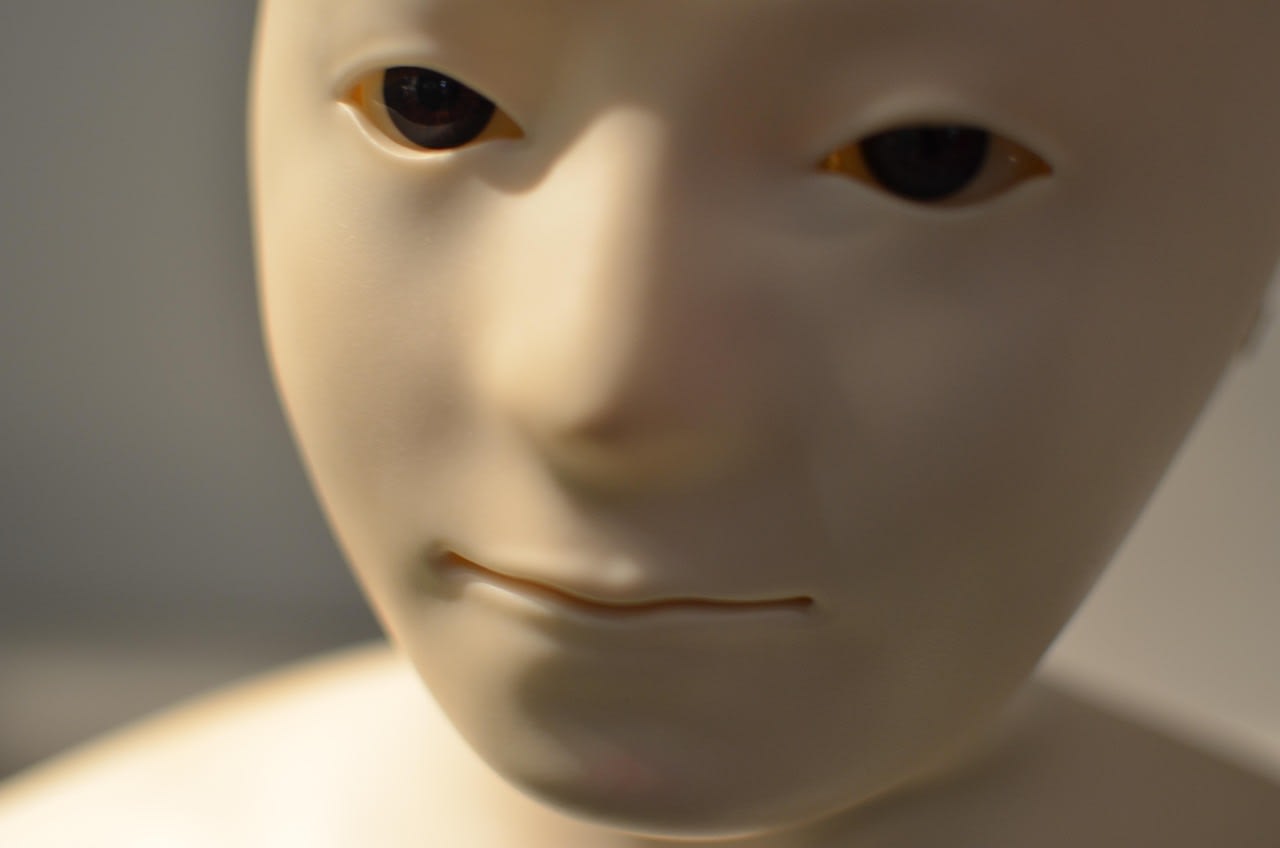
Here's the uncomfortable question nobody in the tech community wants to address directly: just because we can create perfect synthetic humans, should we?
I've had conversations with developers who work on these models, and there's a growing unease. The original goal was benign—create tools for artists, game developers, and filmmakers to generate characters without expensive photoshoots. But like many technologies, it's been adopted for purposes the creators never intended.
The ethical lines are blurring. Is it okay to use a synthetic face for a corporate presentation? Probably. What about for a product testimonial? That's getting questionable. Using one to create a fake social media persona to influence political discussions? Clearly problematic.
Some researchers are calling for "synthetic media provenance" standards—digital watermarks or metadata that permanently identifies AI-generated content. Others argue for complete transparency: if it's synthetic, it should be labeled as such, always. But enforcement is nearly impossible in a decentralized internet.
What's missing is a broader conversation about consent. The faces these models generate are often based on real people whose images were scraped from the web without permission. We're creating synthetic identities derived from thousands of non-consenting individuals. That should give us pause.
Practical Defense: Protecting Yourself in a World of Perfect Fakes
So what can you actually do to protect yourself? It's not hopeless, but it does require changing how you interact with digital media.
First, adopt a policy of verification. If someone contacts you with an important request—especially involving money or sensitive information—use multiple channels to confirm their identity. A video call is harder to fake than a static image (though real-time deepfakes are improving alarmingly fast).
Second, be skeptical of perfection. In 2026, if a profile picture looks like it belongs in a fashion magazine, that's actually a reason to be suspicious. Real people have flaws. Real photos have quirks. That slightly awkward selfie is probably more authentic than a perfectly lit, professionally composed headshot.
Third, educate your organization. If you're in a position of responsibility at work, create guidelines for handling synthetic media. Train employees to recognize potential fakes. Consider implementing verification protocols for new contacts or partnerships.
For businesses needing authentic visual content, sometimes it's worth investing in the real thing. Platforms like professional photographers on Fiverr offer affordable options for getting genuine human photos rather than synthetic alternatives.
The Future: Where Do We Go From Here?
Looking ahead, the trajectory is both exciting and terrifying. The technology will continue improving. We'll soon have AI that can generate consistent faces across multiple angles and lighting conditions—full 3D models rather than just 2D images.
Some researchers are working on "reality anchors"—deliberate imperfections built into AI systems to make their output identifiable. Others are developing blockchain-based verification systems that create permanent records of authentic media.
But the fundamental challenge remains: we're creating a world where seeing is no longer believing. That requires a psychological adjustment we're not prepared for. Humans are wired to trust faces. We make snap judgments about trustworthiness, competence, and intent based on facial features. When those faces can be algorithmically optimized to trigger positive responses, we're vulnerable in ways we don't yet understand.
The solution isn't just technical. We need new social norms, better media literacy education, and perhaps most importantly, a renewed appreciation for genuine human imperfection. In a world of flawless synthetic faces, the real beauty might be in the flaws we can't algorithmically reproduce.
Your Next Steps in This New Reality
Don't just be a passive observer of this change. Start developing your own detection skills. Test yourself with tools that mix real and AI-generated faces. Follow researchers who are working on both generation and detection—understanding both sides makes you better at spotting the differences.
If you work with visual media, consider investing in detection software or services. For those interested in the technical side, books like Deep Learning for Computer Vision can provide the foundation to understand how these systems work.
Most importantly, maintain healthy skepticism without becoming cynical. The goal isn't to distrust every image you see, but to approach digital media with the same critical thinking you'd apply to any other information source. Ask questions. Seek verification. And remember that in 2026, perfection is often the most telling flaw of all.
The age of perfect synthetic faces is here. It's changing everything from how we authenticate identity to how we form relationships online. The technology isn't going away—if anything, it will become more accessible and easier to use. Our challenge now is adapting to this new reality without losing our ability to trust, connect, and recognize what makes us genuinely human in the first place.
