
Introduction: The Silent Crisis in Your Pull Request Queue
You're not imagining it. That sinking feeling when you open a pull request and see 47 files changed, 2,800 lines added, and a description that reads "AI-assisted feature implementation"? That's real. Since our industry embraced AI coding assistants around 2024, something subtle but profound has shifted. Velocity metrics look fantastic—teams are shipping more code than ever. But the actual human experience of reviewing that code? It's become exponentially harder.
I've talked to dozens of engineering teams in 2026, and the pattern is unmistakable. The original Reddit discussion that sparked this article captured it perfectly: "The code usually works, but just looks... wrong." It's functional spaghetti—code that passes tests but lacks the architectural elegance, modularity, and readability that human developers instinctively build. Today, we're going to explore why this happens, what it means for your team, and most importantly, how to adapt your review process for this new reality.
The Velocity Illusion: When Faster Isn't Actually Better
Let's start with the obvious benefit everyone celebrates. AI coding assistants—GitHub Copilot, Amazon CodeWhisperer, the various open-source alternatives—genuinely accelerate initial implementation. What might have taken a senior developer two days can now be prototyped in hours. The raw output is staggering. But here's what gets lost in the celebration: implementation speed isn't the same as development speed.
Development includes design, review, testing, maintenance, and future modifications. AI excels at the first part—cranking out code that solves the immediate problem. But it doesn't understand your team's architectural patterns, your domain-specific abstractions, or the subtle technical debt you've been carefully managing. The result? Massive PRs that work in isolation but create integration nightmares.
I've seen teams where PR size has increased 300% since adopting AI assistants. One backend engineer showed me a "simple API endpoint addition" that touched 18 different files because the AI replicated patterns instead of reusing existing abstractions. The code passed all automated checks. But reviewing it required understanding how 18 different components now had slightly different implementations of the same logic. That's cognitive overhead that doesn't show up in velocity metrics.
Architectural Drift: When AI Doesn't Know Your Conventions
This is the core issue that makes reviews so difficult. Human developers develop what I call "architectural muscle memory." Over time, they internalize team conventions—how your service layer should interact with repositories, where validation logic lives, how errors propagate through your system. These aren't just style preferences; they're the guardrails that keep your codebase maintainable as it grows.
AI assistants don't have this context. They're trained on public code, which means they're averaging patterns across thousands of different codebases with conflicting conventions. When you prompt for "add user authentication to this endpoint," the AI might give you something that technically works but completely bypasses your carefully crafted authentication middleware. Or it might create a new database connection pattern when you have a pooled connection manager everyone else uses.
The worst part? This drift is subtle. It's not a glaring bug that fails tests. It's a slight deviation from convention that, multiplied across dozens of PRs, creates what one developer called "Frankenstein architecture"—a codebase where every component works differently. Reviewing these PRs requires constantly switching between "does this work?" and "does this fit our architecture?" That second question is exponentially more time-consuming.
The Readability Gap: Code That Works But Can't Be Read
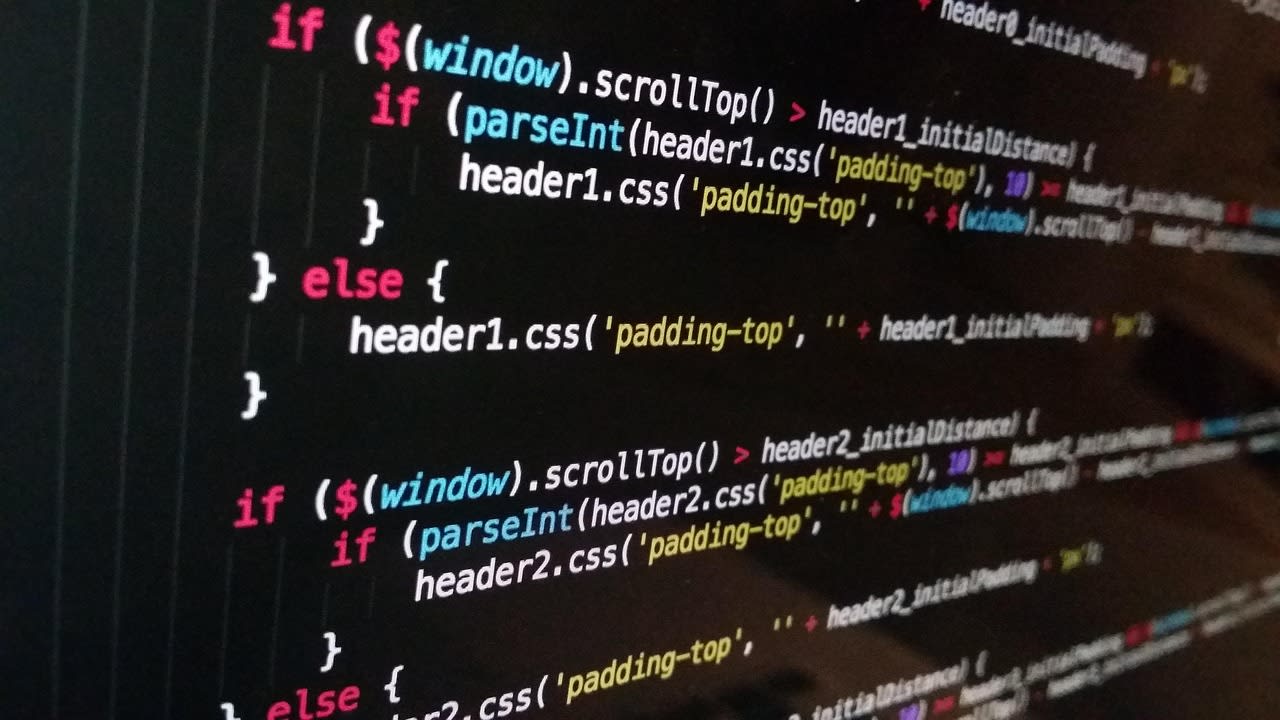
Here's a paradox of AI-generated code: it's often more syntactically correct than human-written code but dramatically less readable. Humans write for other humans. We add explanatory comments, choose descriptive variable names, and structure code to tell a story. We think about the next person who will read this code—maybe ourselves six months from now.
AI writes for the compiler. Or more accurately, it writes statistically probable sequences of tokens that satisfy the prompt. The result is code that's technically correct but cognitively opaque. I've seen functions with perfect type annotations and zero logical errors that still took me 15 minutes to understand because the variable names were generic ("data," "result," "value") and the control flow was unnecessarily complex.
One reviewer put it perfectly: "I spend more time trying to understand what the AI was trying to do than I would have spent writing it from scratch." That's the hidden cost. The initial time saved on implementation gets multiplied during review, and then multiplied again every time someone needs to modify that code later. Readability isn't a nice-to-have; it's what makes code maintainable over years. AI-generated code often sacrifices readability for correctness, and that tradeoff kills review efficiency.
The Modularity Problem: Everything Connected to Everything
Good software design is about separation of concerns. We create modules, services, layers—abstractions that hide complexity and limit ripple effects when changes occur. Humans are pretty good at this. We instinctively ask "should this be its own thing?" or "is this too much responsibility for one class?"
AI doesn't ask those questions. It generates code that solves the immediate problem with minimal context about system boundaries. The result is what developers in the original discussion called "spaghetti architecture"—components with hidden dependencies, logic duplicated across layers, and concerns that should be separated mashed together.
I reviewed a PR recently where an AI had "added logging" to a service. Sounds simple. But instead of using the team's centralized logging utility, it had imported a different logging library, configured it inline, and scattered logging statements across 12 different files. Each statement worked. But now the team had two logging systems with different configuration, formatting, and output destinations. Untangling that took three hours of review and refactoring—time that would have been saved if a human had just written the logging integration properly in the first place.
From Reviewer to Architect: The New Required Skill Set
This is the crucial mindset shift. In the pre-AI era, code review was largely about correctness and consistency. Does this work? Does it follow our patterns? Is it tested? In 2026, with AI-assisted development, the primary review focus must shift to architecture and design. You're no longer just checking code; you're evaluating architectural decisions made by a non-architect.
This requires different skills. Reviewers need to think in terms of system boundaries, abstraction layers, dependency direction, and long-term maintainability. They need to ask questions like:
- "Should this logic be in a shared utility rather than duplicated here?"
- "Does this new dependency align with our overall architecture?"
- "What happens when we need to change this in six months?"
- "Is this creating a hidden coupling between components that should be independent?"
These are architectural questions, not code review questions. But they're now essential. The most effective teams I've seen in 2026 have explicitly trained their senior developers in this architectural review mindset. They've created checklists specifically for AI-generated code that focus on integration patterns rather than just syntax.
Practical Adaptation: How to Review AI-Generated Code in 2026
So what actually works? Based on observing successful teams this year, here's a practical approach:
First, establish AI-specific review criteria. Beyond your normal checklist, add questions like: "Does this reuse existing abstractions or create new ones?" "Are the architectural patterns consistent with the rest of our codebase?" "Could a developer understand this logic six months from now?" Make these explicit, not implied.
Second, implement size limits on AI-assisted PRs. This sounds counterintuitive—if AI generates more code, shouldn't we accept larger PRs? Actually, no. The cognitive load of reviewing AI-generated code is higher, so the PRs should be smaller. I recommend teams cap AI-assisted PRs at 300-500 lines maximum. If the feature needs more code, break it into multiple PRs with clear architectural boundaries.
Third, require architectural diagrams for substantial changes. If an AI implements a new service integration or data flow, the developer should provide a simple diagram showing how it fits into the existing system. This forces architectural thinking before implementation and gives reviewers context they desperately need.
Fourth, use pair programming for complex AI-generated code. Instead of having the AI generate code and then a human review it, have the human work with the AI in real time, steering the generation toward proper architecture. This catches problems early and builds the developer's architectural thinking.
Tooling and Automation: What Actually Helps
Conventional static analysis tools aren't enough. They catch syntax errors and simple patterns, but they don't understand architecture. In 2026, we're seeing new categories of tools emerge specifically for AI-generated code review.
Architecture linters are becoming essential. These tools analyze dependency graphs, abstraction boundaries, and pattern consistency across your codebase. They can flag when new code deviates from established architectural patterns—exactly the kind of drift AI introduces. Some teams are building custom rules using tools that can parse and analyze code structure at scale.
Another approach: AI review assistants. Yes, meta. But tools that specifically analyze AI-generated code for common anti-patterns (overly complex functions, poor abstraction boundaries, inconsistent patterns) can surface issues before human review. They don't replace human judgment, but they filter the obvious problems.
For teams dealing with particularly complex integrations or needing to understand existing systems before reviewing new AI-generated code, sometimes you need to map what's already there. Tools like Apify can help automate documentation generation or dependency analysis, giving reviewers the system context they need to evaluate new contributions properly.
Common Mistakes Teams Make (And How to Avoid Them)
I've seen teams stumble with AI adoption in predictable ways. The biggest mistake? Treating AI-generated code like human-generated code in reviews. The processes need to be different because the failure modes are different.
Another common error: focusing only on whether the code works. With AI, that's the easy part. The hard part is whether it fits, whether it's maintainable, whether it moves your architecture in the right direction. Teams that only check functionality end up with working systems that are nightmares to modify.
Underestimating the training required is another pitfall. Developers need to learn how to prompt AI effectively—not just for correctness, but for architecture. And reviewers need training in architectural evaluation. This isn't intuitive; it's a new skill set that requires deliberate practice.
Finally, the tooling mistake: assuming your existing CI/CD pipeline catches everything. It doesn't. Your existing linters check for style and simple bugs. They don't check for architectural consistency, abstraction quality, or long-term maintainability. You need additional tooling or processes specifically for these concerns.
The Human Element: When to Bring in Specialists
Sometimes, the architectural complexity exceeds what your regular team can handle during review. This isn't a failure—it's recognizing that different problems require different expertise. In 2026, we're seeing the rise of specialized roles like "AI integration architect" or "codebase consistency engineer."
These specialists focus specifically on the architectural integrity of AI-generated code. They develop custom linting rules, create architectural templates for common patterns, and conduct deep-dive reviews on critical components. For many teams, this is a part-time role for a senior architect rather than a full-time position.
For smaller teams or specific complex integrations, sometimes it makes sense to bring in external expertise. Platforms like Fiverr have developers who specialize in architectural review and can provide an outside perspective on whether your AI-generated code follows sustainable patterns. A few hours of expert review can save weeks of technical debt down the road.
The key insight: as AI handles more implementation, human expertise shifts up the stack—from writing code to designing systems, from fixing bugs to maintaining architectural integrity. Investing in this higher-level expertise pays dividends in long-term velocity, even if it slows initial implementation slightly.
Conclusion: Embracing the New Reality of Code Review
So no, it's not just you. Reviewing PRs in the age of AI-assisted coding is exponentially harder because the nature of the code has changed. What looks like a productivity win on paper often becomes a maintainability nightmare in practice. The code works, but it doesn't fit. It's correct, but it's not coherent.
The solution isn't rejecting AI tools—they're here to stay, and they do provide real value. The solution is adapting our processes, our skills, and our expectations. We need to shift from reviewing code to reviewing architecture. We need smaller PRs, clearer criteria, and better tooling. Most importantly, we need to recognize that implementation speed isn't the same as development speed.
In 2026, the most successful teams aren't those that generate the most code with AI. They're those that maintain architectural integrity while leveraging AI's capabilities. They understand that the real bottleneck has shifted from writing code to integrating it coherently. And they've adapted their review processes accordingly.
Your pull requests might be harder to review today. But with the right approach, they can still lead to better software tomorrow. The key is recognizing that in the AI era, we're all architects now.