

The 2026 Productivity Reality Check: Beyond the New Year Hype
Here's a confession: by January 3rd, 2026, I'd already abandoned two of the "revolutionary" productivity systems I'd sworn I'd implement. Sound familiar? If you're reading this, you've probably been there too—caught between the promise of a perfectly optimized year and the messy reality of actually getting work done.
That Reddit thread with over a thousand upvotes? It's telling. People aren't just asking about tools anymore. They're asking something more honest: "Are these things actually helping?" After testing dozens of apps, systems, and mindset shifts that emerged in late 2025 and early 2026, I've separated the genuinely useful from the merely trendy. What follows isn't another list of "top productivity apps." It's a real-world report card on what's delivering measurable improvements in focus, output, and—crucially—reduced stress versus what's already collecting digital dust.
The Great App Consolidation: Why Less Is Actually More in 2026
Remember when every productivity guru told you to have separate apps for notes, tasks, projects, and time tracking? Yeah, that's officially over. The most consistent theme from early 2026 adopters is consolidation fatigue. People are tired of context switching between seven different interfaces just to complete one project.
What's working instead? Platforms that combine multiple functions without becoming bloated. Tools like Notion (with its significantly improved database relations in late 2025) and Coda are seeing renewed interest—but with a twist. Users aren't building elaborate, all-encompassing systems anymore. They're creating focused, single-purpose workspaces. One Reddit user put it perfectly: "My 'Projects' workspace in Notion has exactly three views: Active, Waiting On, and Archive. That's it. No fancy dashboards. It's reduced my admin time by about 70%."
The real shift here is psychological. When your tools are simpler, you spend less time managing your productivity system and more time being productive. It sounds obvious, but in practice, it requires resisting the siren call of every new feature. The apps that are winning in 2026 aren't necessarily the most powerful—they're the ones that get out of your way fastest.
AI Assistants That Actually Assist (Instead of Annoying You)
AI was supposed to revolutionize productivity years ago. Instead, we got chatbots that suggested obvious next steps and "smart" scheduling that double-booked us. But something changed in late 2025. The AI tools that are sticking in early 2026 are the ones that operate in the background, handling specific, repetitive tasks without requiring constant attention.
Claude for Teams (Anthropic's late 2025 release) is getting surprising traction for one specific use: meeting synthesis. It doesn't just transcribe—it identifies action items, decisions, and follow-ups, then formats them according to your existing templates. One commenter noted: "It saves me 30-45 minutes per meeting I don't have to spend cleaning up notes. That's real time back."
Meanwhile, tools like Mem.ai are evolving beyond simple note-taking into genuine thought partners. Their 2026 "Contextual Recall" feature actually surfaces relevant past notes, emails, and documents before you start a task, based on what you're working on. It's predictive rather than reactive. The key difference? These tools aren't asking "How can I help?" every five minutes. They're quietly doing useful work until you need them.
Here's the pro tip that emerged from testing: Don't use AI for creative work or complex decision-making in 2026. Use it for the boring, repetitive stuff you hate doing. That's where it actually delivers time savings without adding cognitive load.
The Physical-Digital Hybrid: Paper's Unexpected Comeback
This one surprised me. In a thread about digital productivity tools, multiple people mentioned returning to—or never leaving—paper. But not in the way you might think. They're not abandoning digital tools. They're creating intentional hybrids that leverage the strengths of both mediums.
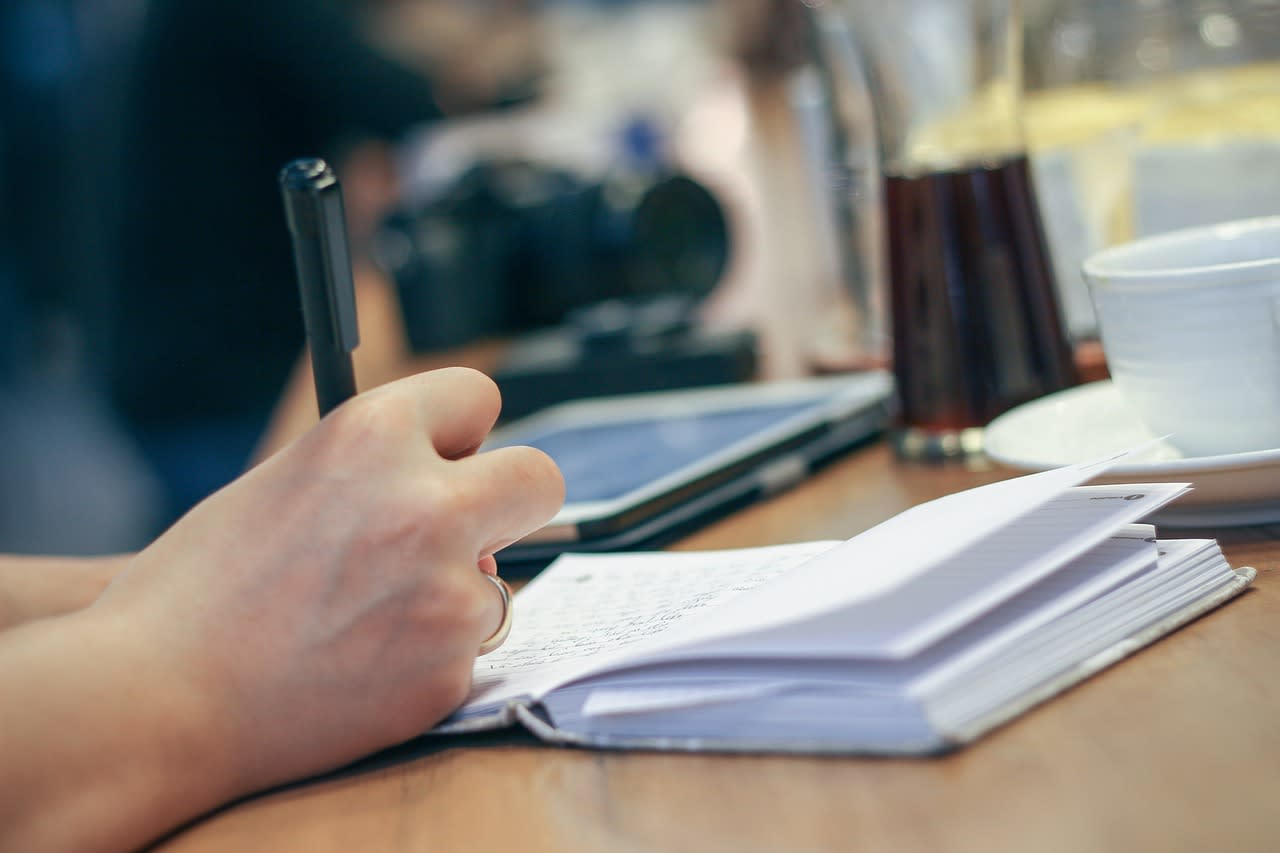
The most common pattern? Paper for daily planning and big-picture thinking, digital for execution and collaboration. One software developer shared: "I start each day with 10 minutes and a notebook. I sketch out the day, draw connections between tasks, doodle when I'm stuck. Then I transfer the concrete tasks to my digital task manager. The paper gets my brain working; the digital tool tells me what to do next."
Specific tools that support this hybrid approach are thriving. The Rocketbook Fusion (the 2026 model with improved scanning) lets you write by hand, then digitize and organize notes automatically. Remarkable 3 has finally nailed the handwriting-to-text conversion, making paper-like digital notes actually searchable and organizable.
The psychological benefit is huge. Paper forces linear thinking and limits options—which reduces decision fatigue. Digital tools offer search, sharing, and automation. Together, they're more powerful than either alone. If you've been feeling overwhelmed by purely digital systems, this hybrid approach might be your 2026 breakthrough.
Time Blocking 2.0: From Rigid Schedules to Adaptive Rhythms
Time blocking isn't new. But the way successful people are implementing it in 2026 has evolved dramatically. The old method—dividing your day into rigid, hour-long blocks—has largely failed. Why? Because real work doesn't fit neatly into 60-minute containers, and interruptions happen.
The new approach? Adaptive time blocking. Instead of scheduling tasks, you schedule types of work based on your natural energy rhythms. One marketing director explained her system: "Deep work from 8-10:30 AM (my peak focus), meetings from 11-1 PM (when I need external stimulation), administrative work from 2-3 PM (my energy dip), and creative work from 3:30-5 PM (my second wind). The specific tasks within those categories change daily, but the rhythm stays consistent."
Tools that support this flexible approach are winning. Motion (with its 2026 adaptive scheduling engine) and Sunrise Calendar (recently relaunched with focus on work rhythms) are getting mentioned repeatedly. They don't just put tasks on your calendar—they learn when you do your best work on different types of tasks and suggest schedules accordingly.
The biggest shift in mindset? Accepting that some days your "deep work" block might only be 45 minutes, and that's okay. The structure provides guidance, not prison bars. This flexibility is why people are sticking with time blocking in 2026 when they abandoned it in previous years.
The Notification Revolution: From Interruption to Intentional Information
Here's where we've seen the most dramatic improvement in early 2026. The constant barrage of notifications hasn't just been annoying—it's been costing us hours of refocus time daily. But the solutions that are working aren't about turning off all notifications (impractical for most) or using aggressive focus modes (which often cause you to miss important things).
The winning strategy? Notification batching and intelligent prioritization. Tools like OneSec (which forces a breath before opening distracting apps) have evolved into full notification management systems. Their 2026 "Intentional Inbox" feature batches non-urgent notifications and delivers them at scheduled times—like email, but for everything.
Even operating systems are catching on. iOS 19 and Android 16 (released late 2025) include "Notification Context" features that learn which notifications you actually act on versus dismiss, then prioritize accordingly. One user reported: "After a month, my phone only buzzes for messages from my team, calendar alerts, and texts from family. Everything else waits. I check it intentionally three times a day instead of reacting constantly."
The result isn't just fewer interruptions. It's reclaiming the ability to focus deeply without FOMO. Your brain learns that if something is truly urgent, you'll know. Otherwise, it can wait. This single change has been responsible for the most dramatic stress reduction reports in early 2026.
Automation That Doesn't Break: The Simple Scripts People Actually Use
Automation was supposed to save us time, but for years, it's mostly saved us from boredom while we set up overly complex systems that break when one service changes its API. The automation that's actually sticking in 2026 is remarkably simple, focused, and robust.
People aren't building elaborate 20-step Zapier workflows anymore. They're creating 2-3 step automations that solve specific pain points. Examples from the Reddit thread:
- "When I star an email in Gmail, it becomes a task in Todoist with the email body as notes."
- "When I finish a time block in Toggl, it automatically creates a journal entry in Day One with what I accomplished."
- "When a client payment is marked received in QuickBooks, it moves their project to 'Complete' in Asana and schedules a follow-up email."
These are simple, understandable, and—most importantly—they keep working. The automation platform that's getting unexpected love in 2026? n8n (the open-source alternative). Why? Because when you self-host it, nothing changes unless you change it. No surprise pricing increases, no features disappearing, no API changes breaking your workflows.
For those who don't want to self-host, services like Make (formerly Integromat) are winning with their visual editor that makes simple automations actually simple to build. The lesson here: Start with one painful, repetitive task. Automate just that. See if it holds up for a month. Then maybe add another.
Mindset Shifts That Outlast Any App: The 2026 Productivity Philosophy
Here's the most important finding from testing all these tools: The people seeing real, sustained improvements aren't just using better apps. They've adopted fundamental mindset shifts that make any tool more effective.
First: Progress over perfection. The quest for the "perfect" productivity system has been abandoned. Instead, people are asking: "Is this better than what I was doing before?" If yes, they keep it. If no, they drop it. No guilt, no endless tweaking.
Second: Seasonal systems. Your productivity needs in January (planning mode) are different from April (execution mode) or October (review mode). Successful people are changing their tools and methods quarterly, not clinging to one system year-round. One consultant shared: "Q1 is for planning—heavy on mind mapping and strategy tools. Q2-Q3 are for execution—simple task managers and time trackers. Q4 is for review and cleanup—back to notes and reflection tools."
Third: The weekly reset ritual. Instead of New Year's resolutions that fade by February, people are implementing weekly 30-minute reviews every Friday afternoon. They look at what worked, what didn't, and make one small adjustment for the following week. This creates constant, gradual improvement instead of dramatic, unsustainable overhauls.
These mindset shifts matter more than any app because they're transferable. Change jobs? Your philosophy comes with you. A favorite app gets discontinued? You adapt faster because you understand the principles behind why you were using it.
What's Already Being Abandoned (And Why)
Let's be honest—part of smart productivity is knowing what to stop doing. Based on early 2026 trends, here's what people are already dropping:
Over-engineered task managers: Apps with endless tags, filters, priorities, and custom fields are being replaced by simpler tools. The cognitive load of managing the system outweighs the benefits.
Productivity "games": Apps that turn work into RPGs or competition with friends had a moment in 2025. By early 2026, most users report they're more distracting than motivating. Real work provides enough challenge without artificial gamification.
All-in-one life operating systems: The dream of one app managing your tasks, notes, habits, finances, and relationships is largely dead. These systems become so complex that maintaining them becomes a part-time job. People are returning to specialized tools that do one thing well.
Continuous time tracking: Apps that track every minute of your day sounded useful in theory. In practice, they create anxiety and constant context switching as you stop to categorize each activity. Most successful trackers in 2026 use manual entry for focused work blocks and automatic tracking only for specific applications (like design or coding tools).
The common thread? Anything that adds more management overhead than it saves in actual work time gets abandoned quickly. In 2026, efficiency isn't just about doing things faster—it's about reducing the mental tax of your productivity system itself.
Your 2026 Productivity Experiment: A Practical Starting Point
Feeling overwhelmed? Don't try to implement everything at once. Based on what's actually working for people in early 2026, here's a simple four-week experiment:
Week 1: Notification audit. Turn off all non-essential notifications. Use batching for the rest. Measure your focus time (even subjectively). This single change often provides the biggest immediate improvement.
Week 2: Tool consolidation. Pick one category (notes, tasks, or projects) and eliminate one tool. Either migrate its functions to another tool you're already using or decide you don't need that function at all. Less switching means more doing.
Week 3: Hybrid experiment Try using paper for daily planning for one week. Any notebook will do. Notice when you reach for digital tools versus when paper feels better. You might discover, like many, that each has its ideal use case.
Week 4: One automation. Identify the most repetitive, mindless task you do weekly. Spend 30 minutes automating it. Use Apify's automation tools if it involves web data, or simple tools like Zapier if it's connecting apps. If it saves you time, keep it. If not, drop it without guilt.
After a month, you'll have real data on what works for you—not just what works in theory. That's the 2026 productivity difference: evidence-based personal optimization instead of following generic advice.
The Bottom Line: Productivity That Actually Lasts
As we move deeper into 2026, the productivity conversation is maturing. It's less about finding the perfect tool and more about developing sustainable practices. The most successful people aren't the ones with the most sophisticated systems—they're the ones whose systems support their work instead of becoming their work.
The tools that are winning share common traits: they're flexible enough to adapt to your changing needs, simple enough that you actually use them, and focused enough that they don't try to solve every problem. Meanwhile, the mindset shifts—progress over perfection, seasonal adaptation, weekly resets—are proving more valuable than any app update.
Your challenge for the rest of 2026 isn't to find the next revolutionary productivity app. It's to look honestly at what you're already using and ask: "Is this helping or just adding complexity?" Be ruthless about what serves you and generous about letting go of what doesn't. The best productivity system isn't the one with the most features—it's the one you'll actually use consistently to do meaningful work.
So what's your one change this week? Pick something small. Test it honestly. Keep what works. That's how productivity actually improves—not with grand January overhauls, but with consistent, thoughtful adjustments throughout the year.